
Where can I buy Craftsman garage door opener parts?
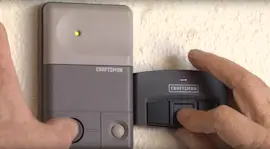
You can buy replacement parts for your Craftsman 13930498 (3-button remote control) by using the model-specific parts listing for this unit, then ordering the exact part you need. For additional Craftsman garage door opener parts by model number, shop on Sears PartsDirect.
Best way to make sure you order the right part
Because “garage door opener parts” can mean the opener head, rail, wall control, safety sensors, or a remote control, we recommend matching by model number first, then confirming the part description before checkout.
- Confirm the model number is 13930498 (Craftsman remote control)
- Identify what is failing (no response, short range, intermittent operation)
- Check the battery type and orientation in the remote
- Verify the opener itself works from the wall control (helps separate remote vs opener issues)
- If you have multiple doors, confirm which opener the remote is paired to
Quick troubleshooting before you buy
Many “bad remote” symptoms are caused by power or signal issues, not the remote electronics.
| Symptom | Most common cause | What to try first |
|---|---|---|
| No response at all | Dead battery, wrong battery orientation | Replace battery; re-seat contacts |
| Works only up close | Weak battery, interference | New battery; reduce nearby RF interference |
| Works sometimes | Dirty contacts, worn buttons | Clean battery contacts; test each button |
| Opener works at wall but not remote | Remote not paired, battery issue | Reprogram remote; replace battery |
Why it matters
Ordering by the exact Craftsman model number prevents mismatches between similar-looking remotes and ensures the replacement part is compatible with your garage door opener system.
Last updated: February 2026
Is it worth repairing a 20 year old garage door opener?
For a 20-year-old garage door opener, repair is usually not worth it; most openers have a typical service life of 10 to 15 years, so replacement is the better long-term value for reliability, security features, and smoother operation. If the fix is minor and inexpensive, a repair can buy time.
When repair makes sense (and when it doesn’t)
A repair is reasonable when the problem is simple and the opener is otherwise dependable.
- The remote or wall control is intermittent (often battery, contact, or programming related)
- The opener runs but the door does not move (common mechanical adjustment issues)
- The door is binding and the opener is straining (door hardware issue, not always the opener)
- You need a short-term fix while planning a full upgrade
Replacement is the better choice when:
- The unit is missing modern safety and security features you want today
- You have repeated failures (logic board, motor, gear wear, or inconsistent operation)
- Parts are hard to match for an older system
- The opener is loud, slow, or unreliable even after basic tune-ups
Quick decision guide
| Situation | Best choice | Why |
|---|---|---|
| Minor issue (battery, reprogram, adjustment) | Repair | Low cost, fast improvement |
| Major failure (motor/drive/board) | Replace | Cost and downtime add up |
| Frequent breakdowns | Replace | Reliability becomes the priority |
| Security concerns (older remotes/codes) | Replace | Modern security is a meaningful upgrade |
What to check before you decide
These checks help you avoid replacing an opener when the real issue is the door itself.
- Door balance: With the opener disconnected, the door should lift smoothly and stay near mid-travel
- Photo eyes and wiring: Look for loose connections, pinched wires, or misalignment
- Force and travel settings: Incorrect settings can cause reversals or incomplete closing
- Remote range: Weak range can be interference, antenna position, or a failing remote
If you need basic electrical troubleshooting tools and techniques, we recommend reviewing how to use a multimeter to test electrical parts video.
Why it matters
A garage door opener is a safety and security device. Past the 10 to 15 year mark, reliability drops and feature improvements (quieter drive systems, better security, smarter controls) make replacement the better overall investment.
If you decide to replace, we recommend searching by model and opener type on Sears PartsDirect to compare compatible options and accessories.
Last updated: February 2026
What are the common problems with Craftsman garage door openers?
Common Craftsman garage door opener problems usually fall into three areas: safety sensor issues (misalignment or blockage), drive system wear (belt/chain, gears, trolley), and control problems (wall button, remote, keypad, logic board). The exact symptoms depend on which opener and accessories you have.
Most common symptoms and what they usually mean
- Door won’t open or close: power issue, travel limits/force settings, or a stuck door
- Door starts down then reverses: photo-eye safety sensors blocked or misaligned
- Opener runs but door doesn’t move: disengaged trolley, stripped gear, broken belt/chain
- Noisy operation (grinding, rattling, squealing): worn gear/sprocket, loose hardware, dry rollers/hinges
- Remote/keypad works intermittently: weak battery, interference, or lost programming
Quick checks we recommend (fastest to slowest)
- Replace the remote battery; clean battery contacts and confirm polarity
- Make sure the door moves freely by hand (with the opener disconnected)
- Clean and align the safety sensor lenses; confirm both indicator lights are steady
- Check the opener light bulbs; some LED bulbs create radio interference that reduces remote range
- Inspect the rail and trolley; confirm the emergency release is fully re-engaged
Symptom-to-fix guide
| Symptom | Most likely cause | What to do first |
|---|---|---|
| Door reverses before closing | sensors blocked/misaligned | clear path, align sensors, tighten brackets |
| Opener runs, door stays put | trolley disengaged or gear failure | re-engage trolley; inspect drive gear area |
| Remote range is short | battery or interference | replace battery; test with opener lights off |
| Loud grinding from motor unit | stripped gear/sprocket | inspect gear housing; plan gear replacement |
Why it matters
Most “opener problems” are actually safety or door-balance problems. Fixing sensor alignment and door binding first prevents repeat failures and reduces strain on the motor and drive components.
Parts and DIY help
This model page is for Craftsman 13930498, which is a 3-button remote control used with many Craftsman openers (it is not the motor unit). If you need parts for your specific opener, search by the opener’s model number on Sears PartsDirect. For electrical troubleshooting steps, we follow the same process shown in how to use a multimeter to test electrical parts video.
Last updated: February 2026
How do I know what model Craftsman garage door opener I have?
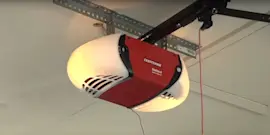
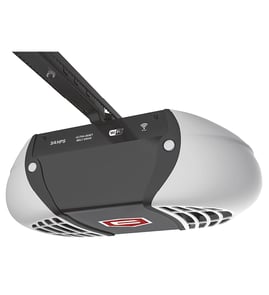
Model 13930498 is a Craftsman 3-button remote control model number, not the ceiling-mounted opener head. To identify your actual Craftsman garage door opener model (the motor unit), find the rating label on the opener power head; use that opener model for parts like gears, sensors, and circuit boards.
Where to find the opener model number (motor unit)
Look on the ceiling-mounted opener (power head) in these common spots:
- Side or back of the motor unit housing
- Under the light lens cover (near the bulbs)
- On the front panel behind a flip-down cover
- On the underside of the unit near the hanging bracket
- On the original paperwork or purchase/installation documents
Where to find the remote model number (like 13930498)
If you are identifying the handheld remote itself, check:
- Inside the battery compartment
- On the back of the remote case
- Under or behind the visor clip
What to write down (so you match the right parts)
Capture all identifiers you see; they help confirm compatibility:
- Opener head model number (from the motor unit label)
- Remote model number (example: 13930498)
- Serial number (if listed)
- FCC ID (often on remotes)
Quick guide: which number to use
| You found the number on... | What it identifies | Use it for |
|---|---|---|
| Ceiling-mounted motor unit label | Opener head model | Opener parts and diagrams |
| Remote battery compartment/back | Remote model (example: 13930498) | Replacing/programming a remote |
| Add-on receiver box (if present) | Receiver model | Matching remotes to receiver |
Why it matters
Craftsman systems can have separate model numbers for the opener head, remote, and receiver. Using the opener head model prevents ordering parts that fit a remote but not the drive system or electronics in the motor unit.
Once you have the correct model number, search by that exact number on Sears PartsDirect. You can also use this guide: how to find your appliance model number (and what it means for parts).
Last updated: February 2026