Owner’s manual


Where is the model number on a Craftsman rear tine tiller?
On the Craftsman rear-tine tiller model 917299852, the model number is printed on the model plate attached to the top of the transmission. Use that plate to record both the model and serial number for parts lookup and service reference; see the 917299852 owner's manual.
Where to look on the tiller
Check these common spots first (starting with the most reliable location):
- Top of the transmission (model plate location for 917299852)
- Around the transmission housing area where the shifter and drive components mount
- Near the frame above the tines (close to the tine guard area)
- If you are looking for the engine model number (not the tiller model): on the engine blower housing near the spark plug
Model number vs. engine model number (quick guide)
The tiller and the engine each have their own identification plate. This helps you order the correct belt, clutch cable, or engine parts.
| What you need | Where it’s found | What it’s used for |
|---|---|---|
| Tiller model number (917299852) | Plate on top of the transmission | Tiller parts diagrams and chassis parts |
| Engine model number | Blower housing near the spark plug | Engine-specific parts (carburetor, ignition, etc.) |
Why it matters
Using the correct model number prevents mismatched parts and saves time when you are ordering common wear items like a drive belt, clutch cable, chain, or depth stake. It also helps ensure you pull the right parts breakdown for your exact Craftsman tiller configuration.
Last updated: February 2026
Where can I buy Craftsman replacement parts?
You can buy replacement parts for your Craftsman rear-tine tiller model 917299852 directly from the parts list for this model, using the exact part number and description shown in your owner's manual. This is the most reliable way to match belts, cables, tines, and hardware to your tiller.
Best way to get the right part for model 917299852
We recommend matching parts by model number first, then confirming the part number and part description before ordering.
- Find the tiller model number plate on the top of the transmission (model 917299852)
- Find the engine model number on the blower housing near the spark plug
- Use the repair parts list to match the exact part number and description
- Order common wear items as needed (belts, tines, spark plug, air filter)
- Keep your old part for visual comparison (length, mounting points, hardware)
Common Craftsman 917299852 parts customers replace
These are examples of model-matched parts available for this tiller; choose the one that fits your symptom.
| Symptom or need | Part to check first | Example part on this model |
|---|---|---|
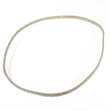
| Tines or wheels do not drive correctly | Drive belt and clutch linkage | Husqvarna rear-tine tiller drive belt 591372401 |
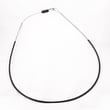
| Clutch handle feels loose or won’t engage | Clutch cable adjustment or replacement | Tiller clutch cable 532110675 |
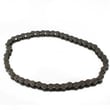
| Excessive slack, skipping, or drive noise | Chain condition and tension | Tiller chain, #25-50 532102134 |
Why it matters
Craftsman tillers often have multiple versions that look similar, but use different belts, cables, and gearcase parts. Ordering by model 917299852 and verifying the part number in the manual helps prevent returns and gets your tiller back to work faster.
Last updated: February 2026
What is the bar on the back of a tiller for?
On the Craftsman 917299852 rear-tine tiller, the bar at the back is the depth stake (also called a drag stake). We use it to control how deep the tines dig, help the tiller “bite” into the soil instead of running away, and set the machine up for tilling versus transporting. See the owner's manual for the exact adjustment positions and pin locations.
What the depth stake does
- Controls tilling depth: raising it generally lets the tiller dig deeper; lowering it limits depth.
- Adds traction and control: it drags in the soil to keep the tiller from lunging forward.
- Helps with consistent results: keeps the tiller at a steadier depth across a row.
- Protects the area when moving: in transport position, it helps prevent the tines from scuffing the ground.
How to adjust it (typical steps)
- Park on level ground and shut the engine off; let hot parts cool.
- Remove the depth stake pin.
- Slide the stake up or down to the hole that matches the depth you want.
- Reinstall the pin fully and confirm it is locked.
Quick guide to common positions
| What you want to do | Depth stake setting | What you will notice |
|---|---|---|
| First pass in hard soil | Shallower | Less bouncing, easier control |
| Deeper tilling | Higher (more depth) | More resistance, slower progress |
| Transporting | Down/top transport hole | Tines stay up, less ground contact |
Why it matters
Depth stake position affects safety and performance. A stake set too high can make the tiller harder to control and increase strain on the drive system (belt, clutch cable, and chain drive). A stake set too low can prevent the tines from reaching the depth you need.
Parts that commonly relate to “won’t dig” or “won’t move” symptoms
If the tiller won’t pull itself into the soil or the tines do not stay engaged, these parts are often involved:
Last updated: February 2026
What are the common problems with lawn tillers?
Common problems on the Craftsman 917299852 rear-tine tiller include hard starting or no-start, loss of power, overheating, excessive bouncing or poor handling, soil clumping, and tines or wheels not moving as expected. Most issues trace back to fuel quality, ignition, airflow, belt/drive wear, or soil conditions (too dry or too wet).
Most common symptoms and what usually causes them
- Won’t start / hard to start: empty tank, stale fuel, dirty air cleaner, loose spark plug wire, bad spark plug, or choke/throttle set incorrectly
- Loss of power / runs rough: dirty air filter, old fuel, engine overloaded (tilling too deep or too fast)
- Overheats: dirty cooling areas (air screen/cylinder fins), heavy load, low oil level
- Excessive bounce / difficult handling: soil too dry and hard, depth stake set too deep, tines catching in hard ground
- Soil balls up or clumps: soil is too wet
- Tines won’t rotate or unit won’t move: worn/slipping drive belt, clutch cable out of adjustment, drive/gearcase issues
Quick checks we recommend before replacing parts
- Shut the engine off, disconnect the spark plug wire, and wait for all moving parts to stop.
- Confirm fresh gasoline and a clean fuel can (rust and dirt in the can often becomes “fuel problems”).
- Check the air filter and cooling areas; clean debris from the air screen and cylinder fins.
- Inspect the spark plug condition and gap; replace annually for best reliability.
- Verify tine engagement and look for loose fasteners before each use.
Common fixes and the parts that often solve them
| Problem you notice | What to inspect first | Parts that commonly wear |
|---|---|---|
| Tines/wheels won’t turn | Belt condition and tension | Husqvarna rear-tine tiller drive belt 591372401 |
| Tines don’t engage smoothly | Cable free play and routing | Tiller clutch cable 532110675 |
| Poor tilling or bouncing | Soil moisture, depth stake setting | Depth stake 532102156 (if bent or won’t hold setting) |
Why it matters
A tiller that’s overloaded, run in the wrong soil conditions, or operated with worn belts and poor maintenance can become hard to control and can damage drive components. Keeping up with seasonal checks (spark plug, air filter, belts, and tines) improves starting, power, and tilling performance.
For operating depth, cultivating depth (typically 1 to 3 inches), and maintenance intervals specific to this unit, follow the owner's manual.
Last updated: February 2026
How often should I change the oil in my tiller?
For your Craftsman 917299852 rear-tine tiller, change the engine oil after the first 2 hours of operation, then every 25 hours of use (or at least once per year). Check the oil level before starting and after each 5 hours of continuous use; see the owner's manual.
Recommended oil-change schedule
- First oil change: after 2 hours (break-in)
- Routine interval: every 25 hours
- Minimum: once per year if you do not reach 25 hours
- Check level: before each start
- During long jobs: recheck after 5 hours of continuous use
Quick oil-change steps (high level)
- Put the tiller on a level surface.
- Warm the engine briefly so oil drains more freely, then shut it off.
- Let hot parts cool enough to prevent burns.
- Drain oil into a suitable container, reinstall the drain plug securely.
- Refill with the correct oil type and amount listed in the manual.
Oil type guidance (what to use)
The manual specifies a high-quality detergent oil meeting API service classification SG. Choose viscosity based on expected temperatures.
| Temperature range | Typical viscosity choice | Notes |
|---|---|---|
| Warmer conditions | SAE 30 | Common for warm-weather operation |
| Variable or cooler starts | 10W-30 | Check oil level regularly during use |
Why it matters
Fresh oil reduces engine wear and heat buildup. Following the 2-hour break-in change and the 25-hour interval helps prevent low-oil operation, especially when tilling hard soil or running in hot weather.
Last updated: February 2026