Installation guide
 Owner’s manual
 Error Codes



Do all refrigerators have a drip pan underneath?
Most modern refrigerators, including the Frigidaire FGHN2866PFHA, use a drip pan (also called a drain pan) to catch defrost water, but not every refrigerator has an easy-to-remove pan underneath the front. Many pans sit near the bottom by the compressor and are designed to evaporate water during normal operation; check the FGHN2866PFHA owner's manual for your model’s access method.
What a refrigerator drip pan does
A drip pan collects water from the defrost drain and lets it evaporate using heat from the condenser area. If the pan is missing, cracked, or overflowing, you can see water on the floor or smell musty odors.
Common signs the drip pan or drain system needs attention:
- Water puddles under or behind the refrigerator
- Musty or sour odors near the toe grille area
- Water dripping into the freezer or fresh food section
- Excess frost buildup that later melts and leaks
Where the drip pan is usually located
On bottom-mount and French door refrigerators like the FGHN2866PFHA, the drip pan is typically:
- At the bottom rear near the compressor and condenser fan
- Sometimes accessible by removing the toe grille (front kick plate)
- Sometimes only accessible from the back after pulling the refrigerator out
Quick access comparison
| Refrigerator design | Typical drip pan location | Typical access |
|---|---|---|
| Older top-freezer | Bottom front | Toe grille/front access |
| Many modern bottom-mount | Bottom rear | Rear access (pull out) |
| Compact/mini fridge | Bottom base | Varies by model |
Why it matters
A drip pan is part of normal defrost drainage. If the drain line clogs or the pan cracks, water can end up on your floor and cause odors. Keeping the drain path clear also helps the refrigerator run efficiently.
What we recommend if you see water under the refrigerator
- Confirm the refrigerator is level and slightly higher in front so doors close well (leveling affects drainage)
- Inspect for a clogged defrost drain (ice or debris can block it)
- Check door gaskets for gaps that cause excess frost and meltwater
- Clean the pan area if accessible, and clear dust from the condenser area
If you’re also dealing with odors, replacing the refrigerator door air filter EAFCBF can help reduce smell buildup while you address the moisture source.
Last updated: January 2026
What is the bottom part of the fridge called?
On the Frigidaire FGHN2866PFHA refrigerator, the bottom area is commonly called the machine compartment (or lower rear compartment). It typically houses the compressor and condenser-side airflow parts, and the lower front opening is the toe grille, which must stay unblocked for proper air circulation (see the FGHN2866PFHA installation guide).
Common names you will hear (and what they mean)
- Machine compartment: The enclosed lower area where major cooling components sit.
- Toe grille: The vented grille at the lower front; it lets air move in and out.
- Base grille: Another term for the toe grille.
- Drain pan area: The space near the bottom where defrost water can evaporate.
- Lower rear access cover: The panel you remove to service components.
What’s usually located in the bottom area
Most bottom-mount refrigerators like the FGHN2866PFHA place heat-producing and airflow components low in the cabinet:
- Compressor
- Condenser fan and airflow path
- Condenser coils (location varies by design)
- Drain pan (for defrost water evaporation)
Quick reference table
| Term | Where it is | Why it matters |
|---|---|---|
| Machine compartment | Lower rear/bottom | Contains key cooling hardware |
| Toe grille | Lower front | Must stay open for airflow |
| Drain pan area | Bottom near compressor | Helps manage defrost water |
Why it matters
If the toe grille is blocked, airflow drops and the refrigerator can run hotter and longer than normal. During installation and everyday use, we keep that lower front vent clear and make sure the unit is level and stable.
For model-specific diagrams and access notes, use the FGHN2866PFHA owner’s manual.
Last updated: January 2026
What is the most common problem with Frigidaire refrigerators?
For Frigidaire refrigerators like model FGHN2866PFHA, the most common customer complaints are cooling problems (warm fridge or freezer) and ice maker or water dispenser issues. In many cases, the root cause is airflow restriction, a door that is not sealing, or a water supply or filter problem; our FGHN2866PFHA use and care manual walks through the most common symptoms and fixes.
Most common issues we see
- Not cooling well: temperatures drift up, food spoils faster, freezer softens.
- Ice maker not making ice: ice maker turned off, water valve closed, kinked line, or filter not seated.
- Odd-tasting water: water not dispensed for a long time, or unit not connected to a cold water line.
- Doors not closing or sealing: refrigerator not level, door closed too hard, or cabinet interference.
- Noisy operation: fan noise can increase when airflow is restricted or components wear.
Quick checks that solve a lot of calls
- Confirm doors seal and close easily: the cabinet should be level and slightly tilted back so doors self-close.
- Verify airflow clearances: allow about 3/8 inch at sides and top and 1 inch at the rear for air circulation.
- Check the water supply (ice and dispenser): valve open, line not kinked, cold water line connection.
- Reseat or replace the water filter: a clogged or mis-seated filter can reduce flow to the ice maker.
- Purge stale water: dispense and discard 10 to 12 glasses if water tastes or smells odd.
Common symptoms and likely causes
| Symptom | Most likely cause | What to do first |
|---|---|---|
| Fridge warm, freezer OK | Airflow issue between compartments | Check vents are not blocked; confirm doors seal |
| Ice maker not making ice | Water supply or filter issue | Open valve, unkink line, reseat filter |
| Doors pop open or won’t close | Unit not level or cabinet interference | Level refrigerator; ensure it is not touching cabinets |
| Water tastes/odors | Stagnant water or wrong water line | Flush 10 to 12 glasses; confirm cold water line |
Parts that commonly relate to these problems
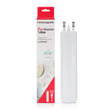
If you are troubleshooting ice and water performance, the filter is a frequent maintenance item for this model: refrigerator water filter ULTRAWF.
Why it matters
Cooling and ice maker problems often start small (a door not sealing, restricted airflow, or low water flow) but they can lead to food spoilage, frost buildup, and repeated ice maker failures. Addressing the basics first saves time and prevents unnecessary part replacement.
Last updated: January 2026