Owner’s manual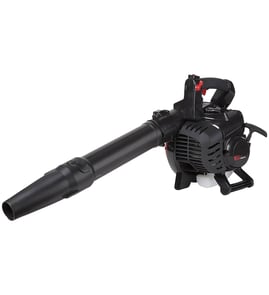






How to find Craftsman leaf blower model number?
Your Craftsman gas leaf blower’s model number is printed on the unit’s ID label; for this blower, the manual lists it as 316.791600 (often shown without the dot as 316791600). On handheld blowers, that label is typically on the engine housing or rear handle area; confirm the exact characters against the 316791600 operator's manual.
Where to look on the blower
Check these common label locations first (wipe dirt and oil off before reading):
- Side of the engine/motor housing
- Rear of the unit near the handle or trigger
- Near the air filter cover area
- Around the fuel tank area
- On the blower tube connection area (near the outlet)
What the model number looks like (and why it matters)
Craftsman handheld blowers often show the model in one of these formats. Any of these can point to the same model:
| You might see | What it means |
|---|---|
| 316.791600 | Manual-style format (with a dot) |
| 316791600 | Parts and ordering format (no dot) |
| 316.791600 + extra characters | Sometimes includes a revision or manufacturing code |
Why it matters
We use the model number to match the correct parts diagrams and compatible parts like a carburetor, ignition coil, air filter assembly, or blower tube. A single digit off can pull parts for a different Craftsman or MTD-built blower.
Tips if the label is hard to read
- Clean the label gently with a damp cloth; avoid harsh solvents that can erase printing.
- Use your phone camera and zoom in; angled light helps make faded text visible.
- Write down the full model number and any additional numbers nearby (they can help with exact part selection).
Last updated: February 2026
How to start a Craftsman gas leaf blower?
To start your Craftsman gas leaf blower model 316791600, set the unit on the ground in a stable starting position, use the primer and choke as directed, then pull the starter rope with a controlled, steady motion until the engine starts. For a warm engine, start with the throttle held open.
Quick start steps (cold engine)
- Move the On/Off switch to ON.
- Carefully inspect the area; keep people and pets at least 50 feet away.
- Press the primer bulb the number of times shown in the 316791600 owner's manual.
- Set the choke lever to the start position.
- Pull the starter rope with a controlled, steady motion.
- Once it fires, adjust the choke toward RUN and let the engine stabilize at idle.
If it will not start after a few pulls
The manual’s restart guidance is to increase airflow and fuel draw:
- Squeeze and hold the throttle control, or move cruise control to HI (fast).
- Pull the starter rope with a controlled, steady motion until it starts.
- If the engine hesitates, return cruise control to LO (slow) and repeat the start steps.
Warm start vs. cold start
| Engine condition | Choke | Throttle/cruise | What to do |
|---|---|---|---|
| Cold | Start position | Normal | Prime, choke, pull rope steadily |
| Warm | Typically less choke | Hold throttle or HI | Pull rope steadily until it starts |
Why it matters
Correct priming, choke setting, and a steady rope pull help the carburetor deliver the right fuel-air mix. That reduces flooding, improves starting reliability, and helps protect parts like the starter assembly and ignition system.
Last updated: February 2026
What is the life expectancy of a gas leaf blower?
A gas leaf blower typically lasts about 8 to 10 years with normal homeowner use and routine maintenance. For your Craftsman 316791600 (25 cc, 2-cycle), consistent upkeep like air filter care and fuel-system maintenance is what most directly determines how long it runs strong; see the 316791600 owner's manual for the maintenance schedule and safety steps.
What affects lifespan the most
- Fuel quality and storage: fresh, properly mixed 2-cycle fuel helps prevent carburetor varnish and hard starting.
- Air filtration: a clean filter prevents dirt from wearing the engine.
- Cooling airflow: keeping the air intake clear prevents overheating.
- Ignition health: a good spark plug and coil keep starts easy and combustion clean.
- Operating habits: avoiding long, wide-open runs when not needed reduces heat stress.
Maintenance checkpoints (practical schedule)
Use this as a simple guide; match exact intervals to the 316791600 owner's manual.
| Task | What to do | Helps prevent |
|---|---|---|
| Air filter service | Inspect and clean/replace as needed | Power loss, engine wear |
| Spark plug check | Verify condition and correct gap | Hard starting, misfire |
| Fuel system care | Empty or stabilize fuel for storage | Clogged carburetor |
| Cooling/air intake cleaning | Remove debris buildup | Overheating |
When parts replacement extends life (instead of replacing the blower)
If the engine runs poorly or won’t stay running, these are common wear items that often restore performance:
- Mtd leaf blower air filter assembly 753-08507 (restricted airflow causes rich running and low power)
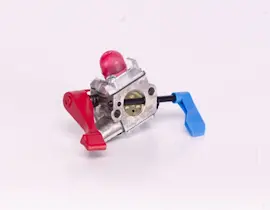
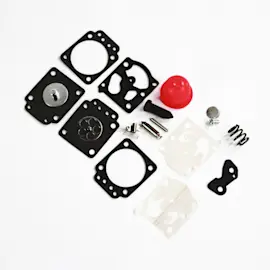
- Mtd line trimmer carburetor 753-06288 (common fix for surging, stalling, or no-start after storage)
- Mtd leaf blower ignition coil 753-08489 (helps when spark is weak or intermittent)
Why it matters
A blower that is maintained on schedule starts easier, runs cooler, and avoids the most common gas-engine failures (fuel varnish, dirt ingestion, overheating). The manual also emphasizes key safety steps like stopping the engine, letting it cool, and disconnecting the spark plug wire before maintenance.
Last updated: February 2026
Why does my Craftsman leaf blower keep dying?
If your Craftsman gas leaf blower model 316791600 keeps dying, the most common causes are fuel delivery problems (old fuel, restricted carburetor passages), airflow restriction (dirty filter or blocked tube/nozzle), or ignition issues. Start with fresh fuel and basic cleaning steps from the 316791600 owner's manual.
Quick checks that fix most “starts then dies” problems
- Drain old fuel and refill with fresh, properly mixed fuel (if your unit is 2-cycle).
- Press the primer bulb fully and slowly 10 times before starting (per the manual).
- Make sure the blower tube and nozzle are securely attached and not blocked.
- Clean debris from air openings and the intake area; blocked airflow can cause stalling.
- Inspect the muffler area for heavy debris or carbon buildup; keep the engine and muffler clean.
Parts that commonly cause stalling on this model
A restriction in air or fuel flow can make the engine run briefly and then quit.
| Symptom | Most likely area | What to do next |
|---|---|---|
| Runs a few seconds, then dies | Fuel delivery/carburetor | Try fresh fuel; if it persists, service the carburetor |
| Dies when you squeeze throttle | Airflow restriction | Check filter and tube/nozzle for blockage |
| Random dying, hard restart | Ignition or switch | Check stop switch operation and ignition components |
Model-matched parts to consider
- Mtd leaf blower air filter assembly 753-08507: Replace if dirty, oil-soaked, or damaged.
- Mtd line trimmer carburetor 753-06288: Consider if fresh fuel and priming do not stop the stalling.
- Mtd leaf blower on/off switch 725-05280: Consider if the engine cuts out like the switch is being toggled.
Why it matters
When a blower repeatedly stalls, unburned fuel and heat can increase carbon buildup around the muffler area. The manual also stresses keeping the engine and muffler free of grass, leaves, grease, and carbon to reduce fire hazard and keep airflow and cooling normal.
Last updated: February 2026