Owner’s manual
 Error Codes



Is it okay to use a generic water filter in a Samsung refrigerator?
Yes, it’s usually okay to use a generic water filter in your Samsung RF23HCEDBSR as long as it’s truly compatible with the filter housing and is certified for the contaminants you want reduced. If a generic fits poorly, it can leak, restrict water flow, or cause bad-tasting water.
Use these checks before installing any non-OEM filter:
- Match the filter type and connection style to your refrigerator’s filter housing (don’t force it)
- Choose a filter with NSF/ANSI certification that fits your needs (commonly 42 for taste/odor; 53 for health-related contaminants)
- Inspect O-rings and sealing surfaces for damage or flattening before installation
- After installing, flush several gallons of water to clear carbon fines and air
- Watch for slow dispensing, sputtering, or leaks during the first 24 hours
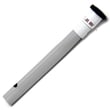
For the model-correct replacement, use the refrigerator water filter DA29-00019A.
| What you care about | Generic filter | Samsung-matched filter |
|---|---|---|
| Fit and sealing | Varies by brand and batch | Consistent fit for the housing |
| Water taste/odor improvement | Often good with NSF 42 | Reliable with proper flushing |
| Flow rate | Can be reduced if media is dense | Typically closer to expected flow |
| Leak risk | Higher if tolerances are off | Lower when installed correctly |
These symptoms usually point to a fit, seal, or restriction issue:
- Water dispenser flow is much slower than before
- Ice maker stops or makes hollow cubes
- Drips or moisture around the filter head
- Filter will not lock in smoothly
- Water tastes “dusty” even after flushing
If any of these happen, reinstall the filter carefully and confirm the housing is clean. If the issue continues, switch back to the correct filter and follow the replacement steps in the owner's manual.
The water filter affects both the dispenser and ice maker water supply. A filter that does not seal correctly can leak inside the fresh food compartment, and a filter that restricts flow can cause weak dispensing and poor ice production.
Last updated: February 2026
What is the capacity of the Samsung rf23hcedbsr?
The Samsung RF23HCEDBSR bottom-mount refrigerator has a total capacity of 22.5 cu. ft., with 6.8 cu. ft. in the freezer section. For the exact compartment breakdown and feature-specific storage details, use the RF23HCEDBSR owner's manual.
- Total capacity: 22.5 cu. ft.
- Freezer capacity: 6.8 cu. ft.
- Fresh food (refrigerator) capacity: typically the remainder (about 15.7 cu. ft.)
- Usable space can feel smaller if shelves, bins, or the ice maker take up room
- Overpacking reduces airflow and can cause warm spots or frost issues
| Section | Capacity |
|---|---|
| Total | 22.5 cu. ft. |
| Freezer | 6.8 cu. ft. |
| Fresh food (approx.) | 15.7 cu. ft. |
Knowing the true capacity helps us match your storage needs and troubleshoot performance. For example, if the refrigerator is packed tightly, airflow across the evaporator cover and temperature sensors can be restricted, which can lead to uneven cooling.
If you are diagnosing cooling or ice issues that make the refrigerator seem “too small” (because items are freezing or warming), these model-compatible parts are commonly involved:
- Refrigerator temperature sensor DA32-10104N (temperature feedback)
- Refrigerator defrost heater DA47-00244U (prevents frost buildup that blocks airflow)
- Samsung refrigerator fresh food evaporator cover assembly DA97-12608A (airflow path and fan cover)
- Refrigerator ice maker DA97-13718A (ice production and bin space)
Last updated: February 2026
What is the difference between force defrost FD and RD?
On Samsung refrigerator model RF23HCEDBSR, RD (refrigerator defrost) focuses on defrosting the fresh food (refrigerator) evaporator area, while FD (forced defrost) runs a broader defrost routine intended to clear heavier ice buildup across more than one cooling section. For the exact button sequence and timing for your unit, follow the RF23HCEDBSR owner's manual.
Use the mode that matches where the frost problem is showing up.
- Use RD when the refrigerator section has symptoms like warm temps, restricted airflow, or frost behind the rear panel.
- Use FD when you suspect heavier or more widespread ice buildup (for example, repeated fan noise from ice contact, or persistent icing that returns quickly).
- Stop the cycle if you see excessive water overflow; protect floors with towels.
- Empty ice and food as needed to prevent water damage and to improve airflow during defrost.
- Let temperatures stabilize after defrost; cooling performance can take several hours to normalize.
These modes are used to melt frost so air can move across the evaporator and the refrigerator can cool normally.
| Mode | Primary target | Best for | What you may notice |
|---|---|---|---|
| RD | Fresh food evaporator area | Refrigerator-only frost symptoms | Water dripping to drain pan, temporary warming in fridge |
| FD | Broader defrost routine | Heavier icing or recurring icing | More melting water, longer recovery time |
Choosing the right defrost mode helps you clear ice without over-warming the refrigerator. RD is the more targeted option; FD is the stronger option when ice buildup is affecting cooling, airflow, or defrost drainage.
Recurring frost usually points to an underlying issue that needs attention.
- Door not sealing consistently (warm air leaks)
- Drain restriction causing refreeze and overflow
- Defrost system problem (heater, sensor, wiring)
- Fan airflow blocked by ice
If you’re troubleshooting a defrost-related cooling problem, common related parts for this model include the refrigerator defrost heater DA47-00244U and refrigerator temperature sensor DA32-10104N.
Last updated: February 2026
What does the number 23 signify?
On Samsung refrigerator model RF23HCEDBSR, the “23” is part of the model series name and is commonly used to indicate the refrigerator’s approximate capacity class (often around 23 cubic feet) rather than a special code or symbolic meaning. For the exact rated capacity and features, use the RF23HCEDBSR owner's manual.
In model names like RF23..., Samsung typically uses the number to group models by size and platform.
Common takeaways:
- It points to a capacity class (often about 23 cu. ft.) for that series.
- It helps identify the design family (French door, bottom-mount layout, feature set).
- It is not an error code, diagnostic code, or a part number.
- It does not change how you order parts; parts must match RF23HCEDBSR.
| Item type | Example from this model page | What it tells you |
|---|---|---|
| Model number | RF23HCEDBSR | Which refrigerator you own (used to match parts) |
| Part number | DA29-00019A | Manufacturer’s part number for a component |
| Part name | Refrigerator water filter | What the part does |
Using the correct model number prevents mismatches when you’re diagnosing cooling, ice maker, or water dispenser issues.
If you’re working on common “23-series” problems, these model-matched parts are often involved:
- Refrigerator water filter DA29-00019A (water taste, flow, filter light routines)
- Refrigerator ice maker DA97-13718A (no ice, small cubes, jammed ice)
- Refrigerator water inlet valve DA62-04027A (no water to dispenser or ice maker)
For step-by-step ice production checks, use why your Samsung fridge stopped making ice and how to fix it.
Last updated: February 2026