 Owner’s manual


How do I tell what model Kenmore dishwasher I have?
Your Kenmore dishwasher’s model number is usually printed on a rating label inside the door area. For most Kenmore dishwashers, we find it on the inner door frame (left or right side), along the top edge of the door opening, or on the tub wall just inside the opening. Use that exact model number to match parts and troubleshooting info in the 66517539201 owner's manual.
- Open the door and look along the inner door frame on both sides.
- Check the top lip of the door opening (the horizontal edge).
- Look on the tub wall near the front opening.
- If the label is dirty or faded, wipe it with a damp cloth and a little dish soap.
- Write down the full model number exactly as shown (numbers only for this style, like 66517539201).
Kenmore dishwashers commonly use a numeric model format. Many start with 665 (often shown with or without a dot, such as 665.XXXX). For parts ordering, we use the full model number as a single string (example: 66517539201).
| What you see on the label | What to enter for parts lookup | Notes |
|---|---|---|
| 665.17539201 | 66517539201 | Dot is not required for lookup |
| 66517539201 | 66517539201 | Exact match is best |
- Check the kickplate/toe panel area (sometimes the tag is visible when the toe panel is removed).
- Look for a folded tech sheet behind the toe panel or in a side channel; it often repeats the model/serial.
- Use the dishwasher’s documentation and diagrams in the 66517539201 owner's manual to confirm you are matching the correct Kenmore unit.
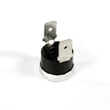
The model number controls parts compatibility. Even small differences can change fitment for common repairs like a dishwasher heater W10518394, a door seal, or a pump motor, so using the exact model number prevents wrong-part returns and repeat repairs.
Last updated: February 2026
Is it worth repairing a Kenmore dishwasher?
Yes, repairing a Kenmore dishwasher like model 66517539201 is usually worth it when the problem is a common wear item (seal, hose, heater) or a straightforward electrical issue. It becomes less cost-effective when multiple major components fail at once or the repair approaches the cost of a replacement.
Use these checkpoints before you buy parts or schedule service:
- Repair cost vs. replacement: If the repair is under about 50% of replacement cost, repair is typically the better value.
- Age: Dishwashers typically last 10 years.
- Type of failure: Leaks and no-heat issues are often economical; repeated motor or control problems can add up.
- Warranty coverage: Your manual lists coverage such as one-year full warranty, two-year coverage on the electronic control and power supply board, and additional coverage for certain wash system parts and tub/inner door panel leaks (terms vary by purchase date and conditions). See the 66517539201 owner's manual.
These are frequent, targeted fixes that can restore performance without replacing the whole dishwasher:
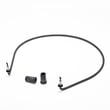
- No heat or poor drying: replace the dishwasher heater W10518394
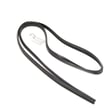
- Door leaks: replace the dishwasher door seal W10542314
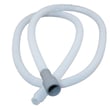
- Drain problems or water left in tub: inspect/replace the dishwasher drain hose 8269144A
- Dead dishwasher or intermittent power: test/replace the fuse 8193762
The economics shift toward replacement when you see any of the following:
| Situation | What it usually means | Typical direction |
|---|---|---|
| Multiple symptoms (leaking + not washing + not draining) | More than one system failing | Replace or get a full diagnosis |
| Repeated motor/pump issues | High-cost parts plus labor | Often replace |
| Tub damage or major structural issues | Labor-intensive repair | Often replace |
A targeted repair can extend the life of your 66517539201 and restore cleaning and drying performance. A replacement decision is smarter when you are stacking multiple high-cost repairs, because the total cost and downtime rise quickly.
Last updated: February 2026
What are common problems with Kenmore dishwashers?
Common problems with Kenmore dishwashers (including model 66517539201) are no-start or stopping mid-cycle, not filling, poor cleaning, draining issues, and leaks. Many of these trace back to simple checks like the door being fully latched, power supply problems, or a stuck overfill float (see the 66517539201 owner's manual).
- Won’t start or stops during a cycle: door not latched, wrong cycle selection, tripped breaker or blown house fuse, motor overload that resets after a few minutes.
- Won’t fill with water: overfill protection float stuck; press down to release and confirm it moves freely.
- Runs a long time: cycle pauses can be normal during main wash; heating or water temperature issues can also extend run time.
- Poor drying or spots/film: rinse aid and detergent amount matter; heated drying can worsen etching on some glassware.
- Leaks: door seal wear, loose hose connections, or drain hose routing problems.
- Confirm the door closes tightly and latches.
- Verify power: check the household breaker or fuse.
- Make sure the water shut-off valve is turned on.
- Check the overfill float: it should move up and down freely.
- If the motor overloaded, wait a few minutes for the automatic reset.
| Symptom | Common part area | Example part for this model |
|---|---|---|
| Not drying, long cycles | Heating circuit | Dishwasher heater W10518394 |
| Leaking at the door | Door sealing | Dishwasher door seal W10542314 |
| Not draining, water left in tub | Drain path | Dishwasher drain hose 8269144A |
| Dead/no power symptoms | Electrical protection | Fuse 8193762 |
Catching the basic causes early (latch, power, water supply, float movement) prevents unnecessary part replacement and helps avoid repeat problems like poor cleaning, standing water, and leaks.
Last updated: February 2026







