Owner’s manual

What is the most common cause of air compressor failure?
The most common cause of failure in an air compressor is preventable wear from poor maintenance and overheating. On the Tnt 15560, daily tank draining, keeping airflow unobstructed, and responding correctly to motor overload shutdowns prevents many “won’t start” and “won’t build pressure” breakdowns (see the owner's manual).
- Moisture left in the tank (internal corrosion, contaminated air, sticking valves)
- Overheating from restricted ventilation or heavy duty cycles (trips overload protection)
- Air leaks at fittings, hoses, or valves (long run times, low pressure at tools)
- Regulator misuse or misadjustment (tool pressure too low or too high)
- Using tools, hoses, or piping not rated for the compressor’s pressure (unsafe operation and premature wear)
Your Tnt 15560 is designed to stop at 155 PSI and automatically restart around 125 PSI. It also has an internal overload protector that shuts the motor off if it gets too hot.
| Item | Normal behavior | What it prevents |
|---|---|---|
| Auto stop at 155 PSI | Motor stops when tank reaches max pressure | Over-pressurizing and overheating |
| Auto restart near 125 PSI | Motor restarts as tank pressure drops | “No start” complaints that are actually normal cycling |
| Overload protector | Shuts off hot motor; reset after cooling | Motor damage from overheating |
- Drain the tank after each use; open the drain valve only when tank pressure is 10 PSI or less
- Keep the compressor clean and vents clear so the pump and motor can shed heat
- Inspect before each use for loose screws, damaged wiring, abnormal noise, or vibration
- Do not use an extension cord; plug into a proper outlet
- Use only air hose, tube, or pipe rated above 155 PSI; avoid PVC for compressed air
Most “failed compressor” symptoms start as small issues (water in the tank, a slow leak, or overheating). Fixing those early keeps the pump, pressure switch, check valve, and gauges from being stressed by long run times and high temperatures.
Last updated: February 2026
Are air compressor parts interchangeable?
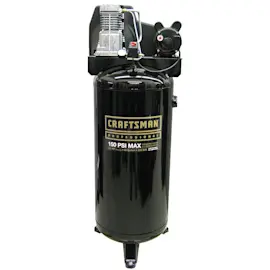
Most air compressor parts are not interchangeable because they’re designed around a specific brand/model’s pump design, motor load, pressure rating (PSI), and safety controls. For your Tnt air compressor model 15560, we recommend matching parts by the exact model and using the owner's manual to confirm specifications and service guidance.
These parts are typically model-specific because fit, airflow (CFM), pressure limits, and mounting patterns vary:
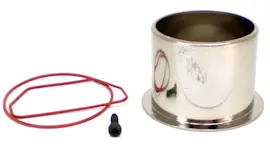
- Pump and cylinder/head components
- Motor and capacitor (voltage, amperage, RPM, mounting)
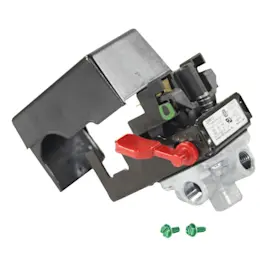
- Pressure switch (cut-in/cut-out settings and port layout)
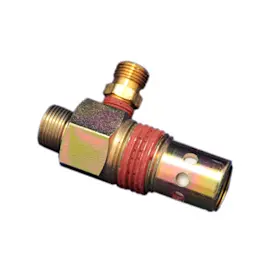
- Check valve and unloader tube routing
- Regulator/manifold assemblies and gauges
- Safety release valve (must match the tank and pressure system)
Some external connections can cross over between brands if the thread type and size match and the part is rated for the compressor’s pressure:
- Quick-connect couplers and plugs (style/profile must match your air tools)
- Hose fittings and adapters (commonly NPT in the U.S.)
- Basic shutoff/ball valves rated for compressed air
- Match thread type (for example, NPT vs. BSP)
- Match thread size (for example, 1/4 in. vs. 3/8 in.)
- Confirm the pressure rating exceeds 155 PSI (the manual warns hoses/piping must be rated higher than 155 PSI)
- Use leak sealant intended for compressed air connections
The Tnt 15560 manual includes safety guidance that directly impacts “universal” part choices:
- Never use PVC pipe for compressed air.
- Never modify or repair the air tank; replace damaged tanks.
- Drain the tank after each use; open the drain valve only with low tank pressure.
| Scenario | Best practice | Why it matters |
|---|---|---|
| Replacing a pressure switch | Match the same cut-in/cut-out range and port layout | Wrong settings can cause unsafe pressure or constant cycling |
| Replacing a coupler | Match plug style and thread size; verify pressure rating | Mismatched profiles leak or won’t connect |
| Replacing a hose | Use a hose rated above 155 PSI | Underrated hose can burst |
Air compressors are safety-critical tools; mismatched parts can create air leaks, poor pressure control, nuisance tripping, or unsafe over-pressurization. Using identical replacement parts and following the manual helps keep the compressor operating safely.
Last updated: February 2026
Is it worth it to repair a compressor?
Repairing a Tnt air compressor model 15560 is worth it when the problem is a single, serviceable failure (like a pressure switch, regulator issue, or a leaking fitting) and the tank and pump are still in good shape. If the unit has repeated failures, abnormal noise or vibration, or tank integrity concerns, replacement is the practical choice.
- Repair when the compressor previously ran normally and the issue is new and isolated.
- Repair when the symptom matches a common fix (won’t start, won’t build pressure, air leaks).
- Replace when failures keep returning after repairs.
- Replace when you see cracked/broken parts, damaged wiring, or the unit runs with abnormal noise/vibration.
- Replace when the air tank condition is questionable (corrosion, damage, or it will not hold air).
Use the safety and maintenance steps in the owner's manual before you decide.
- Turn the power switch OFF and unplug before inspection or service.
- Inspect for loose screws, binding parts, cracked components, and damaged wiring.
- Drain moisture from the tank after each use (open the drain valve, then retighten).
- If the compressor will not start, verify outlet power and cord connection; then let tank pressure drop so the motor can restart.
| Situation | Usually worth repairing? | Why |
|---|---|---|
| Minor air leak at fittings/quick connector | Yes | Low cost, fast fix, restores performance |
| Won’t start due to switch/control issue | Sometimes | Repair can be straightforward, but electrical issues raise labor cost |
| Won’t build tank pressure (pump/valves) | Sometimes | Can be a bigger job; compare time and parts cost |
| Repeated breakdowns or unsafe condition | No | Ongoing cost and downtime add up |
A compressor can restart unexpectedly and can store high pressure; the manual stresses switching OFF and unplugging before service, and having abnormal noise or vibration corrected before further use. That safety and reliability reality is why “repair vs. replace” is mainly about condition and repeat failures, not just the first repair bill.
For symptom-based troubleshooting, we use guides like air compressor won't start and air compressor won't build tank pressure to narrow the likely cause before spending money.
Last updated: February 2026