Owner’s manual
 Error Codes


How many cubic feet is my Kenmore refrigerator model 10651763511?
Your Kenmore side-by-side refrigerator model 10651763511 has its exact cubic-foot capacity listed in the specifications section of the 10651763511 owner's manual. Use that spec (not the cabinet width) when comparing refrigerators or ordering storage parts.
How to confirm the exact cubic feet
Use one of these quick checks:
- Open the 10651763511 owner's manual and look for “Product specifications” or “Capacity”.
- Check the model and serial tag inside the fresh food compartment; many tags list total volume.
- If the tag lists separate volumes, add refrigerator + freezer to get total cubic feet.
What “cubic feet” means on a side-by-side
Capacity is the interior storage volume, not the outside dimensions. It is usually shown as:
- Total capacity (cu. ft.)
- Refrigerator compartment capacity
- Freezer compartment capacity
| Spec label wording | What to use | Why |
|---|---|---|
| Total capacity | Total cu. ft. | Best for comparing models |
| Refrigerator + freezer volumes | Add them together | Confirms total volume |
| “36-inch class” | Not a capacity | Width does not equal storage |
Why it matters
The correct cubic feet helps us match fit-critical items like shelves and bins, and it also helps set expectations for usable space once you account for ice maker hardware, air channels, and door storage.
Related parts that affect usable space and performance
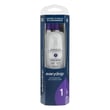
- Replace the water filter on schedule to keep dispenser flow strong (see Kenmore refrigerator water filter 9081).
- Keep interior air vents clear so the evaporator fan can circulate cold air.
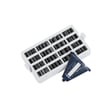
- If you notice odors, replace the air filter when equipped (see refrigerator air filter W10311524).
Last updated: January 2026
How wide is a Kenmore side by side refrigerator?
Most Kenmore side-by-side refrigerators are 36 inches wide. For Kenmore model 10651763511, our installation guidance calls for a 36 inch minimum cabinet cutout width; plan additional clearance for ventilation and door swing as shown in the 10651763511 owner's manual.
What “width” should you measure?
Use these measurements so the refrigerator fits and the doors open fully:
- Refrigerator cabinet width: the appliance body (commonly 36 inches on side-by-sides)
- Cabinet opening (cutout) width: the space between cabinets or walls
- Door swing clearance: extra room so doors open and drawers can slide out
- Depth clearance: space behind for the power cord and water line (if equipped)
Model 10651763511 installation width and clearances
The manual’s installation section lists these key fit requirements:
- Minimum cabinet cutout width: 36 inches (91.44 cm)
- Ventilation clearance: 1/2 inch (1.27 cm) on each side and at the top
- Rear clearance: 1 inch (2.54 cm) behind the refrigerator
- Wall-adjacent installs: leave 2 inches (5.08 cm) minimum on each side (depending on setup) for door swing
Quick reference table
| What you’re planning for | Dimension to use | Value from the manual |
|---|---|---|
| Minimum cabinet opening | Width | 36 in (91.44 cm) |
| Ventilation gap | Side/top clearance | 1/2 in (1.27 cm) |
| Space behind unit | Rear clearance | 1 in (2.54 cm) |
Why it matters
A refrigerator can be “36 inches wide” but still not fit correctly if the opening is tight or a wall blocks the door swing. Following the cutout and clearance requirements helps prevent poor cooling, noise, and drawer access problems.
Last updated: January 2026
What are the most common issues with 10651763511?
The most common issues we see with the Kenmore 10651763511 side-by-side refrigerator involve weak or no ice and water dispensing, warm temperatures from poor airflow, frost buildup from defrost problems, and door sealing issues that cause temperature swings and moisture. Use the 10651763511 owner's manual to confirm control settings and feature operation.
Common symptoms and what usually causes them
- No ice or slow ice production: clogged filter, low water pressure, or a failing inlet valve or ice maker
- Water dispenser not working or dripping: restricted filter, frozen water line, or a sticking inlet valve
- Refrigerator warm but freezer cold (or vice versa): evaporator fan or airflow/duct issue
- Frost buildup on freezer back wall: defrost heater or defrost system problem
- Doors not sealing, sweating, or leaking air: worn gasket, misalignment, or a damaged closer cam
Quick checks we recommend first
- Set temperatures to typical targets: 37°F fresh food, 0°F freezer.
- Make sure vents are not blocked by food packages.
- If ice or water is weak, replace the filter and purge air from the line.
- Listen for the evaporator fan running when the doors are closed.
- Inspect door gaskets for gaps, tears, or hardened sections.
Parts that commonly solve these problems
| Problem area | Common fix | Example part for this model |
|---|---|---|
| Ice and water issues | Replace clogged filter | Refrigerator water filter 9081 |
| Odors and stale air | Replace air filter | Refrigerator air filter W10311524 |
| No water to ice maker/dispenser | Replace inlet valve | Refrigerator water inlet valve WPW10341320 |
| Frost buildup | Restore defrost heat | Refrigerator defrost heater WPW10495967 |
| Poor airflow | Repair evaporator fan airflow | Refrigerator evaporator fan blade WP2169142 |
Why it matters
These issues affect food safety, ice quality, and energy use. For example, a restricted water filter can mimic a bad valve, and a door gasket leak can cause long run times, frost, and temperature instability.
Last updated: March 2026