




How to tell the year of Kohler's engine?
For a Kohler CV20S-65551 lawn and garden engine, we determine the engine’s build year by reading the engine identification label and decoding the serial number. The serial format varies by series, but the serial always contains the production date information used for parts lookup and service.
Where to find the date information
Look for the engine identification label (or stamped ID) on the blower housing, valve cover area, or near the starter. Record these exactly:
- Model (example: CV20S-65551)
- Spec number (often shown as “Spec”)
- Serial number (S/N)
- Any “DOM” or date code if present
How to decode the serial number (practical method)
Because Kohler uses different serial formats across engine families, we use a consistent process that works for CV-series engines:
- Write down the full serial number exactly as shown (include letters).
- Compare the serial format to Kohler’s serial-date chart for your engine family.
- Use the decoded date to confirm the correct carburetor, ignition, and charging parts for your spec.
If you are doing maintenance at the same time, pairing the build year with a tune-up refresh is a smart move; the Kohler command pro twin engine tune-up kit is a common service bundle for Command Pro Twin applications.
Quick checklist: what to capture before ordering parts
- Engine model: CV20S-65551
- Spec number: exact digits matter
- Serial number: exact characters matter
- Equipment brand/model (tractor or mower) the engine is installed on
- Photos of the ID label and the part area you are servicing
Why the year matters for parts
Kohler often updates components mid-production. The build date plus spec number helps match the correct version of key systems.
| System | Parts that commonly vary by year/spec | Example part on this model page |
|---|---|---|
| Fuel | Fuel line routing, filter size | Fuel filter 24-050-02 |
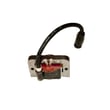
| Ignition | Coil/ignition module style | Ignition module 24-584-01 |
| Starting/charging | Starter, stator output | Stator kit 54-755-09 |
Last updated: February 2026
How many hours will a Kohler lawn mower engine last?
Most Kohler residential lawn mower engines run 500 to 1,500 hours; with consistent maintenance, many reach 1,500 to 2,000 hours, and commercial-duty use reaches 2,000 to 3,000+ hours. For the Kohler CV20S-65551, engine life is driven by oil condition, cooling airflow, and clean fuel delivery.
Typical lifespan ranges
| Use type | Typical hours | What usually limits life |
|---|---|---|
| Residential mowing | 500 to 1,500 | Dirty oil, clogged air filter, overheating |
| Heavy residential or light commercial | 1,500 to 2,000 | Heat and load wear, skipped tune-ups |
| Commercial with strict maintenance | 2,000 to 3,000+ | Normal internal wear over time |
What extends engine life the most
- Change oil on schedule and keep the oil level correct; low oil causes rapid wear.
- Keep cooling fins, blower housing, and air intake clear to prevent overheating.
- Use fresh fuel and stabilize fuel for storage to prevent varnish in the carburetor.
- Replace tune-up items regularly (spark plugs, filters, and related service parts).
- Fix small issues early (fuel seepage, loose clamps, cracked lines, hard starting).
Parts that commonly support longevity
These model-compatible parts are often involved in routine service or common repairs:
- Kohler command pro twin engine tune-up kit 24-789-02-S (routine service items that help maintain starting and performance)
- Ignition module 24-584-01 (restores consistent spark when ignition problems show up)
- Electric starter 25-098-05 (addresses slow crank or no-crank conditions that lead to hard starting)
Why it matters
Engine hours help you plan maintenance before power loss, hard starting, or overheating causes expensive internal wear. Most premature failures come from dirty oil, restricted airflow, or fuel system contamination.
Last updated: February 2026
What are common Kohler engine problems?
Common problems we see on Kohler engines like model CV20S-65551 include hard starting or no-start, rough running or surging, power loss under load, overheating, and oil leaks. These symptoms usually trace to fuel delivery, airflow and cooling restrictions, ignition faults, or crankcase sealing.
Most common symptoms and likely causes
- Won’t start or starts then dies: stale fuel, restricted fuel flow, weak spark, choke linkage issues
- Runs rough or surges: carburetor varnish, vacuum leak, partially clogged jets
- Loses power under load: restricted fuel flow, ignition breakdown when hot, low compression
- Overheats: clogged cooling fins, debris under shrouds, low oil level
- Oil leak or burning oil smell: breather issues, worn seals, gasket surfaces not sealing
Quick checks we recommend first (fast, low-cost)
- Drain old fuel and refill with fresh fuel; replace the inline fuel filter if flow is weak
- Check the air filter and clear debris from cooling fins and under engine shrouds
- Inspect fuel lines for cracks and loose clamps; tighten or replace as needed
- If it cranks slowly or clicks, clean and tighten battery terminals and ground connections
- If spark is weak or intermittent, test ignition and consider replacing the ignition module 24-584-201-s
Parts that commonly fix these problems
| Symptom | What to check first | Part that often resolves it |
|---|---|---|
| Fuel starvation, stalling | Fuel freshness, line condition, tank vent | Replace the inline fuel filter (match by diagram) |
| No spark or misfire when hot | Spark quality, kill wire, coil air gap | Ignition module 24-584-201-s |
| No crank or slow crank | Battery, cables, solenoid, starter draw | Electric starter 25-098-07-s |
Why it matters
On a CV20S-65551, fuel restriction and cooling blockage are the two fastest ways to create repeat failures. Fixing airflow, cooling, and fuel delivery first prevents overheating, hard starting, and unnecessary carburetor replacement.
Last updated: February 2026