Error Codes


How do I tell how old my Maytag dryer is by serial number?
To estimate the age of your Maytag dryer model MGD8630HC1, use the date code embedded in the serial number. On many Maytag dryers, the date code is the last two characters: the first letter indicates the year and the second letter indicates the month.
Where to find the serial number
You’ll typically find the serial number on a rating label in one of these spots:
- Inside the door opening on the cabinet frame
- On the back panel of the dryer
- Along the door opening edge near the lint screen housing
- Occasionally behind the control panel area (less common)
How to read the Maytag date code
When the serial number ends with two letters, read them like this:
- 1st letter (of the last two) = manufacturing year code
- 2nd letter (last character) = manufacturing month code
- The rest of the serial number identifies the production sequence
Example
If a serial number ends in LA:
| Serial ending | Meaning | What it tells you |
|---|---|---|
| L | Year code | The dryer was built in the year represented by “L” |
| A | Month code | The dryer was built in the month represented by “A” |
Because letter-to-year mappings vary by production era, we use the model and full serial together to match the correct year range.
Quick tips to confirm you have the right age
- Write down the full model number (MGD8630HC1) and the entire serial number
- Compare the estimated build date to symptoms and wear items (rollers, belt system, blower)
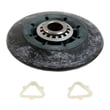
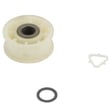
- If the dryer is noisy or thumping, age-related wear often points to drum support parts like the dryer drum support roller WPW10314173 or the dryer idler pulley W10837240
Why it matters
Knowing the manufacture date helps us choose the right Maytag dryer parts, avoid version mismatches, and prioritize common wear components (drum support rollers, idler pulley, thermal fuse, igniter) based on typical service life.
Last updated: February 2026
Where to find part number on Maytag dryer?
On your Maytag MGD8630HC1 dryer, the part number is printed on the part itself, and the model and serial tag is on the dryer cabinet. We use the model number from that tag to look up the correct parts list, then match the part number on the old part.
Where to look on the dryer for the model and serial tag
Check these common Maytag dryer locations first:
- Inside the door opening on the front panel (door jamb area)
- On the cabinet frame just behind the door
- On the back of the dryer cabinet
- Along the side panel edge near the front
Where to find the part number on the actual part
Most replacement parts have a number stamped, printed, or labeled directly on them.
- Rollers and pulleys: stamped on the metal hub or printed on a label
- Sensors and fuses: printed on the plastic body or on a small sticker
- Igniter and gas parts: printed on the bracket, valve body, or tag
- Motor and blower wheel: printed on the motor label or molded into the wheel
If the number is worn off, we match by the dryer model (MGD8630HC1) and the part’s location and shape.
Quick examples of “part ID” vs “part number”
On Sears PartsDirect, you may see both. Either can help, but the model-based lookup is what ensures fit.
| What you see | Example from this model page | What it means |
|---|---|---|
| Part ID | WP8577274 | Sears PartsDirect identifier for the listing |
| Part number | 8577274 | Manufacturer number often printed on the part |
Why it matters
Dryer parts can look similar across Maytag and Whirlpool-built platforms, but small differences (mounting holes, connector style, temperature rating) affect fit and performance. Using the MGD8630HC1 model tag plus the number on the old part prevents wrong-part returns.
For a common example, the temperature sensor listing is dryer thermistor WP8577274.
Last updated: February 2026
What's the life expectancy of a Maytag dryer?
A Maytag dryer like model MGD8630HC1 typically lasts 12 to 15 years with normal household use. Regular vent cleaning and replacing wear items (rollers, idler pulley, fuses, sensors) on time is what most often determines whether it reaches the high end of that range.
Typical lifespan and what affects it
Most dryers fail early due to airflow restrictions, overheating, or normal wear in the drum support and drive system.
- Airflow and venting: clogged lint screen or venting makes the dryer run hot and long
- Load habits: frequent heavy loads speed up belt, roller, and motor wear
- Heat system health (gas models): ignition and flame sensing issues can cause no-heat cycles
- Maintenance: periodic cleaning prevents overheating and nuisance shutdowns
- Timely part replacement: small parts replaced early prevent bigger damage
Parts that commonly limit dryer life
If your MGD8630HC1 starts squealing, thumping, shutting off, or taking too long to dry, these are the first parts we check.
| Symptom | Common wear item | Example part for this model |
|---|---|---|
| Squealing, rumbling, thumping | Drum support roller | Dryer drum support roller WPW10314173 |
| Dryer runs but drum struggles or squeaks | Idler pulley | Dryer idler pulley W10837240 |
| Dryer won’t run or stops from overheating | Thermal fuse | Thermal fuse W10909685 |
| Poor airflow noise, weak drying | Blower wheel | Dryer blower wheel WP697772 |
Why it matters
A dryer that is forced to run hotter or longer than designed wears out the motor, drum supports, and heat components faster. Keeping airflow strong and addressing noises early is the simplest way to get a full 12 to 15 years from a Maytag dryer.
Maintenance checklist (fast, high-impact)
- Clean the lint screen every load
- Inspect and clean the vent path regularly (especially long runs)
- Stop using the dryer if you smell burning or notice repeated overheating shutdowns
- Don’t overload; dry heavy items in smaller batches
- If you hear new squeals or thumps, service the roller and idler system before it damages the drum
Last updated: February 2026
What could be wrong with my Maytag dryer?
If your Maytag MGD8630HC1 dryer is not drying well, not heating, not starting, or making noise, the most common causes are restricted airflow (lint or venting), a failed heat or safety component (thermal fuse, thermistor, igniter), or a worn drive system (idler pulley, drum rollers). Start with airflow checks first.
Quick checks we recommend first (no parts needed)
- Clean the lint screen completely; wash it with warm water if you use dryer sheets.
- Confirm strong airflow at the outside vent hood while the dryer runs.
- Inspect the vent hose for kinks, crushing, or long runs; shorten and straighten if possible.
- Try a timed dry cycle; sensor cycles can end early if the load is too small or the sensor is dirty.
- Do not overload; heavy loads can tumble poorly and dry unevenly.
Symptom-to-cause guide (MGD8630HC1)
| Symptom | Most likely cause | What to check next |
|---|---|---|
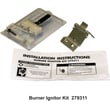
| Runs but no heat | Ignition or gas heat components | Test/inspect igniter 279311 and dryer radiant sensor WP338906 |
| Runs but takes too long | Airflow restriction or weak blower | Venting, then inspect dryer blower wheel WP697772 |
| Won’t start | Power, door switch, or safety open | Verify power, then check thermal fuse W10909685 |
| Loud squeal/rumble | Worn rollers or idler pulley | Inspect dryer drum support roller WPW10314173 and dryer idler pulley W10837240 |
| Shuts off too soon | Moisture sensing issue | Clean sensor bars; consider dryer moisture sensor WP3387223 |
Parts that commonly fix these problems
We see these parts solve many MGD8630HC1 complaints when symptoms match:
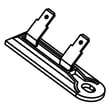
- Thermal fuse W10909685 (no heat or won’t run if it opens)
- Dryer thermistor WP8577274 (temperature sensing problems)
- Igniter 279311 (gas dryer won’t heat)
- Dryer gas valve coil kit WPW10328463 (heats briefly then stops)
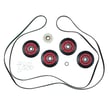
- Dryer repair kit 4392067 (common wear items for noise and poor tumbling)
Why it matters
Airflow problems can cause long dry times and overheating, which can trip safety devices like a thermal fuse. Fixing venting first prevents repeat failures and helps your Maytag dryer dry faster and more efficiently.
For error-code help, use Maytag bravos dryer error codes as a starting point for Maytag code meanings and next steps.
Last updated: February 2026