Error Codes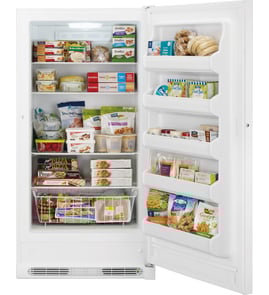



How many cubic feet is a Kenmore freezer model 2539203282?
Kenmore upright freezer model 2539203282 is a 20.0 cubic foot upright freezer. That capacity is the total storage volume used to compare freezer sizes across brands and helps you confirm you are shopping the correct shelves, bins, and cooling-system parts.
What “20.0 cubic feet” means
- It is a volume rating (not a measurement of exterior size).
- Usable space is slightly less once shelves, bins, and the evaporator cover are installed.
- Capacity does not change with temperature setting; it is a cabinet specification.
- Door bins and interior accessories affect how much you can practically store.
Quick size comparison
| Upright freezer size | Typical use case | What you’ll notice |
|---|---|---|
| 14 to 17 cu ft | Smaller households, overflow storage | Narrower cabinet, fewer shelves |
| 20 cu ft (your model) | Family-size bulk storage | More shelf positions and door storage |
| 21+ cu ft | Maximum storage | Often wider/taller footprint |
Why it matters
Knowing the correct cubic-foot capacity helps you compare Kenmore upright freezer sizes accurately and avoid ordering the wrong interior parts when layouts differ between 17 cu ft and 20 cu ft cabinets.
A part-based way to confirm you are on the right parts list
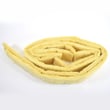
If you are double-checking that you are viewing parts for 2539203282, match a refrigeration-system component used on this model, such as the filter 5303305677.
Last updated: February 2026
How to clean coils on Kenmore upright freezer?
To clean the coils on your Kenmore upright freezer model 2539203282, unplug the freezer, pull it out for access, then gently vacuum and brush dust off the condenser coil area so air can flow freely and the compressor can cool efficiently.
Before you start (safety and setup)
- Unplug the freezer (or switch off the breaker) before cleaning.
- Protect the floor with cardboard or a towel before sliding the cabinet.
- Use a coil brush and a vacuum with a crevice tool; avoid sharp tools.
- Keep water and cleaners away from electrical parts and wiring.
- If you see damaged wiring, stop and repair it before restoring power.
Step-by-step: cleaning the condenser coil area
- Empty nothing unless you need to; coil cleaning does not require unloading food.
- Pull the freezer straight out to create working space behind or below it.
- Locate the condenser coil area (commonly behind a lower rear cover or near the bottom).
- Vacuum loose dust first.
- Brush the coil fins and surrounding area to loosen packed lint, then vacuum again.
- Clean the floor under the freezer and around the compressor area.
- Reinstall any cover you removed, push the freezer back, then restore power.
What to expect after cleaning
| What you notice | What it usually means | What to do |
|---|---|---|
| Quieter running | Better airflow | Normal, no action needed |
| Runs less often | Improved heat removal | Normal, monitor temps |
| Still warm inside | Possible airflow/defrost issue | Check door seal, vents, frost buildup |
| Loud buzzing/rattle | Debris or panel vibration | Recheck covers and clear debris |
How often we recommend cleaning coils
- Every 6 months in most homes
- Every 3 months if you have pets, heavy dust, or the freezer sits in a garage
- Anytime you notice longer run times, warmer temps, or the cabinet feels unusually hot
Why it matters
Dirty condenser coils trap heat, which makes the compressor work harder. Keeping the coil area clean helps your Kenmore 2539203282 maintain stable freezing temperatures, reduce energy use, and prevent overheating-related wear.
Related parts (only if you are already servicing the sealed system)
If you are doing sealed-system work (not routine cleaning), the freezer condenser coil 5300123788 is the model-matched coil assembly.
Last updated: February 2026
Is there a reset button on a Kenmore upright freezer?
Most Kenmore upright freezers, including model 2539203282, do not have a single dedicated “reset” button. The practical reset is a power reset: unplug the freezer (or switch the circuit breaker off) for about 5 minutes, then restore power and allow 24 hours for temperatures to stabilize.
How to reset your Kenmore 2539203282 upright freezer
- Unplug the power cord from the wall outlet.
- Wait 5 minutes (this lets the control and compressor protection timer fully reset).
- Plug the freezer back in.
- Set the temperature back to your normal setting.
- Keep the door closed as much as possible for the next several hours.
- Check for normal operation: interior fan sound (if equipped), compressor cycling, and steady cooling.
If the freezer still will not cool after a reset
A “reset” will not fix a failed cooling or airflow component. These are the most common next checks:
- Power and outlet: confirm the outlet has power and the cord is firmly seated.
- Control settings: make sure the temperature is not set to “warmest” or “off.”
- Door seal and door closing: look for gaps, torn gasket, or a door that is not fully closing.
- Airflow blockage: avoid packing items tightly against vents and the back wall.
- Frost buildup: heavy frost can indicate a defrost problem that restricts airflow.
Quick symptom guide (what it usually points to)
| What you notice | What it often means | What to do first |
|---|---|---|
| Lights on, no cooling | Control not calling for cooling, compressor protection delay, or sealed system issue | Do the 5-minute power reset; then wait 10 to 15 minutes for compressor start |
| Runs constantly, still warm | Poor airflow, dirty condenser area, door leak | Check door seal and airflow; reduce door openings |
| Heavy frost on back wall | Defrost system problem | Manually defrost (unplug, doors open) and monitor return of frost |
| Trips breaker | Electrical short or failing component | Stop using and have it checked before resetting again |
Why it matters
A proper power reset clears minor control glitches and compressor protection lockouts, but it also helps you avoid unnecessary parts replacement. If symptoms persist, focus on airflow, frost patterns, and electrical checks to pinpoint the real failure.
If you need to confirm you are working with the correct parts list for your exact unit, use our guide: how to find your appliance model number (and what it means for parts).
Last updated: February 2026
Where is the model number on a Kenmore upright freezer?
On a Kenmore upright freezer like model 2539203282, the model number is printed on a rating label inside the cabinet or on the cabinet frame. We most often see it on an inside side wall, near the top (ceiling area), or behind the lower kick plate.
Common places to check
- Inside the freezer on the left or right interior wall
- On the interior ceiling area near the light or control housing
- On the door frame (cabinet opening) where the door gasket seals
- Behind or just above the lower kick plate (front bottom grille)
- On the back exterior panel of the cabinet
Quick steps to find it fast
- Open the door and scan the interior side walls at eye level.
- Look up along the interior ceiling area.
- Check the cabinet frame around the opening (not just the door).
- Remove the lower kick plate if your freezer has one (usually it snaps off or uses a couple screws).
- If you still do not see it, check the rear panel.
What the label usually looks like
| What you may see | What it means | Why you need it |
|---|---|---|
| Model number (example: 2539203282) | Identifies the exact freezer design | Ensures parts match your unit |
| Serial number | Production identifier | Helps with age and production run |
| Electrical ratings (V/Hz/A) | Power requirements | Useful for diagnosing electrical issues |
Why it matters
We use the full model number to match the correct Kenmore upright freezer parts (shelves, door stops, wiring harnesses, and sealed-system components). Even small model number differences can change which part fits.
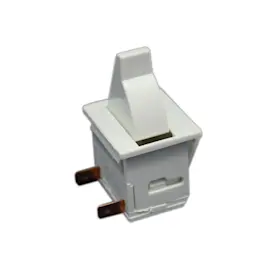
If you need a replacement part after you find the label, match it to the part listing for your model, for example the freezer door stop 8016354 if your door is not stopping correctly.
Last updated: February 2026
Why does my upright freezer ice up at the bottom?
Bottom ice in a Kenmore 2539203282 upright freezer almost always happens when warm, humid room air leaks past the door seal and then freezes, or when defrost water cannot drain away and refreezes on the freezer floor. Fixing the air leak or clearing the drain stops the repeat icing.
Most common causes (and what to check first)
- Door not sealing fully (gasket torn, dirty, or the door is slightly ajar)
- Freezer overpacked, blocking air circulation and pushing the door open
- Defrost drain clogged with ice or debris, so water refreezes at the bottom
- Freezer not level, so water does not flow to the drain
- High humidity or frequent door openings (garage, basement, busy kitchen)
Quick fix steps we recommend
- Check the seal test: close the door on a dollar bill; it should drag when you pull it out.
- Clean the gasket and mating surface: warm water plus mild dish soap; dry fully.
- Level the cabinet: front slightly higher than the back helps the door self-close.
- Clear the bottom ice: unplug the freezer, remove food, and melt ice with towels and a fan (avoid sharp tools).
- Clear the drain path: after the ice melts, flush the drain area with warm water and confirm it flows away.
What “bottom ice” usually looks like
| Symptom | Most likely cause | Best next step |
|---|---|---|
| Sheet of ice on the floor | Clogged defrost drain | Defrost and flush drain with warm water |
| Frost around door edge | Door leak or misalignment | Clean gasket, level unit, reduce overpacking |
| Ice returns in 1 to 3 days | Ongoing air leak or drain still restricted | Recheck seal test and drain flow |
Why it matters
Bottom ice can block airflow, reduce cooling performance, and force longer run times. That can lead to warmer food temps and higher energy use, even if the freezer still “seems cold.”
Parts that may be involved
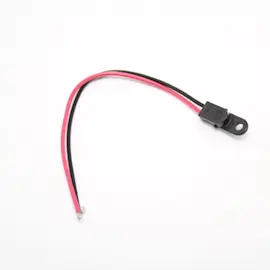
If you find damaged wiring or a loose connection while inspecting, use a proper repair method and replace any compromised components such as the harness 5303925136 if it matches what you see in your freezer.
For safe electrical testing during troubleshooting, follow our how to use a multimeter to test electrical parts video.
Last updated: February 2026
Why is my Kenmore upright freezer not freezing?
If your Kenmore upright freezer model 2539203282 is running but not freezing, the problem is usually poor airflow, dirty or blocked condenser area, a defrost system issue (heavy frost on the evaporator), or a sealed-system/compressor problem. Start with the quick checks below before replacing parts.
Quick checks we recommend first
- Confirm the temperature control is set colder and the door is sealing fully.
- Make sure the freezer is not overpacked; air must circulate around shelves and the air duct.
- Check for heavy frost on the back interior panel (a strong sign of a defrost failure).
- Clean dust from the condenser area and verify the unit has a few inches of clearance for ventilation.
- Listen for the evaporator fan inside the freezer; no fan airflow often means a fan or control issue.
- If the compressor runs constantly and it still will not freeze, suspect a sealed-system issue.
What the symptoms usually mean
| What you notice | Most likely cause | What to do next |
|---|---|---|
| Freezer runs, weak cooling, little airflow | Airflow blockage or fan problem | Clear vents, reduce load, check fan operation |
| Thick frost on back wall | Defrost system failure | Defrost fully, then troubleshoot heater/thermostat/control |
| Warm cabinet, compressor silent | Power/control/start issue | Check outlet, cord, controls; test electrical components |
| Compressor runs, still warm | Sealed-system or compressor issue | Professional sealed-system diagnosis recommended |
Parts that can be involved (when diagnosis points there)
These parts are not the cause in every case, but they are commonly involved in “not freezing” complaints:
- Freezer condenser coil 5300123788 (restricted heat rejection can reduce cooling)
- Air duct 5303212700 (cracks or misrouting can disrupt airflow)
- Harness 5303925136 (damaged wiring can stop fans or defrost components)
Why it matters
A freezer that is not freezing is often a simple airflow or frost issue at first. If it is left running warm, the compressor can run longer than normal, food safety is impacted, and the repair can become more involved.
Last updated: February 2026
Why is my upright freezer leaking water from the bottom?
Water leaking from the bottom of your Kenmore 2539203282 upright freezer almost always comes from a defrost drain that is clogged with ice or debris, causing meltwater to overflow and run down to the base. A cracked or mispositioned drain pan and warm, humid air leaking past the door gasket can also create puddles.
Quick checks we recommend first
- Unplug the freezer before working near wiring or the evaporator area.
- Look for a sheet of ice on the freezer floor; that points to a frozen drain.
- Check the drain pan underneath for cracks, warping, or being out of place.
- Inspect the door gasket for gaps, tears, or areas that do not seal.
- Confirm the freezer is level (slightly tilted back is typical so the door closes firmly).
Clear a clogged or frozen defrost drain
- Remove food and bins near the bottom so you can access the drain trough area.
- Melt visible ice with warm (not boiling) water; a turkey baster works well.
- Flush the drain with warm water until it flows freely to the drain pan.
- If the drain refreezes quickly, reduce door-open time and check gasket sealing.
Parts that can be involved
If you find damaged wiring to the defrost system or sensors while inspecting, the freezer may not be completing defrost properly.
| What you see | Most likely cause | What to do |
|---|---|---|
| Ice slab on bottom interior | Frozen/clogged defrost drain | Thaw and flush drain, clear debris |
| Water only under unit | Drain pan cracked/overflowing | Re-seat pan, replace if damaged |
| Beads of water around door | Door gasket leak, high humidity | Clean gasket, improve seal, limit openings |
| Repeated refreezing after clearing | Defrost issue or airflow restriction | Check for heavy frost, inspect wiring/defrost components |
Why it matters
When defrost water cannot reach the drain pan, it finds the lowest path and can refreeze into thicker ice, reduce airflow, and make the freezer run longer. Fixing the drain and sealing issues prevents recurring leaks and temperature swings.
Last updated: February 2026