Installation guide
 Error Codes





What is the standard size side-by-side fridge?
Most standard side-by-side refrigerators measure about 33 to 36 inches wide, 67 to 70 inches tall, and 29 to 35 inches deep (not counting extra clearance for doors and airflow). For your KitchenAid KSSC48FKS01 built-in refrigerator, the exact cutout and clearance requirements are listed in the installation guide.
These are the most common “standard” exterior dimensions you will see across brands (including KitchenAid, Whirlpool, and Kenmore style designs):
- Width: 30 to 36 inches (most common: 33 or 36)
- Height: 67 to 70 inches (some are taller)
- Depth: 29 to 35 inches (counter-depth models are usually shallower)
- Door swing clearance: often needs extra space beyond cabinet depth
- Ventilation clearance: varies by design (especially for built-in units)
Built-in side-by-side models like the KitchenAid KSSC48FKS01 often follow different rules than freestanding refrigerators because they must fit a cabinet cutout and maintain airflow.
| Type | What “standard size” usually means | What to measure first |
|---|---|---|
| Freestanding side-by-side | Overall width, height, depth | Doorway and kitchen depth |
| Built-in side-by-side | Cutout width/height, top and rear ventilation | Cabinet opening and clearance specs |
Use these steps before ordering a replacement refrigerator or planning cabinetry:
- Measure cabinet opening width at the top, middle, and bottom
- Measure height from floor to the lowest overhead cabinet/soffit
- Measure depth to the front edge of counters, then add door/handle clearance
- Confirm hinge-side clearance so doors open fully and bins can slide out
- Check for airflow space required at the top, back, or toe-kick (built-ins)
A refrigerator that is “standard size” can still fail to fit if door swing, handles, or ventilation clearances are ignored. Built-in models are especially sensitive to cutout dimensions, which is why we recommend using the model-specific specs in the installation guide.
Last updated: February 2026
Do side-by-side refrigerators have a freezer?
Yes. A side-by-side refrigerator like the KitchenAid KSSC48FKS01 has two full-height vertical compartments: one is the fresh-food (refrigerator) section and the other is the freezer section.
In most side-by-side designs:
- The freezer is on the left and the refrigerator is on the right (common, but not universal).
- Both compartments run from top to bottom, so you get easy access to frozen and fresh items without bending as much.
- Many models include in-door ice and water features, which rely on a water filter and ice maker components.
| Refrigerator style | Where the freezer is | Best for | Tradeoffs |
|---|---|---|---|
| Side-by-side | Full-height compartment on one side | Narrow door swing, frequent freezer access | Narrower shelves for wide platters |
| French door | Bottom drawer | Wide fresh-food shelves | Freezer items can be harder to see |
| Top freezer | Top compartment | Simple storage, value | Less convenient fresh-food access |
Knowing that one side is a dedicated freezer helps when you are troubleshooting temperature issues, airflow problems, or ice maker performance. For example, weak cooling on the freezer side can affect ice production and overall refrigerator temperatures.
If you are diagnosing ice or water issues on a side-by-side, these model-compatible parts are often involved:
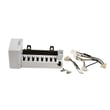
- Ice maker assembly - refrigerator ice maker by whirlpool 4317943 (ice production problems)
- Whirlpool everydrop 5 refrigerator water filter EDR5RXD1 (slow water flow, bad taste/odor)
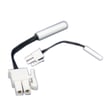
- Refrigerator thermistor WP2188820 (temperature sensing and control)
For model-specific compartment and feature details, use the installation guide.
Last updated: February 2026
Is a side-by-side or bottom freezer better?
For most households, a bottom-freezer refrigerator is better for everyday convenience because fresh food sits at eye level and you bend less. A side-by-side like KitchenAid model KSSC48FKS01 is better when you want a narrower door swing and easy access to frozen items at mid-height.
| Feature | Side-by-side (like KSSC48FKS01) | Bottom freezer |
|---|---|---|
| Fresh-food access | Good, but shelves are narrower | Best, most-used items are easiest to reach |
| Freezer access | Easy, items are mid-height | More bending for freezer drawers |
| Door swing clearance | Usually better in tight kitchens | Often needs more clearance |
| Storage shape | Tall, narrow compartments | Wide shelves, better for platters |
| Ice and water in door | Common | Common on many models |
- Narrower doors for a tight aisle or island
- Frozen foods at a comfortable height (less bending)
- More vertical freezer organization (bins and shelves)
- Built-in look and consistent access across both compartments
- Fresh-food items (produce, drinks, leftovers) at eye level
- Wider refrigerator shelves for trays and large containers
- Easier organization of refrigerated foods you use most
The “better” layout is the one that fits your kitchen clearance and how you cook. Side-by-side designs trade wide shelf space for easier freezer access and tighter door swing, while bottom freezers prioritize fresh-food ergonomics.
- Set stable temperatures and avoid overpacking air vents
- Keep door seals clean so cold air does not leak
- Replace the water filter on schedule if your unit has a dispenser (see how to replace the water filter in a KitchenAid refrigerator)
For built-in installation and clearance guidance specific to KSSC48FKS01, follow the installation guide.
Last updated: February 2026