 Installation guide
 Owner’s manual



What does PF mean on a Frigidaire?
On Frigidaire appliances, PF means power failure. If your Frigidaire FDB510LCB0 dishwasher shows PF (or you suspect a power interruption), restore power and then clear the alert by following the reset steps in the FDB510LCB0 owner's manual.
- Confirm the dishwasher has steady power (breaker on, outlet powered, no loose plug).
- If the control is unresponsive, turn the breaker off for 1 minute, then turn it back on.
- Start a short cycle and listen for the normal sequence: drain, fill, then wash.
- If the dishwasher won’t start after power is restored, check the door is fully latched.
- If PF returns repeatedly, focus on the home power supply (intermittent outlet, tripping breaker).
A power interruption can stop the cycle mid-wash and leave water in the tub. It can also prevent the timer/control from advancing normally until the dishwasher restarts cleanly.
| What you notice | Most likely cause | What to check next |
|---|---|---|
| PF after a storm or outage | Brief power loss | Reset power, restart cycle |
| PF happens randomly | Intermittent power | Outlet, cord, breaker, wiring |
| Has power but won’t run | Door not latched or control issue | Latch engagement, reset breaker |
If power is on but the dishwasher still won’t begin a cycle, use our dishwasher wont start video to narrow down common causes such as door latch problems, control/timer issues, or power supply faults.
Last updated: January 2026
How to get a Frigidaire dishwasher out of lock mode?
On the Frigidaire FDB510LCB0 dishwasher, you can turn off Control Lock by pressing and holding the Heated Dry button for about 3 seconds until the lock indicator light turns off (you may hear a beep). This restores normal keypad operation.
- Press Heated Dry.
- Keep holding it for about 3 seconds.
- Watch for the lock light to go out.
- Try pressing Start or selecting a cycle to confirm the controls respond.
- If it re-locks, repeat the same hold-to-toggle step.
Sometimes the dishwasher is not in Control Lock, but it still will not start because the door is not fully latched or the cycle is not set correctly.
- Close the door firmly until it latches.
- Turn the cycle dial clockwise to a wash cycle.
- Run the hot water at the nearest faucet until it is hot, then turn it off (helps fill temperature).
- Start the cycle by closing the door to latch.
For model-specific operating steps and cycle selection details, use the FDB510LCB0 owner’s manual.
| What you see | Most common cause | What to do next |
|---|---|---|
| Buttons do nothing, lock light on | Control Lock is on | Hold Heated Dry 3 seconds |
| Buttons work, but it will not run | Door not latched | Check latch alignment and close firmly |
| It starts then stops quickly | Fill or drain issue | Check water supply and drain path |
If the door will not latch consistently, inspect the latch area for damage or misalignment. The dishwasher door latch assembly 5304442175 is the model-matched latch component commonly involved.
Control Lock prevents accidental cycle changes, but when it is on, the dishwasher can look “dead” even though it has power. Unlocking restores normal control operation and helps you avoid unnecessary part replacement.
Last updated: January 2026
How to get a Frigidaire dishwasher to drain?
To get a Frigidaire FDB510LCB0 dishwasher to drain, first make sure the cycle has advanced past any pause and that the drain hose is routed correctly with no kinks. Then clear the glass trap/filter area so water can pump out normally; see the FDB510LCB0 owner's manual.
- Let the cycle finish; many cycles start with a brief pre-drain and drain again later.
- Cancel or reset the cycle (if your model has that function) and listen for the drain pump.
- Check the sink/disposer connection for a clog; the dishwasher cannot drain into a blocked drain.
- Inspect the drain hose for kinks, crushing, or a low spot that traps water.
- If connected to a sink drain, make sure the drain connection enters above the sink trap.
- If your local setup uses an air gap, check it for blockage.
The installation method matters because a low or incorrectly routed hose can cause slow draining or backflow.
| Connection type | Key requirement | Common symptom if wrong |
|---|---|---|
| Sink drain (tailpiece) | Drain entry above the trap | Water backs up into tub |
| Air gap (if used) | Hose routed to air gap inlet, then to drain | Slow drain, overflow at air gap |
| Garbage disposer | Proper disposer inlet connection | No drain or gurgling |
If the hose is damaged or collapsing internally, replacing it is often the most reliable fix; use the exact drain hose for this model, the hose 807117001.
This dishwasher is designed to pump water through the filter area and spray arms, sending soil particles down the drain as water is pumped out and replaced.
- Remove standing water (cup or wet vac) so you can see the bottom.
- Clean the glass trap/filter area thoroughly.
- Check for labels, broken glass, food, or debris near the sump that can block flow.
- Reinstall parts fully seated so the pump can move water efficiently.
A dishwasher that cannot drain usually leaves dirty water in the tub, can redeposit soil on dishes, and can prevent the next fill and wash action from working correctly.
Last updated: January 2026
What is the most common problem with Frigidaire dishwashers?
For the Frigidaire FDB510LCB0 dishwasher, the most common problems we see are drainage issues (water left in the bottom) and start failures caused by the door not fully latching. Both are often tied to simple causes like a kinked drain hose, a disposer knockout plug, or a misaligned latch.
- Won’t drain: confirm the cycle is complete (not paused) and check for a kinked drain hose.
- Connected to a disposer: make sure the disposer is empty and the knockout plug inside the disposer inlet was removed.
- Won’t start: make sure the door is closed and latched.
- Won’t fill: confirm the water supply is on and the inlet hose is not kinked.
- Poor cleaning: verify water temperature is at least 120°F and that dishes are not blocking spray arm rotation.
| Symptom | Most likely cause | What to do next |
|---|---|---|
| Water left in tub | Kinked/clogged drain path | Inspect routing; check disposer knockout plug |
| Dishwasher won’t run | Door not latched | Check latch alignment; inspect strike and latch |
| Not filling | Water supply off or inlet restriction | Verify shutoff valve; check inlet hose for kinks |
| Not cleaning well | Low temp/pressure or loading issue | Use hotter water; reload to clear spray arms |
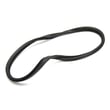
If you find a leak at the bottom of the door or the door isn’t sealing consistently, the lower door seal is a common wear item: gasket 809006501. If the dishwasher won’t drain and the hose is damaged or permanently kinked, replacement can help: hose 807117001.
Drain and latch problems can look like “the dishwasher is bad,” but they often come from installation details (hose routing, disposer connection) or normal wear (seals and latching surfaces). Fixing the root cause prevents repeat clogs, leaks, and no-start complaints.
For operating checks (cycle selection, latching) and troubleshooting tips, use the FDB510LCB0 owner's manual. For disposer hookup, leveling, and hose routing guidance, use the FDB510LCB0 installation guide.
Last updated: January 2026





