Installation guide
 Owner’s manual
 Error Codes


What size is a Kenmore Elite washer?
For Kenmore Elite washer model 11016962502, the installation guide shows a 39-inch minimum height reference for certain drain setups and includes closet-spacing diagrams; for exact cabinet width and depth, we use the model’s installation guide dimensions and spacing requirements when planning a laundry room fit.
What “size” usually means for a washer
When customers ask about washer size, it typically refers to one (or more) of these:
- Overall dimensions (width, height, depth)
- Capacity (cubic feet)
- Clearance needs (side, rear, and door/vent openings)
- Utility requirements (water pressure, electrical outlet location, drain height)
Key sizing details we can use for installation planning
Based on the 11016962502 installation requirements, we plan around these common fit constraints:
- Level floor with up to 1 inch maximum slope under the washer
- Recommended clearance: about 1 inch on all sides to help reduce noise transfer
- Laundry tub drain height: tub rim at least 39 inches above the floor (and not higher than 96 inches from the bottom of the washer)
- Water pressure: 5 to 100 psi (some dispenser configurations perform best at higher minimum pressure)
- Electrical: grounded outlet within about 4 ft of where the power cord attaches
Quick reference table (installation-related “size” checks)
| What you’re measuring | What to plan for | Where to confirm |
|---|---|---|
| Space around washer | About 1 inch clearance on sides | Installation guide |
| Floor slope | Up to 1 inch max under washer | Installation guide |
| Laundry tub drain height | 39 inches minimum tub rim height | Installation guide |
| Water pressure | 5 to 100 psi | Installation guide |
Why it matters
Washer “size” is not only about capacity; clearances, drain height, and floor support determine whether the washer fits safely and runs without excess vibration or noise. Using the installation guide prevents surprises when installing in a closet or recessed area.
Last updated: February 2026
How to do a hard reset on a Kenmore washer?
For Kenmore Elite washer model 11016962502, the most reliable “hard reset” is a power reset: unplug the washer (or switch off the breaker) for 1 minute, then restore power and restart the cycle. For control or cycle issues, use the stop and restart steps in the owner's manual.
Hard reset steps (power reset)
- Press the cycle control knob in to stop the washer.
- Unplug the washer (or turn off the breaker) for 60 seconds.
- Plug back in (or turn breaker on).
- Close the lid.
- Select a cycle and pull the cycle control knob out to start.
If the washer will not start after resetting
These checks fix the most common “no start” symptoms on this style of Kenmore top-load washer.
- Confirm the lid is fully closed; the washer will not run if it thinks the lid is open.
- Make sure the cycle control knob is pulled out (pushed in stops the washer).
- Verify both water faucets are on.
- Level the washer and tighten the leveling-foot locknuts to reduce vibration-related interruptions.
- If the washer stops when you open and close the lid, inspect the lid switch circuit; a failed switch is common.
Parts that commonly relate to “won’t run” or “stops mid-cycle”
| Symptom | What it often points to | Part on this model page |
|---|---|---|
| Won’t agitate or spin, motor runs | Drive connection issue | Washer motor coupling 285753A |
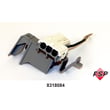
| Stops when lid is opened or won’t run with lid closed | Lid safety switch problem | Washer lid switch assembly WP8318084 |
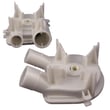
| Hums, won’t drain, or leaves water in tub | Drain pump issue or blockage | Washer drain pump WP3363394 |
Why it matters
Resetting clears a “stuck” timer position and restores normal start/stop behavior, but it will not fix a mechanical failure (like a worn motor coupling) or a safety input problem (like a bad lid switch). Using the correct stop and restart method also prevents unnecessary wear on the timer and drive system.
Last updated: February 2026
What does OE mean on my Kenmore Elite washer?
On a Kenmore Elite washer model 11016962502, OE means the washer is having a drain problem (the tub is not emptying fast enough). In most cases, the fix is clearing a clog in the drain path or replacing a failed drain component.
What to check first (fast, common fixes)
- Cancel the cycle and unplug the washer.
- Check the drain hose for kinks, crushing, or a hose shoved too far down the standpipe.
- Look for a clog at the standpipe or laundry sink where the washer drains.
- If the tub is full, bail out water before servicing to prevent spills.
- Inspect for small items (coins, socks) that can block the pump inlet.
Parts that commonly cause an OE drain error
If the drain path is clear but OE returns, these parts are the most common causes on top-load Kenmore 110-style washers:
- Washer drain pump WP3363394 (pump jammed, broken impeller, or internal blockage)
- Washer lid switch assembly WP8318084 (washer may not complete drain/spin if the lid switch is failing)
- Drain hose or tub-to-pump hose (clogged or collapsing)
Quick symptom-to-likely-cause guide
| What you notice | Most likely issue | What we do next |
|---|---|---|
| Humming but little or no draining | Pump jam or blockage | Check pump inlet; replace pump if damaged |
| Drains slowly, leaves water behind | Partial clog in hose/standpipe | Clear hose and standpipe; verify strong flow |
| Won’t spin out water after draining | Lid switch or drive issue | Test lid switch; check drive components |
Why it matters
When the washer cannot drain, it often stops before spin to prevent overflow and protect the drive system. Fixing the drain issue quickly helps prevent repeat shutdowns and reduces strain on the motor and coupling.
Where to find model-specific guidance
For safety steps, cycle behavior, and service access notes for your washer, follow the instructions in the 11016962502 owner's manual. For hose routing, standpipe height, and drain installation requirements, use the 11016962502 installation guide.
Last updated: February 2026
Is it worth repairing a Kenmore washing machine?
Yes, repairing a Kenmore Elite washer like model 11016962502 is usually worth it when the problem is a common wear item (drain, spin, lid sensing, agitation) and the cabinet and tub are in good shape. Many fixes are straightforward and restore reliable washing for years; see the 11016962502 owner's manual for operating and care guidance.
When repair is the better choice
We typically recommend repair when the washer still fills, agitates, and drains but has one clear symptom you can trace to a serviceable part.
- The washer will not drain or leaves water behind (often a pump or blockage)
- The washer will not spin or stops mid-cycle (often a lid switch or drive issue)
- Agitation is weak or the agitator “slips” (often agitator dogs)
- The washer is noisy or shakes more than normal (often suspension components)
- The timer or cycle selection is inconsistent (control component wear)
Quick cost-to-benefit checklist
Use this simple comparison to decide whether to repair now or plan a replacement.
| What you see | What it usually points to | Typical repair direction |
|---|---|---|
| Won’t drain | Drain pump or obstruction | Repair first |
| Won’t spin with lid closed | Lid switch circuit | Repair first |
| Agitator not grabbing clothes | Agitator dogs/agitator wear | Repair first |
| Severe leak from tub area | Tub gasket/tub components | Evaluate overall condition |
| Multiple major symptoms at once | Several worn drive components | Compare total parts cost |
Parts that commonly make a repair worthwhile
These are frequent, high-impact fixes for top-load Kenmore washers like the 11016962502.
- Washer drain pump WP3363394 (no drain, slow drain)
- Washer lid switch assembly WP8318084 (won’t spin, won’t advance)
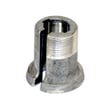
- Agitator dog 80040 (agitator slips, poor turnover)
- Washer motor coupling 285753A (no agitation and no spin on many direct-drive designs)
Why it matters
Repairing the right component restores proper water removal, spin speed, and load movement, which helps prevent overload strain and fabric damage. Our manual guidance also emphasizes balanced loads and avoiding overfilling so items can move freely during washing.
Last updated: February 2026
How to force a Kenmore Elite washer to drain?
To force-drain a Kenmore Elite washer model 11016962502, we first stop the cycle, unplug the washer, then lower the drain path so water can flow out through the drain hose. Most “won’t drain” problems come from a kinked hose, a clogged pump, or a blocked standpipe.
Fast, safe way to drain it now
- Unplug the washer (or turn off the breaker) before handling water or hoses.
- Turn off both water faucets to prevent accidental filling.
- Pull the washer forward enough to reach the drain hose.
- Lower the drain hose into a shallow pan or floor drain; keep the hose end below tub water level so it siphons.
- Straighten kinks and make sure the hose is not pinched behind the cabinet.
- If water will not flow, the drain pump or hose is likely blocked; see the checks below.
Drain hose setup checks (common cause)
Your installation instructions call out two key points: keep the hooked end of the drain hose (do not straighten it) and avoid forcing excess hose down into the standpipe; the hose should be secure but loose enough to leave an air gap to prevent backflow. Use the installation guide for the correct standpipe or laundry tub setup.
Quick checklist
- Hooked end is in the standpipe or tub and not taped airtight
- Hose is not shoved too far into the standpipe
- Hose is routed with no sharp bends
- Standpipe is not clogged (water should drain freely when you pour a bucket in)
If it still won’t drain: likely parts to inspect
These are the most common drain-related culprits for this model:
| Symptom | Most likely cause | What to check next |
|---|---|---|
| Hums but no drain | Pump jammed | Inspect/replace washer drain pump WP3363394 |
| Drains only sometimes | Hose kink or partial clog | Reroute hose; clear standpipe |
| Won’t spin and won’t drain | Lid switch issue | Test/replace washer lid switch assembly WP8318084 |
Why it matters
Forcing a drain gets water out quickly, but fixing the root cause prevents repeat flooding, slow drains, and spin failures. A correct drain hose air gap also helps stop dirty water from siphoning back into the tub.
Last updated: February 2026