Error Codes





Are all washers and dryers 27 inches wide?
No. Many full-size washers and dryers are built around a 27-inch-wide footprint, but widths vary by style and capacity. For your Maytag MED7230HC3 electric dryer, plan for a typical full-size width range and measure your exact space (including clearance for the door swing and venting).
- Compact laundry: often about 24 inches wide
- Most full-size units: commonly about 27 inches wide
- Oversize or specialty models: can be closer to 29 to 30 inches wide
- Stacked laundry centers: width varies; many follow compact or full-size footprints
- Pedestals and trim kits: can change the overall installed footprint
Measure the space and the path to the laundry area, not just the appliance body.
- Width of the opening (wall-to-wall)
- Height under shelves or cabinets
- Depth to the back wall, including the vent elbow and power cord
- Door clearance (dryer door swing and room to load/unload)
- Side and rear clearance for airflow and vibration control
| Laundry type | Common width | Best for |
|---|---|---|
| Compact washer/dryer | ~24 in. | Tight closets, apartments |
| Full-size washer/dryer | ~27 in. | Most standard laundry rooms |
| Larger-capacity models | ~29 to 30 in. | More capacity, more space needed |
A 1 to 3 inch difference can prevent proper venting, pinch the power cord, or block the door from opening fully. Measuring also helps you avoid installation issues that can lead to longer dry times and extra wear on parts like the dryer blower wheel WP697772.
If you are repairing fit-related issues (noise, vibration, long dry times), you can order replacement parts for Maytag MED7230HC3 from the parts list for this model, or search by model number on Sears PartsDirect.
Last updated: February 2026
How do I know if my Maytag dryer thermal fuse is bad?
On your Maytag MED7230HC3 electric dryer, a bad (blown) thermal fuse most often shows up as a dryer that will not start, or a dryer that runs but will not heat. The sure way to confirm is a continuity test with a multimeter after unplugging the dryer.
- Dryer will not start (no motor run)
- Dryer tumbles but produces no heat
- Heat cuts out mid-cycle and does not return
- You find heavy lint buildup or a crushed/kinked vent behind the dryer
- The fuse blows again soon after replacement (overheating problem is still present)
- Unplug the dryer (or switch off the breaker) before opening any panels.
- Access the fuse location (commonly on the blower housing or exhaust duct area on many Maytag-style dryers).
- Pull the wire connectors off the fuse terminals (grab the connector, not the wire).
- Set your meter to continuity or the lowest ohms setting.
- Test across the fuse terminals.
| Meter result | What it indicates | What to do next |
|---|---|---|
| Continuity (near 0 ohms or beep) | Fuse is likely good | Check airflow, heater circuit, and thermostats |
| No continuity (open circuit) | Fuse is blown | Replace the fuse and fix the overheating cause |
For electrical testing basics, we recommend how to use a multimeter to test electrical parts video.
A thermal fuse usually blows because the dryer overheated. Before running the dryer with a new fuse, we focus on airflow.
- Clean the lint screen and the lint screen housing
- Inspect and clean the entire vent run to the outside
- Replace crushed foil or kinked venting with rigid or semi-rigid metal duct
- Confirm the outside vent hood opens freely
- Check for a weak blower wheel or restricted internal ducting
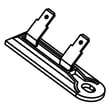
If you suspect the fuse itself is the issue, the MED7230HC3 parts list on this page includes a thermal fuse W10909685.
A blown thermal fuse is a safety cutoff. Replacing it without correcting restricted venting or a heating problem can lead to repeat failures, longer dry times, and overheating.
To order the correct replacement parts by model number, use the parts list for MED7230HC3 or search by model on Sears PartsDirect.
Last updated: February 2026
What is the life expectancy of a Maytag dryer?
Most Maytag residential electric dryers, including model MED7230HC3, typically last 10 to 15 years with normal household use and basic maintenance. Keeping airflow strong and fixing wear items early helps you reach the longer end of that range.
A dryer’s life is mostly determined by heat stress, airflow restriction, and drum-drive wear.
- Vent and lint buildup (restricted airflow overheats components)
- Load size and cycle choices (heavy loads and high heat increase wear)
- Installation quality (long or crushed venting shortens life)
- Routine cleaning (lint screen, blower housing, vent duct)
- Replacing wear parts before they damage other components
If your MED7230HC3 starts squealing, thumping, or taking longer to dry, these parts are common fixes that often restore normal operation:
- Dryer drum support roller WPW10314173
- Dryer idler pulley W10837240
- Dryer blower wheel WP697772
- Thermal fuse W10909685
- Dryer thermistor WP8577274
- Clean the lint screen every load.
- Check airflow at the outside vent; it should be strong and steady.
- Clean the vent duct periodically (more often with pets or heavy use).
- Stop using the dryer if you smell burning or notice overheating; inspect the venting and safety thermostats.
| Symptom | Most common cause | What to check first |
|---|---|---|
| Long dry times | Restricted airflow | Lint screen, vent duct, blower wheel |
| Squealing | Worn idler or rollers | Idler pulley, drum support rollers |
| No heat | Heat circuit issue | Thermal fuse, heater, thermostats |
A dryer that runs hot or struggles to move air can burn through heaters, fuses, and thermostats faster. Good airflow protects key components like the heating element and control system, and it also reduces cycle times and energy use.
To order replacement parts for your Maytag MED7230HC3, use the parts list for this model or search by model number on Sears PartsDirect.
Last updated: February 2026
How do I know if my heating element is bad in my Maytag dryer?
If your Maytag MED7230HC3 dryer tumbles but produces no heat or weak heat, the heating element is a top suspect. The sure check is a multimeter test: a failed element reads open (no continuity) or shows a short to the metal heater housing.
- Dryer runs and tumbles but clothes stay cold or damp
- Dry times suddenly get much longer
- Heat is inconsistent (warm at first, then cool)
- Burning smell or scorching on items
- Visible break in the coil (sometimes)
- Confirm 240V power: A tripped breaker can leave the dryer running on 120V but not heating.
- Check airflow: Clean the lint screen and make sure the vent duct is not crushed or clogged.
- Try Timed Dry: Sensor cycles can end early if airflow is poor.
Unplug the dryer and shut off the breaker.
- Set a multimeter to ohms/continuity
- Test across the heater terminals; no continuity means the element is bad
- Test from a heater terminal to the metal heater housing; any continuity indicates a short to ground
Use this for the testing basics: how to use a multimeter to test electrical parts video
| Part | What it does | Typical symptom |
|---|---|---|
| Element, heater 5400w WP3387747 | Creates heat | No heat, open circuit, or short to ground |
| Thermal fuse W10909685 | Safety cutoff | Dryer runs but won’t heat (or won’t run on some designs) |
| Dryer high-limit thermostat WP8557403 | Limits overheating | Overheats or heat cycles erratically |
If airflow is restricted, the dryer can overheat and repeatedly blow a fuse or damage the heater. Fixing venting helps protect the heating circuit.
To order parts for MED7230HC3, use the parts list for this dryer, or search by model on Sears PartsDirect.
Last updated: February 2026