 Installation guide
 Owner’s manual
 Error Codes


What are the disadvantages of a bottom freezer?
A bottom-freezer refrigerator like the Electrolux EW23BC71IS0 keeps fresh food at eye level, but it can be less convenient if you use frozen foods often. The biggest drawbacks are bending to reach freezer items, heavier pull-out drawers, and typically higher purchase and repair costs than simpler top-freezer designs.
Common disadvantages (what you’ll notice day to day)
- More bending for frozen food: you access the freezer from a lower drawer.
- Heavier, fuller drawers: a loaded freezer drawer can feel bulky and harder to slide.
- Organization can be tricky: stacked items in a deep drawer are easier to lose track of.
- More parts to wear: drawer slides, door gaskets, hinges, and baskets see more stress.
- Often higher cost: bottom-freezer and French-door designs usually cost more than basic top-freezer models.
Parts that commonly get stressed (and what to check)
If doors or drawers feel harder to close, or you see frost buildup, these areas are worth inspecting:
- Door sealing surfaces and gaskets for gaps, tears, or warping
- Drawer alignment and smooth travel (binding can cause poor sealing)
- Hinge tightness and door leveling
- Frost patterns that suggest the door is not sealing consistently
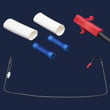
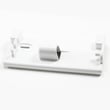
Helpful model-matched parts examples include the refrigerator freezer gasket 5304537408 and the refrigerator hinge 241779401.
Quick comparison: bottom freezer vs top freezer
| Feature | Bottom freezer | Top freezer |
|---|---|---|
| Fresh food access | Easier (eye level) | Requires more bending |
| Freezer access | More bending | Easier access |
| Drawer weight | Heavier pull-out drawer | Lighter swing door |
| Typical complexity | Higher | Lower |
Why it matters
A bottom freezer design is great when you use the refrigerator section most, but frequent freezer use can mean more bending and more wear on sealing and alignment parts. Keeping doors aligned and seals tight helps prevent frost, temperature swings, and higher energy use.
For model-specific care, loading tips, and temperature guidance, use the EW23BC71IS0 owner's manual.
Last updated: February 2026
What are the most common issues with EW23BC71IS0?
The most common issues we see with the Electrolux EW23BC71IS0 bottom-mount refrigerator involve cooling performance, ice and water dispensing, door sealing, and frost buildup. Many of these problems trace back to airflow, defrost heating, sensors, or worn gaskets; the owner's manual helps confirm normal operation and settings.
Common symptoms and what they usually point to
- Warm refrigerator or freezer: restricted airflow, evaporator fan issue, dirty condenser area, or a control/sensor problem.
- Frost buildup on the back wall or freezer: defrost system trouble (heater, defrost circuit) or a door not sealing.
- Ice maker not making ice or dispensing issues: water supply restriction, valve/solenoid issue, or ice path blockage.
- Water leaking or puddles: clogged/iced drain tube, door left ajar, or defrost drain problems.
- Bad odors: old food spills, airflow issues, or an overdue air filter change.
Parts that commonly relate to these issues (for this model)
If troubleshooting points to a failed component, these model-matched parts are commonly involved:
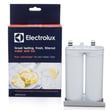
- Air filter EAFCBF for odor and airflow freshness issues
- Refrigerator gasket 241778315 for warm temps, moisture, and condensation from air leaks
- Refrigerator freezer gasket 5304537408 for freezer frost and temperature swings
- Refrigerator fan assembly 241825704 for weak cooling from poor evaporator airflow
- Refrigerator defrost heater 241962501 for frost buildup tied to defrost failure
Quick checks we recommend before replacing parts
- Verify temperature settings and allow 24 hours after changes for stabilization.
- Make sure vents inside the refrigerator and freezer are not blocked by food packages.
- Check door alignment and do the paper test: resistance should be firm all around the gasket.
- Inspect for heavy frost behind the freezer rear panel (a strong defrost clue).
- If you have a dispenser, confirm household water supply is fully open and the line is not kinked.
Symptom-to-likely-cause guide
| Symptom | Most common cause | Often-related part |
|---|---|---|
| Warm temps, compressor runs a lot | Airflow problem | Refrigerator fan assembly |
| Frost blanket in freezer | Defrost failure or air leak | Refrigerator defrost heater, freezer gasket |
| Condensation around doors | Door seal leak | Refrigerator gasket |
| Odors linger | Filter overdue, spills | Air filter |
Why it matters
Catching airflow, gasket, and defrost problems early prevents food spoilage, reduces energy use, and helps avoid secondary damage like ice buildup around the evaporator.
Last updated: March 2026
What is the thing at the bottom of the fridge called?
On the Electrolux EW23BC71IS0 bottom-mount refrigerator, the “thing at the bottom” is most often the toe grille (the front kick plate) or the compressor area behind it. The toe grille snaps on and off for access during leveling and service (see the owner's manual).
Common names for the bottom area
Depending on what you are pointing to, you may be describing one of these:
- Toe grille (kick plate): the removable grille at the very bottom front
- Machine compartment: the space behind the toe grille where cooling components sit
- Compressor: the sealed pump that circulates refrigerant (usually low and toward the back)
- Condenser fan area: where air is moved across the condenser to remove heat
- Anti-tip leg and front rollers: leveling and stability hardware near the bottom front
How to tell which part you mean (quick check)
Use this simple guide:
| What you see/feel | Most likely name | What it does |
|---|---|---|
| A slotted panel across the bottom front | Toe grille | Covers and protects the lower compartment; provides airflow access |
| Warm air blowing near the bottom | Machine compartment | Normal heat rejection from the cooling system |
| A black “tank” shape at the back bottom | Compressor | Drives the refrigeration cycle |
| A removable bottom drawer (freezer) | Freezer drawer | Frozen food storage, slides on rails |
Why it matters
Knowing the correct name helps you find the right instructions and parts. For example, removing the toe grille is a common first step for leveling the refrigerator and accessing lower components.
Parts that relate to the bottom area
If the bottom area is damaged or you are missing a piece, these model-matched parts are commonly involved:
- Refrigerator toe grille 241930301 (the actual bottom front grille)
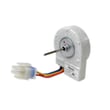
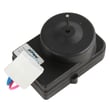
- Motor 297279500 (condenser fan motor, located in the lower cooling area)
Last updated: February 2026





