Installation guide
 Owner’s manual
 Error Codes



Are bottom mount fridges better?
Bottom-mount refrigerators like Kenmore model 25370343412 are better for many kitchens because the fresh-food section sits at eye and waist level, so you reach milk, produce, and leftovers more easily while the freezer stays in a lower pull-out drawer.
Why many people prefer bottom-mount designs
A bottom-mount layout is built around how most households use a refrigerator day to day.
- Fresh-food items are easier to see and grab without bending
- Wide shelves and crisper drawers make meal prep and produce storage convenient
- Freezer baskets keep frozen foods organized in pull-out drawers
- Doors are designed to self-close from a small opening (helpful for temperature control)
- Works well when the refrigerator is positioned near a counter for unloading groceries
When a bottom-mount is not the best choice
Bottom-mount is not automatically “better” for every home. These are the most common tradeoffs.
| If you want... | Bottom-mount is usually | Consider another style if... |
|---|---|---|
| Easy access to fresh food | Better | You rarely use the refrigerator section |
| Easy access to frozen food | OK | You use the freezer constantly and want it at chest height |
| Strong organization | Better | You prefer one large open freezer space |
| Simple door clearance | Depends | Your fridge sits tight to a wall on the hinge side |
Setup details that affect real-world satisfaction
Even the best configuration feels “worse” if it is installed poorly. For Kenmore 25370343412, we recommend following the spacing and leveling guidance in the 25370343412 owner’s manual and the safety and door-handling steps in the 25370343412 installation guide.
- Allow airflow clearance (sides/top and back) for proper cooling
- Keep the toe grille unblocked for ventilation
- Install on a level, solid floor to help doors and drawers align
- Avoid placing the refrigerator where temperatures drop below 55°F or rise above 110°F
- Leave extra room if the hinge side is against a wall so doors can open wider
Why it matters
Choosing the right refrigerator configuration reduces daily bending and improves food visibility, which helps prevent temperature swings, forgotten items, and wasted groceries.
Last updated: February 2026
Do they make a 34 in refrigerator?
Yes. Many brands make 34-inch wide refrigerators, and they are a common “in-between” size when a 33-inch unit is too small and a 36-inch unit will not fit. For your Kenmore model 25370343412, we recommend confirming your exact opening width and required clearances before choosing any 34-inch replacement.
How to measure your space (so a 34-inch model actually fits)
Measure the cabinet opening and the path into the kitchen before you shop.
- Measure the opening width at the front and back (cabinets can be out of square)
- Measure height to the lowest cabinet or trim point
- Measure depth to the front edge of counters (decide standard-depth vs counter-depth)
- Check door swing space and handle clearance
- Confirm you have room for airflow clearances and the toe grille area
For typical installation guidance and clearances, use the 25370343412 installation guide.
Typical clearance needs (what to plan for)
Your refrigerator needs breathing room for proper air circulation and easier installation. Many bottom-mount designs use clearances similar to these:
| Area | Typical minimum clearance |
|---|---|
| Sides and top | 3/8 inch |
| Back | 1 inch |
| Hinge side near a wall | Often needs extra for door swing |
Why it matters
A “34-inch refrigerator” rarely measures exactly 34 inches overall once you include doors, hinges, and handles. Planning for clearance helps prevent warm temperatures, noisy operation, and doors that cannot open fully.
If your new refrigerator has ice and water
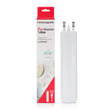
If you choose a 34-inch model with an ice maker or water dispenser, plan for a nearby water supply and a shutoff valve. On your current Kenmore 25370343412, common water-system maintenance includes replacing the Kenmore refrigerator water filter 9999 on schedule.
Last updated: February 2026
What is the bottom part of a refrigerator called?
On Kenmore refrigerator model 25370343412, the bottom front section is commonly called the toe grille (also known as the kick plate). The major sealed-system component often located in the lower rear area is the compressor, which helps circulate refrigerant to keep the refrigerator cold.
Common “bottom parts” and what they do
When someone says “the bottom part,” they usually mean one of these areas:
- Toe grille (kick plate): Vent and access panel at the lower front; it helps airflow and can provide service access.
- Compressor compartment: Lower rear area where the compressor and related components sit.
- Bottom freezer drawer area: The lower cabinet section that holds the freezer drawer on bottom-mount designs.
- Drain pan area: Typically near the bottom; collects defrost water so it can evaporate.
Quick identification guide
Use this to match what you are looking at:
| What you see | Most common name | Where it is | Why it matters |
|---|---|---|---|
| Slotted vented panel | Toe grille (kick plate) | Lower front | Blocking it reduces airflow and can hurt cooling |
| Black “tank” with lines | Compressor | Lower back | Key cooling component; overheating can cause warm temps |
| Drawer and rails | Freezer drawer assembly | Bottom front | Misalignment can cause sealing and frost issues |
Why it matters
Airflow at the bottom of the refrigerator is part of normal cooling operation. For this model, we recommend keeping the lower front vent area clear because restricted airflow can lead to poor temperature control and longer run times.
Helpful references for this model
- For location diagrams, clearances, and airflow guidance, use the 25370343412 owner's manual.
- For installation notes (including keeping the lower front area unblocked), use the 25370343412 installation guide.
Last updated: February 2026
How to tell if a Kenmore refrigerator compressor is bad?
A bad compressor on Kenmore model 25370343412 usually shows up as poor cooling with the unit running almost constantly, unusual buzzing or clicking, and a compressor shell that gets very hot. Before replacing the compressor, we confirm airflow, condenser cleanliness, and control settings in the 25370343412 owner's manual.
Quick signs the compressor is failing
- Refrigerator and freezer temperatures keep rising even though the unit runs a lot
- Loud humming, buzzing, repeated clicking, or hard-start sounds from the rear bottom area
- Compressor is extremely hot to the touch (use caution)
- Breaker trips or the refrigerator repeatedly loses power when the compressor tries to start
- Frost pattern and airflow look abnormal (warm fresh food section, weak airflow)
Rule out common look-alikes first (fast checks)
- Verify temperatures: set fresh food near 37°F and freezer near 0°F.
- Check airflow: do not block vents; make sure the toe grille area has good airflow.
- Clean the condenser area: dust buildup can mimic compressor problems.
- Listen for the evaporator fan: if airflow is weak, a fan issue can cause warm temps.
- If you have an ice maker or dispenser: confirm the refrigerator is not overloaded with warm items and doors are sealing.
Why it matters
A compressor replacement is one of the highest-cost refrigerator repairs. Confirming basics first prevents replacing major sealed-system parts when the real issue is airflow, a fan, or a control problem.
What the symptoms usually point to
| Symptom | Most likely cause | What we check next |
|---|---|---|
| Runs constantly, still warm | Sealed system or compressor issue | Condenser cleanliness, airflow, frost pattern |
| Repeated clicking, won’t start | Start device, compressor, or control | Power supply, start components, board output |
| Freezer cold, fridge warm | Airflow/defrost issue | Evaporator fan, damper, defrost system |
| Breaker trips on start | Compressor locked or electrical fault | Wiring, compressor windings, start circuit |
When to involve a technician
If the compressor will not start, trips the breaker, or you suspect a sealed-system issue, we recommend a qualified service technician. Sealed-system work requires specialized tools and refrigerant handling.
Last updated: February 2026
What are the most common problems with Kenmore refrigerators?
The most common issues we see on Kenmore refrigerators like model 25370343412 are cooling problems, ice maker and water dispenser failures, leaks, unusual noises, and frost buildup. Many of these trace back to airflow restrictions, door sealing problems, or water supply and filtration issues outlined in the 25370343412 owner's manual.
Common problems and what to check first
- Not cooling or warm temperatures: confirm vents are not blocked, doors close fully, and the unit has proper airflow (do not block the toe grille).
- Ice maker not making ice: verify the house water supply is connected, check for leaks at connections, and confirm the ice maker is turned ON.
- Water dispenser slow or no water: replace the water filter and purge air from the line.
- Water leaking: inspect water line connections and recheck for leaks after 24 hours.
- Noisy operation: normal fan and compressor sounds are common; new rattles often come from loose bins, shelves, or the toe grille.
- Frost buildup: usually caused by a door not sealing or being left ajar.
Quick symptom-to-part map (model 25370343412)
| Symptom | Most likely area | Parts that often relate |
|---|---|---|
| Bad taste/odor, slow water flow | Filtration | Kenmore refrigerator water filter 9999 |
| Ice maker not filling | Water supply to ice maker | Water inlet valve, fill tube, filter |
| Door sweating, frost, warm spots | Air leaks | Door gasket |
| Intermittent cooling, odd behavior | Controls/sensors | Main board, temperature sensor |
Why it matters
Catching the simple causes first (filter changes, door sealing, water connection leaks, and airflow at the toe grille) prevents food spoilage, reduces ice maker and dispenser problems, and helps the refrigerator run efficiently.
Helpful model-specific references
- Use the 25370343412 installation guide checklist to confirm: doors sealed, no water leaks, refrigerator level, and ice maker ON.
- For display or beeping issues, use Kenmore 253 series french door refrigerator error codes to match the code to the likely failure area.
Last updated: February 2026
How do I tell what model Kenmore fridge I have?
To identify your Kenmore refrigerator model, look for the model/serial tag on the cabinet walls inside the fresh food section or freezer, or behind the lower kickplate. For model 25370343412, the exact tag locations and examples are shown in the 25370343412 owner's manual.
Where to look for the model number tag
Check these common spots first (use a flashlight and look for a sticker or metal plate):
- Inside the fresh food compartment on a side wall (often upper right)
- Inside the freezer compartment on a side wall
- On the cabinet frame just inside the door opening (near the hinge side)
- Behind the lower toe grille or kickplate area
- Behind or near the crisper drawer area (on the back wall or side wall)
What the tag looks like and what to write down
The tag usually includes a model number and serial number. We recommend copying both exactly.
| What to record | Example format | Why we need it |
|---|---|---|
| Model number | 25370343412 | Ensures parts fit your exact Kenmore refrigerator |
| Serial number | Letters and numbers | Helps match production changes and revisions |
Why it matters for parts and troubleshooting
Kenmore refrigerators can look similar across multiple model families, but parts like a water filter, ice maker, door gasket, or control board can vary by model and production run. Using the correct model number prevents ordering the wrong part and speeds up diagnosis.
Quick tip if you are checking the water filter area
On this model, the water filter is located in the fresh food compartment (top right area). If you are already there, it is a good time to confirm the filter type listed for your unit, such as the Kenmore refrigerator water filter 9999.
Last updated: February 2026
How to read Kenmore model numbers?
Kenmore model numbers tell us who built the appliance and which design family it belongs to; for your Kenmore bottom-mount refrigerator model 25370343412, the 253 prefix identifies the manufacturing source, and the remaining digits narrow down the exact configuration so we can match the correct parts and manuals.
Where to find the model number on this refrigerator
The model and serial information is on the serial plate inside the refrigerator compartment.
- Open the fresh food (refrigerator) door and look along the inner side walls
- Check near the crisper area or upper interior liner
- Write down the full model number and serial number exactly as shown
- Clean the serial plate with soap and water only (so the printing stays readable)
For model-specific location details and labeling, use the 25370343412 owner's manual.
How to interpret a Kenmore model number (quick guide)
Most Kenmore model numbers follow a pattern like this:
- Prefix (first 3 digits): identifies the manufacturer source (who built it for Kenmore)
- Core model digits: identify the platform or design series
- Suffix digits/letters: identify feature and color variations
Example breakdown
| Section | What it means | Why it matters |
|---|---|---|
| First 3 digits | Manufacturer prefix | Helps match the right parts catalog |
| Middle digits | Model family/platform | Helps match diagrams and revisions |
| Ending digits | Version/feature set | Prevents ordering the wrong door, bin, or control |
Why it matters when ordering parts
A small difference in model number can change which parts fit, especially on refrigerators with ice and water features.
Common parts that depend on the exact model include:
- Water filter (example: Kenmore refrigerator water filter 9999)
- Ice maker assembly
- Water inlet valve
- Door gasket and door bins
- User interface and main control board
Helpful tip for Kenmore 253-prefix refrigerators
If you are troubleshooting and see an error code on the display, use our Kenmore 253 series french door refrigerator error codes reference to narrow down the likely system (cooling, fan, defrost, or dispenser).
Why it matters
Reading the model number correctly is the fastest way to avoid returns and get the right Kenmore refrigerator parts the first time.
Last updated: February 2026
How many cubic feet is my Kenmore refrigerator model 25370343412?
Kenmore refrigerator model 25370343412 is typically a 26 cu. ft. class bottom-mount refrigerator. For the exact capacity for your specific configuration, we recommend confirming it in the 25370343412 owner's manual.
How to confirm the exact capacity
We use the model-specific documentation first because capacity can vary slightly by configuration (shelves, bins, and ice maker setup).
- Check the specifications section in the 25370343412 owner's manual
- Look for a rating label inside the fresh food compartment (often on a side wall)
- If your unit has an ice maker, note that usable space can feel smaller than total capacity
- Compare your layout to the parts list (shelves, bins, drawers) to ensure you are matching the correct model
Quick reference: “capacity” vs “usable space”
| What you are measuring | What it means | What to expect |
|---|---|---|
| Total capacity (cu. ft.) | Manufacturer-rated internal volume | Used for model comparisons |
| Usable space | What you can practically load | Reduced by shelves, bins, ice maker |
| Fresh food vs freezer split | How the total is divided | Varies by design |
Why it matters
Knowing the cubic feet helps when you are comparing replacement refrigerators, planning kitchen fit, and choosing accessories such as a water filter or ice maker components that match your Kenmore 25370343412 setup.
Last updated: February 2026
What is the average lifespan of a Kenmore refrigerator?
Most Kenmore refrigerators last 10 to 15 years. For your Kenmore bottom-mount refrigerator model 25370343412, you can reach the high end of that range by keeping airflow and seals in good shape and staying current on routine items listed in the 25370343412 owner's manual.
Typical lifespan and what changes it
A refrigerator’s life is mostly driven by heat management, door sealing, and how hard the sealed system has to work.
- 10 to 15 years is the normal expectation for a full-size refrigerator
- Heavy use (frequent door openings, warm garage installs) shortens life
- Poor airflow (dirty condenser area, blocked vents) increases compressor run time
- Weak door gaskets let in moisture, causing frost and longer run cycles
- Water and ice system neglect can create leaks and ice maker issues
Maintenance that extends life (high impact)
Use these as your baseline routine for the 25370343412.
- Keep the cabinet level and doors sealing evenly (installation checklist guidance is in the 25370343412 installation guide)
- Replace the water filter on schedule; the manual calls for about every 6 months (or after the filter status indicates replacement)
- Confirm the freezer drawer gasket seals on all sides after any drawer removal or adjustment
- Avoid overpacking; leave space for air circulation in the fresh food and freezer sections
- Address unusual noises early (fan rubbing, clicking, buzzing) before they stress other parts
Quick reference: what to replace vs. what to repair
| Item | Typical action | Why it matters |
|---|---|---|
| Water filter | Replace regularly | Protects water quality and helps maintain flow |
| Door gasket | Replace if torn, warped, or leaking | Prevents warm air infiltration and frost |
| Evaporator fan components | Repair/replace if noisy or not moving air | Keeps temperatures stable and reduces run time |
Parts that commonly affect longevity on this model
If performance drops, these are frequent culprits we see on bottom-mount designs.
- Kenmore refrigerator water filter 9999 (clogged filters can reduce water flow and strain the inlet valve)
- Refrigerator door gasket 5304537408 (air leaks cause frost and temperature swings)
- Refrigerator water inlet valve assembly 242253002 (weak valve can cause slow fill or no ice)
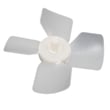
- Refrigerator evaporator fan blade 5308000010 (airflow problems can mimic cooling failures)
Why it matters
Once a refrigerator starts running longer to hold temperature, energy use rises and key components like the compressor and control boards see more wear. Simple sealing and airflow maintenance is the most reliable way to keep the 25370343412 cooling efficiently for years.
Last updated: February 2026