Owner’s manual
 Error Codes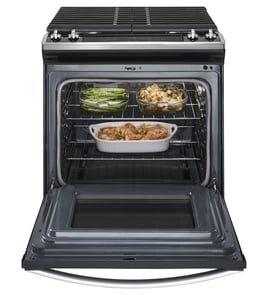




How to find Whirlpool gas range model number?
For Whirlpool gas range model GS395LEGQ3, the complete model number and serial number are printed on the model and serial number label/plate. Use the location diagram in the GS395LEGQ3 owner’s manual to find the label quickly, then write both numbers down for parts and service.
Where to look on the range
On this Whirlpool range, the label/plate is on the appliance body (not on a removable part). Common places to check include:
- Around the oven frame behind the oven door (door open)
- On the lower drawer frame (storage or broiler drawer area)
- Behind the warming drawer area (if equipped)
- On a side frame near the front leveling legs
What to record (and why)
When you contact service or order parts, we recommend recording these items exactly as shown:
- Model number (example format: GS395LEGQ3)
- Serial number
- Purchase date (if available)
Why it matters
Whirlpool often uses similar-looking ranges with different internal components. The full model number and serial number ensure you get the correct igniter, oven rack, door gasket, or other replacement parts for your exact build.
Quick checklist: model number vs. serial number
| Item | What it tells us | Used for |
|---|---|---|
| Model number | The exact product design | Correct part fit and diagrams |
| Serial number | Production run details | Service identification and revisions |
If the label is hard to read
- Wipe the plate gently with a damp cloth and mild dish soap; dry fully
- Use a flashlight at an angle to make faint printing stand out
- Take a close-up photo and zoom in
Last updated: February 2026
Why is my Whirlpool gas oven not getting hot?
On the Whirlpool GS395LEGQ3 gas range, the most common reason the oven will not get hot is a weak or failed oven igniter that cannot open the gas safety valve. Start by confirming the igniter glows during a bake cycle; if it glows dimly or not at all, replacement is typically the fix.
Quick checks we recommend first
- Make sure the oven is set to BAKE (not Self-Clean) and the door is fully closed.
- If you smell gas, follow the safety steps in the GS395LEGQ3 owner's manual.
- Start a bake cycle and watch through the oven bottom openings: the igniter should glow, then the burner should light.
- If the igniter glows but the burner never lights, the igniter can still be too weak to open the safety valve.
- If the oven was just in Self-Clean, allow time for it to cool; the display can show cooling/locked indicators until temperatures drop.
What to test (in order)
1) Oven igniter performance
A failing igniter is the top cause of “won’t heat” on gas ovens.
- No glow: check wiring connections and power to the igniter.
- Weak/dim glow: replace the igniter.
- Glow + delayed ignition (long preheat, gas smell before ignition): replace the igniter.
If you need the correct replacement, use the model-matched range oven igniter W10918546.
2) Gas supply and safety valve behavior
If the igniter is working correctly, the next suspects are gas supply issues or a safety valve that is not opening.
- Confirm other gas appliances work normally.
- Verify the range shutoff valve is fully open.
- If the igniter is hot but there is no flame, a technician should check the safety valve and regulator.
3) Temperature control and sensor issues
If the burner lights but the oven still does not reach temperature, the issue is usually in temperature sensing/control.
| Symptom | Most likely cause | Typical next step |
|---|---|---|
| No igniter glow | Power, wiring, control | Check connections, test voltage |
| Igniter glows, no flame | Weak igniter or safety valve | Replace igniter first |
| Flame lights, poor heating | Sensor/control calibration | Verify settings per manual |
Why it matters
A weak igniter can prevent the safety valve from opening, so the oven never gets fuel to heat. Fixing the ignition system restores normal preheat times and stable baking temperatures.
Last updated: February 2026
What is the average lifespan of GS395LEGQ3?
A Whirlpool gas range like model GS395LEGQ3 typically lasts 15 years with normal household use and basic maintenance. Keeping burners clean, ensuring proper ignition, and replacing wear items (like igniters and door gaskets) on time helps you reach that lifespan.
What affects lifespan the most
- Heat and grease buildup on burner heads and ports
- Ignition system wear (surface igniters and the oven igniter)
- Door seal condition (heat loss makes the oven work harder)
- Self-cleaning use (high heat accelerates wear on some components)
- Leveling and stability (helps the door seal evenly and reduces stress)
Maintenance checklist (simple, high impact)
- Clean burner caps and ports regularly; keep them dry before reassembly.
- If the oven takes longer to heat or won’t light reliably, inspect the range oven igniter W10918546.
- Check the oven door seal for gaps, tears, or looseness; replace the door gasket W11542153 if it’s not sealing.
- Confirm the range is level; adjust the level foot WPW10058460 if the door doesn’t close evenly.
- Use the care and cleaning steps in the owner's manual to avoid damaging finishes and components.
Common “end-of-life” symptoms vs. fixable issues
| Symptom | Most common cause | Typical fix |
|---|---|---|
| Oven won’t ignite or is slow to light | Weak oven igniter | Replace igniter |
| Uneven baking | Heat loss or airflow issues | Check gasket, verify racks and liner placement |
| Burner clicks but won’t light | Dirty burner ports or worn igniter | Clean ports, replace surface igniter if needed |
| Excess heat around control area | Missing shield/insulation or airflow issue | Inspect panels, insulation, and fit |
Why it matters
A 15-year lifespan is realistic for GS395LEGQ3 when ignition and sealing parts are kept in good shape. Small repairs (igniter, gasket, leveling) prevent longer heat cycles, reduce strain on components, and keep cooking performance consistent.
Last updated: March 2026