Owner’s manual
 Error Codes


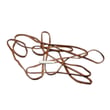
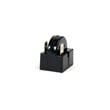
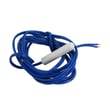
What are the common problems with Kenmore Elite refrigerators?
Kenmore Elite refrigerators (including Kenmore model 79575082402) most often have cooling problems, frost or ice buildup, water leaks, and unusual noises. Many issues trace back to airflow, temperature control settings, door sealing, or defrost and water system components; our 79575082402 owner's manual covers cleaning, control adjustments, and troubleshooting.
Most common symptoms and what they usually mean
- Not cooling or warm temperatures: blocked air vents, dirty condenser coils, or a fan/defrost issue
- Excess frost or ice buildup: door not sealing, frequent door openings, or a defrost system problem
- Water under the refrigerator: clogged defrost drain or drain tube
- Ice maker or water dispenser issues: water supply restriction, filter issue, or inlet valve problem
- Clicking or buzzing: compressor start components or fan noise
Quick checks we recommend first (safe DIY)
- Confirm control settings and adjust in small steps; wait 24 hours between changes.
- Check airflow: keep packages from blocking vents inside the refrigerator and freezer.
- Clean condenser coils (dust buildup can reduce cooling efficiency).
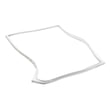
- Inspect door gaskets for gaps, tears, or areas not sealing.
- Look for drain issues if you see puddles or ice near the bottom.
Common parts involved (by symptom)
| Symptom | Likely area | Example part for this model |
|---|---|---|
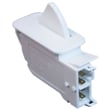
| Interior light stays off or door alarm behavior seems wrong | Door sensing | Lg refrigerator door switch 6600JB1010A |
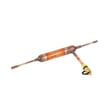
| Frost/temperature swings | Defrost sensing | Refrigerator defrost sensor assembly 6615JB2005C |
| Puddles or water under unit | Defrost drain path | Refrigerator drain tube 5251JA3003D |
| No water to dispenser/ice maker | Water supply control | Refrigerator water inlet valve 5220JA2009D |
Why it matters
Cooling, frost, and leak symptoms usually get worse over time. Addressing airflow, control settings, and drain or gasket problems early helps protect food quality and reduces strain on the sealed refrigeration system.
For display codes and what they mean on Kenmore 795 bottom-freezer models, use Kenmore 795 model bottom freezer refrigerator error codes.
Last updated: January 2026
Why is my Kenmore refrigerator leaking underneath?
Water leaking underneath your Kenmore refrigerator model 79575082402 is usually caused by defrost water not draining correctly (a clogged or frozen defrost drain) or by water supply tubing or valve connections seeping. Start by checking the defrost drain path and the drain pan under the cabinet. See the 79575082402 owner's manual for access and care guidance.
Most common causes (and what to check first)
- Clogged or frozen defrost drain: Meltwater backs up, then spills and runs down to the floor.
- Drain pan shifted, cracked, or overflowing: Defrost water is supposed to collect in the pan and evaporate.
- Water line or fitting leak: Especially if the leak is near the back and you have an icemaker or dispenser.
- Water inlet valve seepage: A slow drip can pool under the refrigerator.
- Door not sealing well: Excess frost can increase defrost water and overwhelm a partially restricted drain.
Quick troubleshooting steps
- Unplug the refrigerator and pull it out enough to inspect the floor and rear area.
- Look for the leak pattern:
- Front center: often defrost drain or drain pan issue.
- Back near the wall: often water line, tubing, or inlet valve.
- Inspect the drain pan underneath for cracks and correct positioning.
- Check the water supply hookup (if equipped). The manual warns that water hammer and improper water line installation can lead to leakage.
- If the leak is tied to the icemaker/dispenser system, inspect the valve and tubing; the refrigerator water inlet valve 5220JA2009D is a common leak point.
Leak location guide
| Where you see water | Most likely source | Best next check |
|---|---|---|
| Under front of unit | Defrost drain backup | Clear drain path; verify pan placement |
| Under back of unit | Water line/tubing/valve | Inspect fittings and tubing for drips |
| Only after defrost | Drain pan overflow | Confirm pan condition and airflow around unit |
Why it matters
A small leak can turn into floor damage and can also signal airflow or defrost drainage problems that lead to ice buildup and poor cooling. Fixing the drain path or a seeping valve early prevents repeat puddles.
Last updated: January 2026
How to tell if a Kenmore refrigerator compressor is bad?
If your Kenmore refrigerator model 79575082402 is not cooling and the compressor runs constantly, overheats, or repeatedly tries to start and then stops, the compressor or its start components can be failing. Use the sound and run-time guidance in the 79575082402 owner's manual to separate normal operation from a true cooling problem.
Quick checks before blaming the compressor
Many “bad compressor” symptoms are caused by airflow, controls, or a start device issue.
- Confirm the refrigerator control is not set to OFF.
- Check the house breaker or fuse if the unit will not run at all.
- Listen for normal sounds (clicks, gurgling, fan airflow) that can seem loud on hard floors.
- Make sure doors close fully and are not being opened frequently.
- Allow time after loading groceries; longer run times are normal while temperatures recover.
Signs that point to a compressor or start problem
These are the most common compressor-related red flags on bottom-mount refrigerators like the 79575082402:
- Warm refrigerator and freezer even after several hours of running.
- Repeated clicking every few minutes (often the start relay trying and failing).
- Compressor very hot and then shutting off.
- Humming followed by a click with no sustained run.
- Breaker trips when the compressor attempts to start.
Normal vs. problem behavior (what to compare)
| What you notice | Often normal | More likely a problem |
|---|---|---|
| Compressor run time | 40% to 80% of the time at normal room temps | Nearly nonstop with poor cooling |
| Sounds | Clicking during cycles, gurgling, fan airflow | Repeating click cycles, loud buzzing, frequent restart attempts |
| After adding food | Longer run time while cooling down | No temperature recovery after hours |
Parts that can mimic a “bad compressor”
A failed start component can prevent a good compressor from starting.
- Refrigerator compressor start relay 6748C-0004D (common cause of clicking and no-start)
- Condenser fan issues (poor heat removal can cause overheating)
- Dirty condenser coils (restricted airflow)
- Temperature sensor problems such as a thermistor or defrost sensor
Why it matters
A compressor diagnosis affects cost and downtime. Ruling out airflow, controls, and start components first helps avoid replacing major sealed-system parts when a smaller repair restores cooling.
Last updated: January 2026
What is the bottom part of a refrigerator called?
On the Kenmore 79575082402 bottom-mount refrigerator, the “bottom part” is most often called the base grille (the front kickplate) and the machine compartment behind it, where key cooling components sit. You may also hear people refer to the bottom hinge area or the drain pan underneath.
Common names you will hear (and what they mean)
- Base grille: The removable grille at the very bottom front; it snaps on and off for access and cleaning.
- Machine compartment: The lower rear or lower area where the compressor and condenser section are located.
- Bottom hinge area: The lower door-hinge mounting area used when removing or reversing doors.
- Drain pan (defrost drain pan): The pan underneath that collects defrost water so it can evaporate.
How to identify the “bottom part” on your 79575082402
Use this quick check so you name the right area when ordering parts or troubleshooting:
| What you see | Most likely name | What it’s for |
|---|---|---|
| Slotted panel at the bottom front | Base grille | Airflow access, service access, cleaning |
| Water on the floor near the front | Drain system area | Defrost water routing to the pan |
| Door sagging or rubbing | Bottom hinge area | Door alignment and support |
| Warm air or fan noise near the bottom | Machine compartment | Heat removal for cooling system |
Why it matters
Using the right term helps you match the correct diagram and part. For example, if you need to remove the kickplate for cleaning or service access, the steps are in the 79575082402 owner's manual. If you are dealing with water under the refrigerator, the issue is often tied to the drain path and pan, such as the refrigerator defrost drain pan 3390JJ0003A or a drain tube.
Helpful tips for owners
- Keep the base grille installed; it helps protect components and supports proper airflow.
- Vacuum dust from the lower areas periodically to help cooling efficiency.
- If you see puddles, check for a clogged drain path before adjusting temperature controls.
- If doors do not close smoothly, leveling can affect the bottom hinge alignment.
Last updated: January 2026