Owner’s manual
 Error Codes



Where can I find the gas range model number?
On the Tappan gas range model TGF657BFW5, the model and serial number are on the serial plate located under the lift-up cooktop. Use the exact model number when ordering parts like an oven igniter, gas valve, or pressure regulator. See the TGF657BFW5 owner's manual for the label location details.
How to locate the serial plate under the cooktop
- Turn all burner knobs to OFF and let the range cool completely.
- Lift the cooktop (many models lift from the front edge); support it securely.
- Look for a serial plate sticker or metal tag on the frame area under the cooktop.
- Write down both the model number and serial number exactly as shown.
- Take a clear photo of the plate for future reference.
Other common model number locations (if the cooktop label is missing)
If the serial plate is damaged or unreadable, many gas ranges also place an ID label in one of these spots:
| Location | What to check | When it helps |
|---|---|---|
| Oven door frame (door jamb) | Sticker on the front frame | Quick access without moving the range |
| Storage drawer area | Label on the frame behind the drawer | Common on ranges with a bottom drawer |
| Back panel | Label near the vent or rear frame | Useful if the front labels are worn |
Why it matters
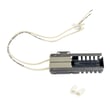
The model number identifies the exact burner system, ignition style, and oven components used on your range. That prevents ordering the wrong part and helps match items like the range bake igniter 5303935066 to your specific configuration.
Last updated: January 2026
Is a gas stove energy efficient?
Yes. A gas stove like the Tappan TGF657BFW5 is typically energy efficient at the appliance because it turns fuel into heat directly at the burner and gives you instant flame control. Real-world efficiency depends most on flame size, cookware fit, and how you cook (not just the fuel type).
How to get the best efficiency from your gas cooktop
Using the right flame size and pan makes a bigger difference than most people expect.
- Keep the flame under the pan; it should not extend past the pan’s edge.
- Match pan size to the burner; avoid small pans on large burners.
- Use flat-bottom cookware and keep it centered.
- Use tight-fitting lids to reduce heat loss.
- Avoid boilovers and long preheats; they waste fuel and can create heavy soiling.
Quick comparison: gas vs. electric (what “efficient” usually means)
This is a practical, customer-focused view of efficiency.
| Topic | Gas range (like TGF657BFW5) | Electric range |
|---|---|---|
| Heat response | Very fast (instant flame changes) | Slower to change temperature |
| Heat delivery | Direct flame to cookware | Heating element transfers heat |
| Best efficiency habits | Correct flame size, proper pan fit | Flat pans, right-size element |
Why it matters
When the flame extends beyond the cookware, you are heating the air around the pan instead of your food. The manual also notes that proper utensil-to-flame relationship improves efficiency and helps reduce safety risks.
Related safety and use notes we follow for this model
These points help you cook efficiently and safely on the Tappan TGF657BFW5.
- Do not line the cooktop or oven bottom with foil.
- Never leave surface burners unattended on high settings.
- During a power failure, the oven burners cannot be lit; cooktop burners may be lit manually only as directed.
For model-specific operating and safety details, follow the TGF657BFW5 owner's manual.
Last updated: January 2026
What gas is used in gas stoves?
Most gas stoves, including the Tappan TGF657BFW5 gas range, are designed to run on natural gas or liquefied petroleum (LP) propane gas. This model ships from the factory set up for natural gas, and it can be converted to propane using the correct conversion instructions.
Which fuel should you use?
Use the fuel your home is already supplied with, and make sure the range is configured for that fuel type.
- Natural gas: Common for homes with a utility gas line
- LP (propane) gas: Common for homes with a propane tank
- Never mix settings: A range set for natural gas will not burn correctly on propane (and vice versa)
- Conversion is a setup change: It involves changing internal gas metering parts and adjustments
- Have a qualified installer handle gas work: This is the safest way to ensure proper operation
Natural gas vs LP propane (quick comparison)
| Fuel type | Typical home supply | What it means for your range |
|---|---|---|
| Natural gas | Utility gas line | Factory configuration for TGF657BFW5 |
| LP (propane) | Propane tank | Requires LP conversion setup |
How to confirm what your range is set up for
Check the documentation and the range setup details before you light the oven or burners.
- Review the TGF657BFW5 owner's manual for fuel and safety information
- Confirm whether your home has a gas utility line or a propane tank
- If the oven burner will not ignite or flames look abnormal, stop using the range until the fuel setup is corrected
Why it matters
Natural gas and LP propane operate at different pressures and require different gas metering. Using the wrong configuration can cause poor ignition, weak heat, soot, or unsafe burner operation.
Last updated: January 2026