Installation guide
 Owner’s manual
 Error Codes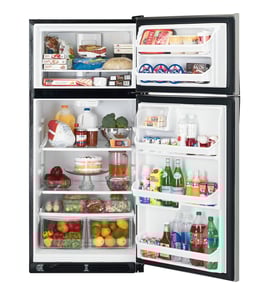




Is top mounted refrigerator better than bottom mounted?
A top-mount refrigerator like the Frigidaire FFHT1831QP2 is better when you want strong energy efficiency, simpler design, and lower purchase and repair costs; a bottom-mount is better when you want fresh-food items at eye level and easier access to the refrigerator section.
Quick comparison (what most homeowners notice)
| Feature | Top-mount (freezer on top) | Bottom-mount (freezer on bottom) |
|---|---|---|
| Everyday access | Freezer is easiest to reach | Fresh food is easiest to reach |
| Energy use | Typically lower | Typically slightly higher |
| Repair complexity | Typically simpler | Typically more complex |
| Organization | Basic, straightforward | Often more drawers and zones |
When a top-mount is the better choice
- You use the freezer often and want it at chest or eye level.
- You want a simpler refrigerator with fewer features to maintain.
- You are placing the unit in a tighter spot and want predictable door swing and clearances.
- You want a layout that is easy to keep cold and stable.
For installation planning, we follow the FFHT1831QP2 clearances listed in the FFHT1831QP2 installation guide; sides and top typically need 3/8 inch and the rear needs 1 inch for airflow and connections.
When a bottom-mount is the better choice
- You cook frequently and want fresh-food shelves at eye level.
- You prefer wide refrigerator drawers for produce and meal prep.
- You do not mind bending for frozen foods.
Why it matters
“Better” depends on how you use the refrigerator. Layout affects daily convenience, but airflow and door sealing affect performance. For example, proper leveling and door seal contact help the doors close and seal correctly, which supports consistent temperatures (details are outlined in the FFHT1831QP2 owner’s manual).
Last updated: January 2026
What are the disadvantages of a top mount fridge?
A top-mount refrigerator like the Frigidaire FFHT1831QP2 puts the freezer at eye level and the fresh-food section lower, so everyday items often require more bending and reaching. Top-mount designs also tend to offer fewer convenience features than many bottom-freezer styles.
Common disadvantages (what you will notice day to day)
- More bending for fresh food: produce, drinks, and leftovers are in the lower compartment.
- Less “grab-and-go” organization: many top-mount layouts have fewer specialty drawers and dividers.
- Fewer built-in dispenser options: many models do not include external ice or water dispensing.
- More temperature swings in the freezer: frequent freezer door openings can affect freezer temps.
- Tighter door swing planning: you may need extra space if the hinge side is against a wall.
Space, access, and installation considerations
Your installation setup can make the “disadvantages” feel bigger or smaller. For example, if the refrigerator is tight in a corner, access and organization become harder.
| Factor | Top-mount impact | What to do |
|---|---|---|
| Door swing near a wall | May not open wide enough for bins/drawers | Leave extra hinge-side clearance when possible |
| Air circulation | Poor airflow can hurt performance | Follow clearance guidance in the installation guide |
| Daily ergonomics | Fresh-food access is lower | Store most-used items on upper refrigerator shelves |
Why it matters
If you use the refrigerator section far more than the freezer, a top-mount layout can feel less convenient over time. Planning shelf and bin placement helps reduce bending and keeps airflow clear for steadier cooling.
For model-specific use and care tips (storage features, temperature settings, and door alignment basics), use the FFHT1831QP2 owner’s manual.
Last updated: January 2026
Why is my Frigidaire top mount freezer not freezing?
If your Frigidaire FFHT1831QP2 top-mount freezer is not freezing, the most common causes are incorrect control settings, restricted airflow, dirty condenser coils, or a defrost-related ice buildup. Set the controls correctly, keep vents clear, and allow a full 24 hours after adjustments for temperatures to stabilize.
Quick checks we recommend first
- Confirm the freezer and refrigerator controls are not set to "0" or "OFF".
- After any control change, wait 24 hours for temperatures to stabilize.
- Make sure the doors close fully and nothing is holding them open.
- Keep food packages from blocking air vents inside the freezer.
- If the unit was just installed or powered back on, allow an 8-hour cool-down period with doors closed before loading food.
What to look for (symptom-based)
| What you notice | Most likely issue | What to do next |
|---|---|---|
| Freezer is warm and fridge is also warm | Cooling system not running efficiently | Clean condenser area, listen for fans/compressor, verify outlet power |
| Freezer is warm but fridge is somewhat cool | Airflow problem (evaporator fan or frost blockage) | Listen for fan in freezer, check for heavy frost on rear panel |
| Heavy frost/ice on freezer back wall | Defrost system problem | Plan to test defrost heater and related components |
| Door won’t seal, frost near door | Air leak | Inspect gasket for gaps and warping |
Parts that commonly fix “not freezing” on this model
If you find heavy frost buildup or no airflow, these model-matched parts are common solutions:
- Refrigerator defrost heater 242044008 (helps melt frost off the evaporator during defrost)
- Refrigerator motor 242077705 (evaporator fan motor that circulates cold air)
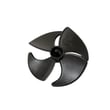
- Refrigerator evaporator fan blade 242219302 (damaged blade can reduce airflow and cooling)
Why it matters
A freezer that is not freezing is usually an airflow or defrost issue; when cold air cannot circulate or the evaporator is packed in ice, temperatures rise quickly and food safety becomes a concern. Correct settings and proper cool-down time prevent unnecessary part replacement.
Model-specific references
- Use the FFHT1831QP2 owner’s manual for the exact control locations, recommended initial settings, and the “common occurrences” troubleshooting steps.
Last updated: January 2026
What is the most common problem with a Frigidaire refrigerator?
The most common problem we see with Frigidaire refrigerators like model FFHT1831QP2 is a cooling complaint: the fresh food section gets warm, the freezer temperature swings, or both. In many cases, the root cause is restricted airflow, a fan problem, or a door that is not sealing consistently.
Most common causes (and what to check first)
- Dirty condenser coils: reduced heat removal makes the refrigerator run longer and cool poorly.
- Evaporator fan issue: weak or noisy airflow can leave the refrigerator section warm.
- Frost buildup from a defrost problem: ice on the evaporator blocks airflow.
- Door seal leak: warm, moist air sneaks in and creates temperature swings and frost.
- Control settings or defrost cycle confusion: the unit can appear “not cooling” during normal operation.
Quick troubleshooting steps for FFHT1831QP2
- Confirm the refrigerator is powered and not set to “0” or “OFF”; then allow time for normal cycling (including defrost). Use the FFHT1831QP2 owner's manual for control details and normal operation notes.
- Listen for the evaporator fan when the unit is running; if airflow is weak, inspect for ice blocking vents.
- Check door closing and gasket contact all the way around; look for gaps, tears, or areas that do not grip paper.
- If you have an ice maker, verify the water line and shutoff valve are correct; the installation guidance warns against using a self-piercing shutoff valve.
Common symptoms and likely causes
| Symptom | Most likely cause | What to do next |
|---|---|---|
| Refrigerator warm, freezer OK | Airflow issue (fan, frost, blocked vents) | Check fan sound, clear vents, inspect for frost |
| Frost on back wall/freezer panel | Defrost system issue | Inspect for heavy frost; consider defrost components |
| Moisture, frost, or warm spots near door | Door not sealing | Inspect gasket and door alignment |
| Unit “not running” but lights work | Defrost cycle or control set to OFF | Wait 20 minutes; verify settings |
Parts that often solve cooling and sealing problems
If inspection points to a failed component, these model-matched parts are common fixes:
- Refrigerator defrost heater 242044008 (helps prevent frost buildup that blocks airflow)
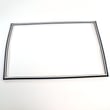
- Frigidaire refrigerator door gasket (white) 242193206 (restores a tight seal on the fresh food door)
- Refrigerator motor 242077705 (evaporator fan motor; restores airflow through the evaporator)
Why it matters
Cooling problems usually get worse over time. Addressing airflow, defrost, and door sealing early helps protect food, reduces compressor run time, and prevents heavy frost that can choke off circulation.
Last updated: January 2026