
Is it worth it to get a countertop ice maker?
A countertop ice maker can be worth it if you want quick, convenient ice without plumbing, but it is usually a better fit for occasional use than for high daily demand. If you already own an Edgestar KIM450BL freestanding ice maker, you will typically get higher output and larger storage from the freestanding unit.
When a countertop ice maker is a good buy
- You need ice fast for small gatherings, RV use, or a home office
- You cannot (or do not want to) run a water line
- You are OK refilling a reservoir and emptying the bin regularly
- You want a portable backup when your main ice maker is down
When you will be happier with a freestanding ice maker
Freestanding units like the Edgestar KIM450BL are built for steadier production and better day-to-day convenience.
- Higher typical daily ice output than most countertop units
- Larger bin capacity, so you are not emptying it as often
- More consistent ice supply for entertaining or frequent use
- Better long-run value if you routinely buy bagged ice
Quick comparison
| Feature | Countertop ice maker | Freestanding ice maker (KIM450BL type) |
|---|---|---|
| Water supply | Manual fill reservoir | Often plumbed in (or uses a dedicated fill setup) |
| Ice production | Lower, best for light use | Higher, better for daily use |
| Storage | Small bin; ice can clump/melt faster | Larger bin; steadier supply |
| Maintenance | Frequent refills and cleaning | Regular cleaning and occasional troubleshooting |
What to check before you decide
- How much ice you actually use: daily drinks vs. parties and coolers
- Space and ventilation: countertop clearance vs. freestanding placement
- Noise tolerance: countertop units can be noticeable in quiet rooms
- Ice quality expectations: some countertop units make softer “bullet” ice
Why it matters
Choosing the right style prevents common frustrations like “it runs but makes very little ice,” ice clumping, or constant refilling. If your current freestanding unit is underperforming, troubleshooting it often costs less than adding another machine; start with freestanding ice maker troubleshooting.
Last updated: February 2026
Is it worth repairing an ice maker?
Yes, repairing an Edgestar KIM450BL freestanding ice maker is worth it when the problem is a common, serviceable failure (drain issue, pump problem, control issue, leak) and the repair cost stays well below the price of a comparable new unit. Replacement makes more sense when sealed-system cooling is failing or repairs stack up.
Quick decision checklist
- Age and condition: If the cabinet is solid and it has been reliable, repair usually pays off.
- Repair cost vs. replacement: A good rule is repair when the total is under about 50% of a new unit.
- Type of failure: Water-system and electrical issues are often repairable; sealed-system issues are usually not cost-effective.
- Downtime impact: If you need ice daily, faster fixes (pump, control board) can be worth it.
- History of repeat problems: Frequent leaks, poor ice production, or repeated shutdowns point toward replacement.
What typically makes repair “worth it”
| Symptom | Common causes | Usual path |
|---|---|---|
| Not running | Power supply, door/bin switch, control issue | Diagnose and repair |
| Runs but no ice | Water supply restriction, recirculation issue, sensor/control | Repair if parts are available |
| Leaking water | Loose fittings, drain blockage, cracked tubing | Repair and correct root cause |
| Making noise | Fan/pump wear, vibration, ice contact | Repair or adjust |
When replacement is the better call
- Weak or no cooling (compressor or refrigerant-system problem)
- Multiple major symptoms at once (leak plus no ice plus not running)
- Corrosion or heavy scale buildup that keeps returning after cleaning
- Repair requires multiple high-cost components (for example, control plus pump plus sensors)
Why it matters
A freestanding ice maker like the KIM450BL depends on clean water flow, reliable recirculation, and stable cooling. Fixing a single failed component can restore normal ice production; chasing repeated failures often costs more than replacing the unit.
Helpful DIY troubleshooting and repair resources
- Use freestanding ice maker troubleshooting to narrow the failure to water supply, recirculation, drainage, or controls.
- If it will not start, follow ice maker not running.
- If it runs but produces no ice, use ice maker runs but no ice.
Last updated: February 2026
Why is my free standing ice maker not making ice?
If your Edgestar KIM450BL freestanding ice maker runs but isn’t making ice, the most common causes are no water getting to the reservoir, poor water circulation over the evaporator plate (often a recirculation pump issue), or a cooling or control problem that prevents freezing.
Quick checks (start here)
- Confirm the unit has power and is turned on; some models pause ice making when the bin is full.
- Make sure the water supply valve is fully open and the inlet line is not kinked.
- Check the reservoir: full but no ice points to circulation or freezing; empty points to a fill or supply issue.
- Look at the evaporator plate during a cycle: it should get wet as water recirculates.
- Clean mineral scale if you see white buildup; scale can block water flow and reduce freezing.
What the symptoms usually mean
| What you see | Most likely cause | What to do next |
|---|---|---|
| Reservoir empty | Water supply, inlet valve, clogged screen/filter | Verify supply pressure, clear screens, inspect inlet valve |
| Reservoir full, evaporator plate dry | Recirculation pump not moving water | Listen for pump hum, check for blockage, test/replace pump |
| Water flows, but no freezing | Sealed system or condenser airflow issue | Clean condenser area, ensure ventilation; service may be needed |
| Starts then stops early | Control board, sensors, or bin/full switch | Check for loose wiring, reset power; diagnose controls |
DIY troubleshooting steps we recommend
- Reset: Unplug for 5 minutes, then restart a cycle.
- Water path: Inspect the inlet line, inlet screen, and reservoir for debris.
- Circulation: If the reservoir is full, verify water is moving across the evaporator plate.
- Airflow and heat removal: Make sure the condenser area is clean and the unit has breathing room.
- Descale and sanitize: Scale and biofilm reduce ice production and can stop ice formation.
Why it matters
Ice makers depend on steady water flow and efficient heat removal. If water is not reaching the evaporator plate or the unit cannot shed heat, the freeze cycle will not complete and you will get little to no ice.
Related DIY help
- Use our step-by-step troubleshooting for this symptom: ice maker runs but no ice
- If you suspect an electrical issue: how to replace a freestanding ice maker electronic control board
Last updated: February 2026
What is the average life of an ice maker?
Most freestanding ice makers, including the Edgestar KIM450BL, typically last about 5 to 10 years with normal use, good water quality, and regular cleaning. Heavy use, hard water scale, and poor airflow around the cabinet can shorten that lifespan.
Typical lifespan ranges (what to expect)
Lifespan depends on how hard the unit works and how clean the water system stays.
| Ice maker type | Typical average life | What usually ends it first |
|---|---|---|
| Freestanding ice maker | 5 to 10 years | Scale buildup, pump wear, control issues |
| Built-in/undercounter ice maker | 7 to 12 years | Water valve leaks, sealed system wear |
| Refrigerator ice maker | 5 to 8 years | Molded module wear, fill valve problems |
What helps your KIM450BL last longer
These habits reduce mineral buildup, overheating, and premature wear on the recirculation system.
- Clean and descale on a schedule (more often with hard water).
- Use a water filter or softened water if scale forms quickly.
- Keep condenser/vent areas clear so the compressor can shed heat.
- Level the cabinet so water flows correctly over the evaporator plate.
- Empty and wipe the bin periodically to prevent odors and clumping.
- Fix small leaks early to avoid corrosion and electrical damage.
Signs the ice maker is nearing end of life
If these become frequent even after cleaning, a repair may not be cost-effective.
- Runs but produces very little ice
- Ice is thin, hollow, or slow to freeze
- Water leaks under or behind the unit
- Loud grinding or buzzing during harvest
- Repeated no-start or intermittent operation
Why it matters
A freestanding ice maker is a small refrigeration system; scale and restricted airflow force longer run times, which increases wear on the compressor, pump, and electronic controls. Keeping it clean and ventilated is the simplest way to reach the 5 to 10 year average.
For step-by-step maintenance and performance tips, use our freestanding ice maker cleaning tips and tips for better ice from an ice maker.
Last updated: February 2026
What are common ice machine problems?
Common problems we see with the Edgestar KIM450BL freestanding ice maker are no ice or low ice production, water leaks, odd noises, poor-tasting or cloudy ice, and ice clumping or jamming. Most issues trace back to water supply problems, airflow and condenser dirt, drain restrictions, or a failing control or pump.
Most common symptoms and what they usually mean
- Runs but makes no ice: low water flow, failed water inlet valve, bad recirculation pump, or control issue
- Makes very little ice: warm room, restricted condenser airflow, scaled evaporator, weak pump
- Leaking water: loose/blocked drain line, cracked reservoir or tubing, overfill from inlet valve
- Making noise: fan obstruction, pump cavitation (air in water line), compressor vibration, ice slab interference
- Bad taste or cloudy ice: dirty water system, mineral scale, stagnant water, dirty bin
Quick checks we recommend first (fast, no parts)
- Confirm the unit is level and has clear ventilation around the condenser area.
- Verify the water supply valve is fully open and the supply line is not kinked.
- Check for a slow or blocked drain (a common cause of leaks and odd cycling).
- Clean the condenser and air intake; dust buildup reduces ice production.
- Run a cleaning/descaling cycle and sanitize the bin (helps taste, clumping, and low output).
Troubleshooting by symptom (at-a-glance)
| Symptom | Most likely causes | Best next step |
|---|---|---|
| Not running | No power, control not calling for ice, failed control board | Follow ice maker not running checks |
| Runs but no ice | No water fill, failed pump, control issue | Use ice maker runs but no ice steps |
| Leaking | Drain restriction, loose tubing, overfill | Use ice maker leaking water steps |
| Loud or new noise | Fan/pump issue, vibration, ice interference | Use ice maker making noise steps |
Why it matters
Catching low airflow, water flow, and scale problems early protects the compressor, improves ice quality, and prevents leaks that can damage flooring and cabinets.
Last updated: February 2026
What are the parts of the ice maker machine?
An Edgestar KIM450BL freestanding ice maker is built from a sealed refrigeration system, a water system, and an ice-making and control system. Together, these parts freeze water on the evaporator, release it, cut or form it, and store it in the bin for reliable daily ice production.
Main parts you will typically find
- Compressor: pumps refrigerant through the sealed system to create cooling
- Condenser coil and condenser fan: remove heat so the unit can keep freezing
- Evaporator (freezing plate): where water freezes into ice
- Water inlet valve: lets fresh water into the reservoir
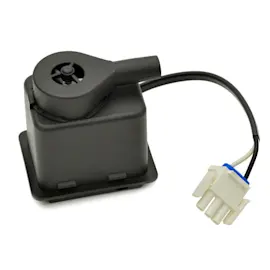
- Recirculation pump: moves water over the evaporator during the freeze cycle
- Drain pump or gravity drain components: remove meltwater and purge water (varies by setup)
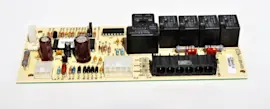
- Electronic control board and sensors: manage timing, water level, temperature, and harvest
How the parts work together (quick map)
| System | What it includes | What it does |
|---|---|---|
| Refrigeration | compressor, condenser, evaporator, fan | creates and maintains freezing temperatures |
| Water handling | inlet valve, reservoir, pump, hoses | delivers and circulates water for ice formation |
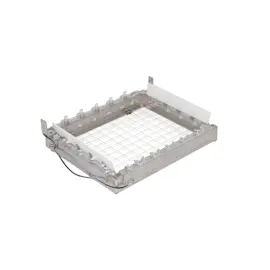
| Ice making and storage | evaporator, cutter grid (some models), bin, bin switch | forms ice, releases it, and stops when bin is full |
| Controls and safety | control board, thermistors/sensors, wiring | runs cycles and protects components |
Common “maintenance parts” that affect performance
These are the items we see most often behind symptoms like small batches, odd taste, or leaks:
- Water line and fittings (kinks, restrictions, loose connections)
- Hoses and clamps (cracks, pinholes)
- Door gasket or bin seal (warm air leaks that cause clumping)
- Drain line (partial blockage can cause overflow)
- Condenser area (dust buildup reduces cooling)
Why it matters
Knowing which system is involved helps you troubleshoot faster. For example, no power or no cycling points to controls, runs but no ice often points to water flow or refrigeration, and leaks usually trace back to hoses, drain, or inlet valve.
Helpful troubleshooting paths
- Use freestanding ice maker troubleshooting to match symptoms to likely parts.
- If the unit powers on but does not start a cycle, follow ice maker not running.
Last updated: February 2026
Is it worth replacing the ice maker on a refrigerator?
If you are asking about the Edgestar KIM450BL, it is a freestanding ice maker, not a refrigerator ice maker. Replacing the ice-making components is worth it when the unit still powers on, runs cycles, and the cabinet is in good condition; it is not worth it when the sealed cooling system is failing.
Quick decision checklist for the KIM450BL
- The unit powers on and the controls respond normally.
- The condenser fan and/or internal fan runs (no repeated overheating shutdowns).
- Water fills normally and you do not see constant leaking into the bin.
- Ice production slowed or stopped due to a serviceable part (pump, cutter grid, control board).
- The cabinet and bin are intact (no heavy corrosion, cracked liner, or broken door/lid).
Repair vs replace: what typically makes sense
| What you observe | Usually worth repairing? | Typical direction |
|---|---|---|
| Runs but makes no ice | Yes | Troubleshoot water fill, pump, sensors, control board |
| Runs but makes very little ice | Yes | Clean, descale, check airflow and water supply |
| Leaking water | Yes | Inspect drain, hoses, pump, fittings |
| Loud grinding or buzzing | Maybe | Check fan, pump, cutter grid |
| No cooling at all (never freezes) | No | Sealed system issue; replacement is the practical fix |
What to check before you spend money
- Clean the condenser area and confirm good airflow around the unit.
- Verify the water supply is steady and the inlet screen is not restricted.
- Descale the water system; mineral buildup commonly causes slow production.
- If the unit has a cutter grid, check for broken wires or heavy scale.
For step-by-step diagnosis by symptom, use freestanding ice maker troubleshooting.
Why it matters
Freestanding ice makers like the Edgestar KIM450BL are economical to repair when the problem is in the water system or controls. When the sealed refrigeration system fails, parts and labor typically exceed the value of the machine.
Last updated: February 2026