 Owner’s manual
 Error Codes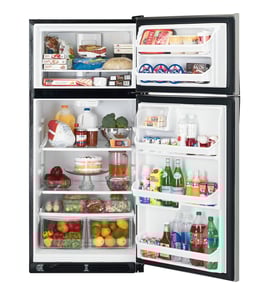



What are the disadvantages of a top mount fridge?
Top-mount refrigerators like the Kenmore 11160715910 put the freezer on top and the fresh-food section below; the main disadvantages are more bending to reach everyday items, fewer premium organization features, and fewer built-in dispenser options compared with many bottom-freezer designs.
Common disadvantages (what you will notice day to day)
- More bending for fresh food: the refrigerator compartment is lower, so you reach down more often.
- Less “eye-level” organization: produce drawers and deli items can be harder to see quickly.
- Fewer high-end features: many top-mount models have simpler bins, shelves, and controls.
- Dispenser limitations: some top-mount designs do not include an external water or ice dispenser.
- Freezer access can be crowded: a top freezer can feel tighter when storing bulky frozen items.
Feature comparison: top-mount vs bottom-freezer
| Feature | Top-mount refrigerator | Bottom-freezer refrigerator |
|---|---|---|
| Fresh-food access | Lower, more bending | Higher, easier access |
| Freezer access | Eye-level | Lower drawer/basket |
| Organization | Often simpler | Often more flexible |
| Dispensers | Less common | More common |
What to check on your Kenmore 11160715910
We recommend using the owner's manual to confirm which features your specific configuration includes (shelf positions, bin layout, and whether an ice maker is installed or optional).
Why it matters
If you use fresh-food items more than frozen foods, a top-mount layout can feel less convenient over time because the most-used compartment sits lower. If you prioritize freezer access and a simpler, efficient design, a top-mount can still be a great fit.
Last updated: February 2026
What is the average lifespan of a Kenmore 11160715910 Elite refrigerator?
A Kenmore top-mount refrigerator like model 11160715910 typically lasts 10 to 15 years. With good airflow, clean condenser coils, and tight door seals, many units reach the high end of that range; heavy use and poor maintenance shorten it. For model-specific care and specs, use the owner's manual.
Typical lifespan and what changes it
Most refrigerator life is driven by compressor run time, heat removal, and how well the cabinet stays sealed.
- 10 to 15 years is the normal lifespan range for modern refrigerators
- Dirty condenser coils can raise temperatures and increase wear
- Worn door gaskets cause longer run times and moisture issues
- A noisy or stalled evaporator fan can lead to warm sections and icing
- Ice maker and water system issues often come from water pressure or valve problems
Maintenance that helps you reach 15 years
- Vacuum and brush the condenser area regularly
- Keep vents inside the fresh food and freezer sections unblocked
- Clean and inspect door gaskets; make sure doors close on their own
- Replace the water filter on schedule if your unit uses one
- Keep the refrigerator level so doors align and seal correctly
Quick “repair vs replace” guide
| If your 11160715910 is… | Usually makes sense to… |
|---|---|
| Under 8 years old with a single failure | Repair (especially fans, sensors, seals) |
| 10 to 15 years old with repeated cooling issues | Compare repair cost vs replacement |
| Not cooling and the compressor is suspected | Consider replacement if repair is high |
Why it matters
A refrigerator near end-of-life often runs longer to hold temperature, which can increase energy use and make food temperatures less stable. Staying ahead of airflow, seals, and filtration is the simplest way to protect the sealed system.
Helpful DIY references
- Use Kenmore 111 model top freezer refrigerator error codes to interpret display or control-board error codes.
- For filtration guidance, see how to replace the water filter in a Kenmore refrigerator.
Last updated: February 2026
What are the common problems with Kenmore 11160715910 Elite refrigerators?
Common problems we see with the Kenmore 11160715910 top-mount refrigerator include weak or uneven cooling, frost buildup that blocks airflow, unusual fan noises, and water leaking inside the cabinet or onto the floor. These symptoms usually trace back to airflow, defrost, door sealing, or drain issues.
Most common symptoms and what they usually mean
- Fridge warm, freezer cold: restricted airflow (frosted evaporator area, blocked vents, or a weak evaporator fan)
- Both sections warm: condenser coils dirty, condenser fan not running (if equipped), or sealed system/compressor issue
- Heavy frost on back wall or in freezer: defrost system problem or door not sealing
- Buzzing, rattling, or grinding: evaporator fan blade hitting ice, worn fan motor, or loose panels
- Water under crisper drawers or puddles: clogged/iced defrost drain or drain tube issue
- Ice maker not working (optional): water supply pressure/valve issue or frozen fill path
Quick checks you can do safely
- Confirm temperatures: 0°F in the freezer and 37°F in the fresh food section.
- Check door gaskets for gaps, tears, or areas that do not grip paper.
- Look for frost patterns: a solid ice sheet in the freezer usually points to a defrost or door-seal problem.
- Clean condenser coils and make sure airflow around the cabinet is not blocked.
- If you have an ice maker, verify household water pressure is in range.
Water pressure specs (ice maker models)
The manual lists these inlet water pressure limits for the optional ice maker:
| Spec | Value |
|---|---|
| Minimum inlet water pressure | 207 kPa |
| Maximum inlet water pressure | 827 kPa |
Error codes and model-specific help
If your display shows an error code, use our Kenmore 111 model top freezer refrigerator error codes guide to match the code to likely causes and the next best repair checks.
Why it matters
Cooling and frost issues often start small (a door not sealing, a drain starting to clog, coils getting dusty) but can quickly turn into spoiled food, ice blockage, and noisy fan operation. Catching airflow and defrost problems early helps prevent repeat icing and temperature swings.
For safety and operating details (including handling cautions around the sealed refrigerant system), follow the owner's manual.
Last updated: February 2026





