Owner’s manual


Where is the model number on Kenmore Elite dryer?
On the Kenmore Elite dryer model 11085871400, the model and serial number label is located at the top inside the dryer door well. Open the door and look along the inside opening near the top edge of the cabinet.
Where to look (quick checklist)
- Open the dryer door fully.
- Look at the cabinet opening (the door well), not the door itself.
- Check the top inside edge of that opening first.
- Wipe dust off the label so the numbers are readable.
- Write down both the model and serial number for parts lookup and service.
What the label typically includes
The label usually lists the key identification details you need for ordering Kenmore parts and matching diagrams.
| Label item | What it’s used for |
|---|---|
| Model number (example: 11085871400) | Ensures parts fit your exact dryer |
| Serial number | Helps identify production run and revisions |
| Electrical ratings | Useful for installation and troubleshooting |
Why it matters
We use the model number to match the correct Kenmore Elite dryer parts (like a heating element, thermistor, or drum support roller) because similar-looking dryers can use different components and wiring.
Helpful reference
For a diagram-style overview of your dryer and where key information is recorded, use the 11085871400 owner’s manual.
Last updated: January 2026
How do I tell if my dryer heating element is bad?
If your Kenmore Elite dryer model 11085871400 runs but doesn’t produce heat (or clothes stay damp), the heating element is a top suspect. We confirm it by doing a quick “heat check” during a cycle, then unplugging the dryer and testing the element for continuity with a multimeter; a failed test points to a bad element.
Quick symptoms that point to a bad heating element
- Dryer tumbles normally but there’s no heat
- Clothes take much longer than normal to dry
- You smell a burning/metallic odor (sometimes from a broken coil)
- The dryer shuts off early because it overheats (often airflow-related, but can be heat-circuit related)
- You see visible damage on the coil (breaks, burn spots) after access
Confirm heat first (simple in-cycle check)
Our manual’s startup check is straightforward: run a heated cycle, let it run about 5 minutes, then open the door and feel for heat. If you don’t feel heat, shut the dryer off and move to electrical checks. Use the steps in the 11085871400 owner’s manual.
Test the heating element with a multimeter
- Disconnect power (unplug the cord; electric dryers use high voltage).
- Access the heater housing (location varies by design).
- Remove at least one wire from the element terminal.
- Set the meter to ohms/continuity.
- Test across the element terminals.
What the readings mean
| Meter result | What it usually means | Next step |
|---|---|---|
| Continuity present (finite resistance) | Element is likely intact | Check airflow and safety fuses |
| No continuity (open/infinite) | Element is bad | Replace the element |
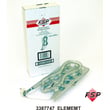
For this model, the replacement part is the dryer heating element WP3387747.
Don’t skip these common “no heat” causes
- Tripped breaker or blown fuse (many electric dryers use two)
- Restricted venting or crushed/kinked ducting
- Blown thermal cut-off or high-limit safety device (often from poor airflow)
- Failed temperature sensor (thermistor)
Why it matters
A dryer that “runs but won’t heat” is often a simple fix, but airflow problems can keep blowing safety parts and shorten the life of the new heater. Verifying heat, power, and venting prevents repeat failures.
Last updated: January 2026
What is the lifespan of a Kenmore dryer?
Most Kenmore dryers, including Kenmore Elite model 11085871400, typically last 10 to 13 years with normal household use. With consistent lint and vent cleaning plus timely replacement of wear items, it’s common to reach the upper end of that range.
What extends the life of your dryer
We see the biggest lifespan gains when airflow stays strong and moving parts stay supported.
- Clean the lint screen before every load and wash it periodically to remove residue
- Keep the exhaust venting clear; lint buildup increases heat and strain
- Avoid overloading; heavy loads stress the drive system and drum supports
- Listen for squealing or thumping and address it early (rollers, idler pulley, belt)
- Use the right cycle and heat setting for the fabric to reduce overheating
Maintenance schedule we recommend
The Kenmore Use and Care Guide calls out lint removal intervals inside the cabinet and from the exhaust vent; use it as your baseline. See the 11085871400 owner's manual.
| Task | Good routine | Why it matters |
|---|---|---|
| Clean lint screen | Every load | Prevents restricted airflow and overheating |
| Remove lint from exhaust vent | About every 2 years (more often with heavy use) | Reduces drying time and heat stress |
| Remove lint inside dryer cabinet | About every 2 years (qualified service) | Helps prevent heat buildup and component wear |
| Check vent material and routing | Anytime you move the dryer | Poor venting can shorten component life |
Parts that commonly affect longevity
If drying times increase, the dryer runs hot, or you hear new noises, these are common wear or airflow-related parts for this model:
- Dryer heating element WP3387747 if the dryer tumbles but won’t heat properly
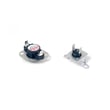
- Dryer thermal cut-off fuse kit 279973 if the dryer overheats or loses heat due to airflow issues
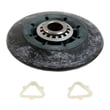
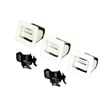
- Support WPW10314173 if you hear rumbling or thumping from worn drum rollers
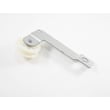
- Dryer idler pulley 279640 if you hear squealing or the belt tension feels weak
Why it matters
A dryer usually “wears out” from heat and friction, not age alone. Strong airflow (lint screen, ducting, exhaust vent) keeps temperatures stable, and replacing wear parts early prevents bigger failures like motor strain or drum damage.
Last updated: January 2026
Why is Kenmore Elite dryer not heating?
If your Kenmore Elite dryer model 11085871400 runs but doesn’t heat, the most common causes are a tripped double breaker (electric heat), restricted venting that overheats the dryer, or a failed heating component such as the heating element, thermal cut-off, or temperature sensor. Use the 11085871400 owner's manual to confirm the correct heat-cycle checks.
Quick checks we recommend first
- Make sure you are using a heated cycle (not Air Dry or a no-heat option).
- Check airflow at the outside vent hood; weak airflow points to a vent restriction.
- For electric dryers, check that both house fuses are good or both breakers are ON (many dryers use a 2-pole supply).
- Run the dryer for 5 minutes on a high-heat cycle, then open the door and feel for heat.
- Clean the lint screen and remove lint buildup in the exhaust path.
Parts that commonly stop heat on this model
If power and venting are good, these parts are frequent heat-related failures:
- Heating circuit: dryer heating element WP3387747
- Overheat protection: dryer thermal cut-off fuse kit 279973
- Temperature sensing: dryer thermistor WP8577274
Symptom-to-part guide
| What you notice | Most likely area | What to do next |
|---|---|---|
| Dryer tumbles, no heat at all | Power supply or heat circuit open | Verify both breakers, then test heating element and thermal cut-off |
| Heat starts then stops early | Vent restriction or temperature sensing | Clear venting, then check thermistor |
| Long dry times, clothes still damp | Poor airflow | Clean lint screen, ducting, and outside hood |
Why it matters
A clogged vent can cause overheating, which can open a thermal cut-off and leave the dryer running with no heat. Restoring proper airflow helps protect the heating element, sensors, and wiring, and it shortens dry times.
Last updated: January 2026