Installation guide
 Owner’s manual
 Error Codes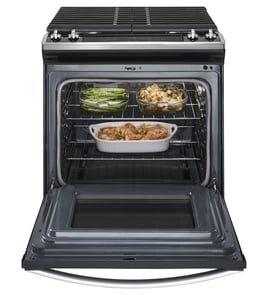


How long should a Kenmore gas stove last?
A Kenmore gas range like model 79071403700 typically lasts 15 years with normal household use. Regular cleaning to prevent grease buildup and prompt repair of wear items (like igniters and light bulbs) helps you reach that lifespan.
- Cleaning habits: Grease buildup can cause overheating, flare-ups, and premature part wear.
- Cooking load: Daily high-heat cooking shortens life compared to light use.
- Ventilation: A working vent hood reduces heat and grease exposure around controls.
- Timely part replacement: Small failures (igniter, sensor, door seal) can lead to bigger problems if ignored.
- Correct installation: Proper gas supply setup and leveling reduce burner and oven issues (see the 79071403700 installation guide).
- Wipe spills after the range cools; keep burner heads and caps seated correctly.
- Keep the oven cavity and bottom area free of grease; follow the cleaning guidance in the 79071403700 owner's manual.
- Replace failed wear items quickly (for example, a burned-out range oven light bulb 316538904).
- Avoid lining broiler inserts with foil; grease can ignite under high broil heat.
- If the oven temperature seems off, test and replace the sensor if needed (common fix: frigidaire range oven temperature sensor 316490000).
| Symptom | Most common cause | Typical fix |
|---|---|---|
| Oven won’t heat but surface burners work | Weak igniter or gas valve issue | Diagnose igniter circuit; replace failed component |
| Oven temperature swings widely | Temperature sensor drifting | Replace oven temperature sensor |
| Door won’t seal, long preheat times | Worn door gasket | Replace oven door seal |
| Oven light out | Bulb or socket | Replace bulb; inspect socket |
A 15-year gas range lifespan assumes basic upkeep. Keeping grease under control and replacing small parts early protects major components like the oven control board, gas valve, and burner system.
Last updated: February 2026
How to take the top off a Kenmore gas range?
To lift the cooktop top on your Kenmore 79071403700 gas range, we remove the grates and burner pieces first, then release the cooktop fasteners (typically screws under the burner heads or at the front lip) so the top can hinge up or lift off for service. Use the 79071403700 installation guide for the exact access points.
- Turn all surface burner knobs to OFF.
- Shut off the gas supply at the manual shut-off valve.
- Disconnect electrical power to the range (unplug or switch off the breaker).
- Let the cooktop cool completely.
- Protect the countertop with a towel or cardboard to prevent scratches.
- Remove the grates and set them aside.
- Lift off the burner caps.
- Remove the burner heads/bases (some lift off; others are held by screws).
- If you see screws securing burner bases or burner tubes, remove those mounting screws.
- Check the front edge of the cooktop (under the front lip) for additional screws or clips; remove/release them.
- Lift the cooktop:
- On many Kenmore/Frigidaire-built ranges, the top hinges up from the rear once the front fasteners are released.
- If it does not hinge, lift straight up carefully and look for any remaining screws or wiring restraints.
| Area under cooktop | What to inspect | Common issue |
|---|---|---|
| Burner heads and caps | Alignment and cleanliness | Uneven flame, clicking |
| Igniters and wiring | Cracks, loose connectors | No spark or constant sparking |
| Orifice area | Debris, grease buildup | Poor ignition, weak flame |
If you are lifting the top to clean or fix ignition/flame issues, these model-matched parts are often involved:
- Range surface burner head 316212400 (burner head condition and fit)
- Igniter and orifice holder 316237805 (spark/ignition mounting and alignment)
Lifting the cooktop correctly prevents bent gas tubes, pinched igniter wires, and misaligned burner heads, which can cause delayed ignition, uneven flames, or burners that keep clicking.
Last updated: February 2026
What are the parts of a gas oven?
On the Kenmore 79071403700 gas range, the “gas oven” includes the oven cavity and the key heating, control, and safety components that make baking and broiling work, plus the door and sealing parts that keep heat in. For diagrams and names, use the 79071403700 owner's manual.
- Oven control and temperature system: sets temperature and manages bake/broil operation; includes the electronic oven control.
- Bake system: the bake burner and gas valve deliver heat for baking.
- Broil system: the broil burner/igniter provides high-heat top cooking.
- Oven temperature sensing: the sensor tells the control board the actual oven temperature.
- Oven door and seal: the door gasket helps maintain a tight seal for stable temperatures.
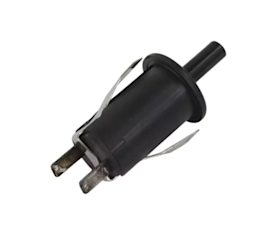
- Oven light system: light bulb, socket, and door light switch illuminate the cavity.
- Racks and interior panels: racks support cookware; bottom panel and insulation help manage heat.
| Oven function | Example part name | Part ID |
|---|---|---|
| Temperature feedback | Oven temperature sensor | 316490000 |
| Bake heat source | Range bake burner | 316404400 |
| Gas flow control | Range oven gas valve | 316404901 |
| Heat retention | Range oven door seal | 5304498835 |
| Visibility | Range oven light bulb | 316538904 |
If you are troubleshooting temperature issues, the frigidaire range oven temperature sensor 316490000 is a common starting point because it directly affects how the control “reads” oven heat.
Knowing the major oven parts helps you diagnose symptoms faster. For example, uneven baking often points to airflow, sealing, or temperature sensing, while “no heat” can point to the bake burner, gas valve, or ignition system.
- Keep the range properly grounded; do not use an adapter or extension cord.
- During self-clean, remove items not listed for self-cleaning and avoid commercial oven cleaners.
- Do not scrub or damage the door gasket; it is essential for a good seal.
- For burner performance, keep burner heads and caps properly seated and ports clean.
Last updated: February 2026
Where to find Kenmore gas range model number?
On Kenmore gas range model 79071403700, the model and serial number are printed on an identification plate located on the right side of the oven front frame inside the Storage or Warmer Drawer compartment. Use that exact model number when ordering parts or checking specifications in the 79071403700 owner's manual.
Check these spots in this order (they are the most common for this model style):
- Pull out the storage drawer or warmer drawer and look on the right-side front frame.
- Look for a label that lists both Model No. and Serial No.
- Wipe the plate gently; grease and cleaner residue can hide digits.
- Write the number down exactly as shown (include all digits).
Use this checklist before you buy a burner head, igniter, or control board:
- Model number matches 79071403700 exactly
- Serial number is recorded (helpful for production variations)
- Fuel type noted (natural gas vs LP conversion)
- You confirm whether you have a storage drawer or a warmer drawer
| What you need | Why the model number matters | Example parts it affects |
|---|---|---|
| Correct replacement parts | Parts vary by model and series | Oven sensor, burner head, igniter |
| Manual and wiring info | Diagrams and procedures are model-specific | Diagnostics, disassembly |
| Gas setup details | Confirms conversion guidance and regulator access | LP kit steps, regulator location |
Using the exact model number prevents ordering the wrong Kenmore range parts, especially for gas components like surface burner parts and oven controls where small design changes can affect fit and performance.
Last updated: February 2026