Installation guide
 Owner’s manual
 Error Codes



What model of Whirlpool dishwasher do I have?
Your Whirlpool dishwasher’s model number is printed on the model and serial number label inside the door. On Whirlpool DU930-series units (including model DU930PWSS0), this label is located on the inner door area; open the door fully and look along the left-hand side.
Where to find the model and serial number label
Check these common label locations first:
- Inside the door on the left-hand side (most common)
- Along the inner door frame (vertical edge)
- On the tub rim near the door opening
- Near the control panel area on the inner door
For diagrams and exact label placement details for this series, use the DU930PWSS0 owner’s manual.
What to write down (and why)
Record both numbers exactly as shown; they are used to match parts like a door seal, latch, or inlet valve.
| Item | What it’s used for | Example of when you need it |
|---|---|---|
| Model number | Identifies the exact dishwasher design | Ordering the correct rack, spray arm, or heater |
| Serial number | Identifies production details | Service history, warranty, and correct revisions |
Why it matters
Whirlpool made multiple similar-looking models (DU915, DU930, DP940, DU945, DU948). The correct model number ensures we match the right parts and troubleshooting steps for your exact dishwasher.
Last updated: February 2026
What are the commonly replaced parts in a dishwasher?
In a Whirlpool dishwasher like model DU930PWSS0, the most commonly replaced parts are the wash and drain components (spray arms, pump parts), leak-prevention seals, and fill or door hardware. These parts wear from heat, detergent, hard water, and normal mechanical use; our DU930PWSS0 owner's manual helps you identify them by location and function.
Commonly replaced parts (and what they affect)
- Spray system: clogged or cracked spray arms reduce cleaning performance (example: dishwasher spray arm WP8268874).
- Heating and drying: a failed heater can leave dishes wet and water cooler than expected (example: heater WPW10082896).
- Door sealing: a worn gasket can cause leaks at the front or corners (example: dishwasher door seal WPW10509257).
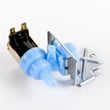
- Filling: a sticking inlet valve can cause no-fill, slow-fill, or overfill symptoms (example: valve-inlt W10844024).
- Draining: a split or restricted drain hose can cause standing water (example: dishwasher drain hose WP3374077).
- Door closing: a weak latch can prevent starting or cause mid-cycle stops (example: dishwasher door latch WP3380854).
Quick symptom-to-part guide
| Symptom | Most likely part area | Example part for DU930PWSS0 |
|---|---|---|
| Dishes not getting clean | Spray arm, pump/impeller, filters | WP8268874 |
| Not drying well | Heater, rinse aid system | WPW10082896, WP8052028 |
| Water leaking at door | Door seal, door alignment | WPW10509257 |
| Won’t fill or fills slowly | Water inlet valve, float | W10844024, WP3376397 |
| Not draining | Drain hose, air gap/check plumbing | WP3374077 |
Why these parts fail most often
These components do the most work every cycle: they handle hot water, detergent, food soil, and constant movement. The manual also calls out routine care like checking the drain air gap when the dishwasher is not draining well, which helps prevent repeat drain problems.
Before you replace anything (fast checks)
- Confirm the cycle finished and the door latched firmly.
- Inspect and clear spray arm holes; make sure racks are seated correctly.
- Check for standing water and verify the drain path (including any air gap).
- Look for obvious leaks around the door perimeter and under the unit.
- If the unit was just installed, follow the DU930PWSS0 installation guide steps to run a short cycle and check for leaks.
Last updated: February 2026
Why is my Whirlpool dishwasher leaking from the bottom?
A bottom leak on your Whirlpool DU930PWSS0 is usually caused by a drain or fill connection leaking, a door leak that runs down the front, or an overfill situation. Start by checking for suds, a loose drain hose/clamp, and that the overfill float moves freely as described in the DU930PWSS0 owner’s manual.
Quick checks that fix many bottom leaks
- Stop the cycle and cancel/drain; then dry the floor so you can spot fresh drips.
- Look for high suds (from wrong detergent); suds can push water out of normal venting and seams.
- Check the overfill protection float (front right of the tub) and clear anything underneath so it moves up and down freely.
- Inspect the drain hose routing under the sink for kinks, cracks, or a loose connection.
- Check the drain hose clamps used at installation; a slightly loose clamp can drip only during drain.
Most common leak sources (and what you’ll see)
| Where it leaks | Typical symptom | What to inspect first |
|---|---|---|
| Drain hose or connection | Water appears during drain/pump-out | Hose, clamp, disposal or drain inlet fitting |
| Fill valve area | Water appears early in the cycle (fill) | Inlet valve body and inlet hose connection |
| Door area running down | Wetness at toe-kick/front center | Door seal, loading blocking door closure |
| Overfill/float issue | Water level too high, intermittent overflow | Float movement and debris under float |
Parts that commonly solve leaks on this model
If you find the leak source, these model-matched parts are common fixes:
- Dishwasher door seal WPW10509257 if water is escaping at the door and running down.
- Dishwasher drain hose WP3374077 if the hose is split, brittle, or leaking at the bend.
- Valve-inlt W10844024 if the fill valve body seeps or the valve connection drips.
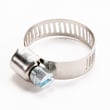
- Clamp WP596669 if a clamp is corroded, distorted, or not tightening evenly.
Why it matters
A small bottom leak can quickly damage flooring and can also lead to poor washing if the dishwasher cannot maintain the correct fill level. Fixing suds, float issues, or a loose hose clamp often restores normal operation without deeper repairs.
Last updated: February 2026
What are dishwasher arms called?
In a Whirlpool dishwasher like model DU930PWSS0, the “dishwasher arms” are called spray arms (wash arms). They rotate and spray water to clean dishes; this model family uses a top spray arm and a lower spray arm.
Names you will see in manuals and parts lists
In Whirlpool documentation, these are the most common terms:
- Top spray arm (sprays the upper rack area)
- Lower spray arm (sprays the lower rack area)
- Wash arm(s) or spray arm(s) (general term)
For the official terminology and diagrams for DU930PWSS0, use the DU930PWSS0 owner's manual.
When a “spray arm” problem looks like something else
Poor cleaning is often caused by a spray arm that cannot spin freely or is not getting good water flow. Check these common causes:
- Tall pans or utensils blocking rotation (especially in the lower rack)
- Food debris clogging spray holes
- Items loaded too close to the arm(s)
- Loose or damaged mounting hardware
- Worn seals that let water leak instead of spraying with force
If you need a model-matched replacement, the lower arm is typically listed as a dishwasher spray arm WP8268874.
Quick troubleshooting checklist
Before replacing parts, we recommend these steps:
- Spin the spray arm(s) by hand; they must move freely.
- Re-load so handles and large items do not interfere with rotation.
- Rinse and clear spray holes (use warm water and a soft brush).
- Confirm the bottom rack is seated correctly so it does not contact the arm.
- Run a cycle and listen for consistent wash action (not just filling and draining).
Common terms and what they mean
| Term you see | What it refers to | Why it matters |
|---|---|---|
| Spray arm / wash arm | Rotating arm that sprays water | Main cleaning action in the tub |
| Top spray arm | Arm under the upper rack area | Cleans glasses, cups, upper rack items |
| Lower spray arm | Arm below the bottom rack | Cleans plates, pots, and lower rack items |
Why it matters
Using the right name helps you match the correct Whirlpool part and diagnose cleaning issues faster. Many “not cleaning” complaints trace back to blocked spray holes or a spray arm that is being stopped by loading.
Last updated: February 2026