Owner’s manual
 Error Codes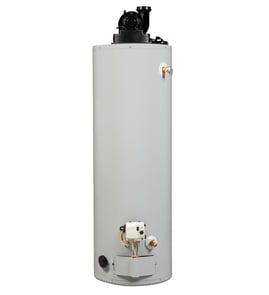




What is the average cost of a 50 gallon gas water heater?
A 50-gallon gas water heater typically costs about $600 to $2,000+ for the unit, and about $1,000 to $3,100+ installed once labor and required materials are included. For an American FG1H5040T3NOV-type replacement, the final price mainly depends on venting type, efficiency features, and local code requirements.
Here is a practical breakdown we use when setting expectations for a standard 50-gallon tank-style gas water heater replacement.
- Basic atmospheric-vent unit: ~$600 to $1,200
- Higher-recovery or premium unit: ~$1,200 to $2,100+
- Typical labor (swap-out): ~$400 to $1,000+
- Extra materials and upgrades: varies (venting, gas piping changes, shutoff valves, expansion control)
| Cost item | Typical range | What drives the price |
|---|---|---|
| Water heater (50-gal gas) | $600 to $2,000+ | Brand, warranty length, recovery rate, venting style |
| Installation labor | $400 to $1,000+ | Access, haul-away, permit, local rates |
| Materials and code items | Varies | Vent connector, gas line work, water shutoffs, expansion tank |
Some homes need additional work beyond a simple replacement.
- Venting changes (draft hood vs. power venting, chimney liner needs)
- Gas supply sizing updates (pipe diameter or run length changes)
- Combustion air requirements if the heater sits in a closet or small room
- Thermal expansion control in closed water systems (common with PRVs and backflow devices)
- Water damage prevention items (drain pan, drain routing)
A low unit price does not always mean a low total cost. Gas water heaters must be installed with correct venting, combustion air, and safe pressure control. Your FG1H5040T3NOV owner’s manual includes guidance on combustion air sizing and thermal expansion recommendations, which often affect what an installer must add.
If you are budgeting beyond the initial purchase, these parts commonly influence maintenance cost over time.
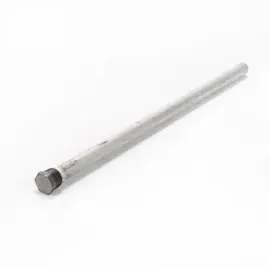
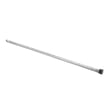
- Water heater anode rod 100109594 (helps protect the tank from corrosion)
- Drain valve 100109106 (used for flushing sediment)
- T&p valve 100108279 (critical safety valve; replace if leaking or not operating correctly)
Last updated: February 2026
What is the most common problem with gas water heaters?
The most common problem we see with gas water heaters like the American FG1H5040T3NOV is reduced performance from sediment buildup in the tank; it can cause rumbling, slower recovery, and inconsistent hot water. Routine draining and basic burner and pilot checks help prevent repeat issues (see the FG1H5040T3NOV owner's manual).
- Popping or rumbling sounds during heating
- Hot water runs out faster than it used to
- Water temperature swings during normal use
- Cloudy water when you drain the tank
- A drain valve that clogs or trickles instead of flowing
- Set the temperature to a safe starting point (120°F is the typical baseline noted in the manual).
- If hot water has not been used for 2 weeks or more, run a hot faucet for several minutes before using any appliance connected to hot water (hydrogen gas can be present).
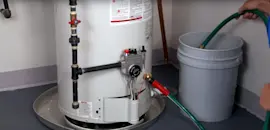
- Drain a few gallons from the tank to flush sediment; if the valve leaks or will not operate, replace the drain valve 100109106.
- If you have pilot problems (no flame, will not stay lit), inspect and service the ignition components; the water heater pilot igniter 100110936 is a common replacement item.
- If you notice a rotten egg odor, check the anode rod condition; replacing the water heater anode rod 100109594 often reduces odor and helps protect the tank.
| Symptom | Most likely cause | What to do next |
|---|---|---|
| Rumbling or popping | Sediment on tank bottom | Flush tank; increase maintenance frequency |
| Pilot will not stay lit | Dirty pilot, weak igniter, airflow issues | Clean and inspect pilot and venting; replace igniter if needed |
| Water too hot | Thermostat set too high, stacking | Lower setting; reduce short draws; consider anti-scald device |
| Water on floor near heater | Leaking drain valve or T&P valve discharge | Inspect valve and discharge pipe; replace leaking valve |
Sediment acts like insulation between the burner and the water, so the heater runs longer, wastes fuel, and can overheat components. Keeping the tank flushed and wear parts (anode rod, drain valve, pilot igniter) in good shape helps extend the life of the FG1H5040T3NOV.
Last updated: February 2026
How long do American water heaters last?
Most American gas water heaters like model FG1H5040T3NOV last 8 to 12 years with normal use and routine maintenance. Regular tank draining and periodic anode-rod inspection help the tank resist corrosion and reach the upper end of that range.
| Water heater type | Typical lifespan | What usually ends its life |
|---|---|---|
| Gas tank (like FG1H5040T3NOV) | 8 to 12 years | Tank corrosion, sediment damage, venting or burner issues |
| Electric tank | 10 to 15 years | Element/thermostat failures, tank corrosion |
We recommend following the inspection and service intervals in the FG1H5040T3NOV owner’s manual. Key habits include:
- Drain and flush the tank periodically to reduce sediment buildup.
- Inspect the venting and combustion air path at least every 3 months.
- Watch for soot, poor flame quality, or signs of restricted airflow.
- Inspect the anode rod about every 3 years; replace it if more than 50% depleted.
- Address water odor or discoloration early; an anode change can help.
A few wear items can prevent secondary damage when serviced on time:
- Water heater anode rod 100109594 (tank corrosion protection)
- Drain valve 100109106 (makes draining and flushing practical)
- T&p valve 100108279 (safety valve; replace if it won’t reseat or leaks continuously)
Once a tank starts corroding internally, performance drops and leaks become more likely. Sediment and a depleted anode rod accelerate that corrosion; routine maintenance is the most effective way to protect the tank itself.
Last updated: February 2026
What is the average labor cost to install a 40 gallon gas water heater?
For a 40-gallon gas water heater replacement like American Water Heaters model FG1H5040T3NOV, typical labor runs $400 to $1,000. A straightforward swap in an accessible location often lands $200 to $600, while installs needing venting, gas-line, or code-related updates commonly exceed $1,000.
- Venting work (draft hood alignment, vent connector changes, chimney/vent sizing)
- Gas piping changes (new shutoff, sediment trap, pressure test, leak check)
- Water piping updates (new shutoffs, dielectric unions, rerouting)
- Access and location (tight closet, attic, crawlspace, stairs)
- Permit and inspection requirements (varies by area)
- Safety add-ons (drain pan, expansion tank for closed systems)
| Scenario | What the plumber is doing | Typical labor range |
|---|---|---|
| Basic replacement | Remove old heater, set new heater, reconnect existing water, gas, and vent | $200 to $600 |
| Standard replacement | Basic replacement plus minor vent or piping adjustments and startup checks | $400 to $1,000 |
| Complex replacement | Significant venting changes, gas line reroute/resize, relocation, multiple updates | $1,000+ |
This model is installed as an indoor, vertical gas water heater with specific requirements for location, combustion air, and venting layout. Installers often spend extra time confirming vent routing (keeping runs efficient with minimal elbows) and verifying combustion air and gas supply sizing. For the exact installation checklist and venting guidance, use the FG1H5040T3NOV manual.
Labor pricing is tied to safety-critical steps: correct venting to move flue gases safely, correct gas piping to prevent leaks, and correct water piping to reduce the risk of property damage from leaks.
Last updated: February 2026
Is it cheaper to repair or replace a water heater?
Repair is usually cheaper upfront for your American FG1H5040T3NOV gas water heater, but replacement is the better value when the tank is leaking, the heater has been submerged, or multiple major components are failing. We base the decision on tank condition, safety, and total repair scope.
- Replace if the tank is leaking; a corroded tank is not a serviceable repair.
- Replace if the heater has been under water; the manual directs replacing the entire water heater after submersion.
- Repair if the problem is limited to a service part (ignition, drain valve, gasket).
- Replace if you are facing stacked major repairs (for example, gas control plus repeated no-heat issues).
- Repair for routine maintenance that prevents early tank failure (draining, flushing, anode inspection).
| Situation | Usually cheaper now | Better long-term choice |
|---|---|---|
| Minor leak at a fitting or drain outlet | Repair | Repair |
| Pilot will not stay lit | Repair | Repair |
| Gas control valve failure | Repair (sometimes) | Replace if repeated failures |
| Tank leak from corrosion | Replace | Replace |
| Flood or submersion event | Replace | Replace |
- The manual notes that if key safety controls, the burner, or the pilot have been submerged, the correct fix is full replacement.
- Anode maintenance matters; the manual calls for inspecting the anode about every 3 years and replacing it if it is more than 50% depleted.
- Drain valve 100109106 for a leaking or broken drain outlet
- Water heater pilot igniter 100110936 for ignition problems
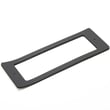
- Water heater manifold door gasket 100112699 if the burner door seal is damaged
- Water heater anode rod 100109594 to slow tank corrosion and address odor-related maintenance
A low-cost repair is only a good deal if it restores reliable, safe operation; replacement is the right call when the tank or safety situation makes repeat failures likely.
For safety steps and maintenance intervals, follow the FG1H5040T3NOV owner’s manual.
Last updated: February 2026