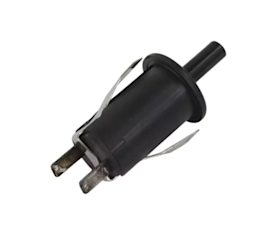
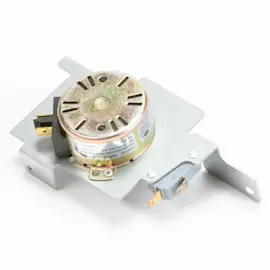
Installation guide
 Owner’s manual
 Error Codes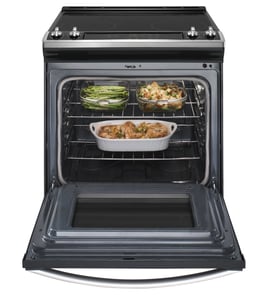



How do I tell what model Kenmore stove I have?
Your Kenmore stove’s model number is printed on the appliance identification plate. For Kenmore electric range model 79094002601, the identification plate is located on the right side of the oven front frame in the storage or warmer drawer compartment; pull the drawer out and look along the frame. Use the 79094002601 owner’s manual for the location diagram and label examples.
Where to look first (fastest checks)
- Pull out the storage or warmer drawer; check the right side of the oven front frame
- Open the oven door; scan the door frame and front frame edges
- Check the back of the range near where the power cord enters
- Look on a lower side panel near the front (some installations expose the tag)
- If your cooktop lifts, check under the cooktop surface
What you should see on the label
- Model No. (this is what you need for parts lookup)
- Serial No. (helps identify production details for service)
- A Kenmore prefix such as 790 is common on many Kenmore ranges
Model vs. serial number
| Label item | What we use it for | Typical format |
|---|---|---|
| Model number | Matching diagrams and ordering parts | 79094002601 |
| Serial number | Service identification and production info | Letters and numbers |
| Purchase date (your record) | Maintenance and ownership records | Month/day/year |
Why it matters
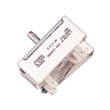
The model number ensures you get the correct Kenmore parts and fit, especially for electrical items like a bake element, oven temperature sensor, or surface element control switch.
Last updated: February 2026
Why is my Kenmore electric oven not getting hot?
If your Kenmore electric range model 79094002601 oven is not getting hot, the most common causes are a failed bake element, a bad oven temperature sensor, or a control issue that stops power from reaching the heating circuit. Start with a quick visual check, then test the heating parts.
Quick checks we recommend first
- Confirm the oven is set to BAKE (not BROIL or a timed mode).
- Make sure the oven door is fully closed.
- Check for an F-code on the display; the manual notes you can press STOP/CLEAR to stop beeping and clear the display, then retest. See the troubleshooting section in the 79094002601 owner's manual.
- Verify the range has proper power (electric ovens typically need 240V; a tripped double breaker can leave lights working but no heat).
- Keep the oven vent area clear; the manual warns to keep vent ducts unobstructed.
Most likely failed parts (and what they affect)
| Symptom | Most likely part | What you typically notice |
|---|---|---|
| Oven will not heat in Bake | Bake element | No red glow, visible blistering or a break |
| Oven heats but temperature is wrong | Oven temperature sensor | Underbakes or overbakes, long preheat |
| Broil works but Bake does not | Bake element or wiring | Top element heats, bottom does not |
| Surface burner issues plus oven issues | Terminal block or harness | Intermittent power, burning smell at rear |
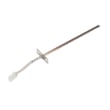
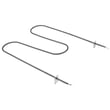
If the bake element is damaged or fails a continuity test, replace the frigidaire range bake element 316075103. If temperatures are consistently off, the frigidaire range oven temperature sensor 316490000 is a strong next suspect.
Safe troubleshooting steps
- Disconnect power at the breaker before removing panels or testing continuity.
- Inspect the bake element for cracks, holes, or burned spots.
- If you use a multimeter, test the bake element and sensor for continuity (a dead-open reading indicates failure).
- Check wiring connections for heat damage, especially at the rear power connection.
- If the control is beeping with an F-code, use the error-code guidance in Kenmore 790 self-cleaning range error codes to narrow the failure.
Why it matters
When the bake circuit cannot heat correctly, the oven may never reach set temperature, cooking times become unreliable, and the control can trigger fault codes. Fixing the heating component (element or sensor) restores stable preheat and even baking.
Last updated: February 2026
What is the average lifespan of 79094002601?
A Kenmore electric range like model 79094002601 typically lasts 13 to 15 years with normal household use. Lifespan depends most on heat stress, cleaning habits, and whether key wear items (like elements and door seals) are replaced when they start failing.
What affects lifespan the most
- Heating element condition: weak or damaged bake/broil elements run longer and strain wiring.
- Power supply quality: loose connections at the terminal block can overheat and damage components.
- Door seal performance: heat leaks make the oven work harder and can affect temperature stability.
- Cleaning and spills: heavy boilovers can damage surface element receptacles and switches.
- Usage pattern: frequent high-heat baking/broiling shortens component life faster than light use.
Quick “age vs. repair” guide
| Range age | What we usually see | Best next step |
|---|---|---|
| 0 to 5 years | Minor adjustments, light bulb, occasional switch | Maintain and keep it clean |
| 6 to 10 years | Element, sensor, door seal, terminal block issues | Repair is usually worthwhile |
| 11 to 15 years | Multiple parts aging at once | Repair if the fix is targeted |
| 16+ years | Higher chance of repeated failures | Consider replacement planning |
Parts that commonly extend oven life
If performance is slipping, these are common, high-impact fixes for this model family:
- Check the bake element for blisters, cracks, or arcing; replace if damaged (see frigidaire range bake element 316075103).
- If temperatures swing or food underbakes, test the sensor and replace if out of spec (see frigidaire range oven temperature sensor 316490000).
- If the door doesn’t seal tightly, replace the gasket to reduce heat loss (see frigidaire range oven door seal 316405000).
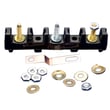
- If you ever notice a burning smell at the back or intermittent power, inspect connections and the terminal block (see kelvinator range terminal block 5304409888).
Why it matters
A range can “still turn on” but cook poorly when the oven temperature sensor drifts, the door seal leaks, or an element weakens. Fixing those items restores bake performance, reduces preheat time, and helps prevent heat-related damage to wiring and controls.
For model-specific safety, grounding, and installation requirements, follow the installation guide and the owner's manual.
Last updated: March 2026