 Owner’s manual


How to identify Kenmore dryer model?
To identify your Kenmore dryer model, look for the model and serial number plate on the dryer cabinet. On Kenmore model 11072932100, the plate is typically found on the door opening area (inside the door) or on the cabinet frame; record both numbers for parts and service.
Where to look on the dryer
Check these common locations first:
- Inside the dryer door opening on the cabinet front
- On the door frame or cabinet frame near the opening
- On the back of the dryer cabinet near the top
- Behind the lower toe panel area (if your model has one)
- Near the control console area on the cabinet
For the exact plate location and how to record it, use the 11072932100 owner's manual.
What to write down (and why)
You will usually see both a model number and a serial number. We recommend writing down:
- Model number (example: 11072932100)
- Serial number (unique to your unit)
- Date of purchase (helpful for maintenance history)
Quick reference
| Item | What it tells us | Why it matters |
|---|---|---|
| Model number | The exact dryer design | Ensures correct part fit and diagrams |
| Serial number | Production run details | Helps match revisions and service info |
| Product type | Gas dryer vs. electric dryer | Changes ignition, heating, and safety parts |
Why it matters
Kenmore dryers often share similar styling across different series, so the model number plate is the only reliable way to match the correct gas dryer parts, wiring layout, and troubleshooting steps.
Last updated: January 2026
What is the average life of a Kenmore dryer?
A Kenmore dryer typically lasts 10 to 13 years. With consistent care (especially keeping airflow clear and the lint screen clean), many Kenmore gas dryers like model 11072932100 can run longer and avoid common heat and safety shutdown problems. See the 11072932100 owner's manual for the maintenance routine.
What affects dryer lifespan the most
- Vent and lint buildup: restricted airflow makes the dryer run hotter and longer
- Lint screen habits: the manual specifically calls out keeping the lint screen clean
- Room temperature: the manual recommends using the dryer where room air is above 45°F (7°C)
- Load size: overloading strains the drive system and drum support
- Wear parts: rollers, idler pulley, and blower wheel wear gradually and get noisy
Maintenance that adds years (and saves repairs)
We recommend these basics for Kenmore gas dryers:
- Clean the lint screen before every load
- Check and clean the exhaust duct regularly so air flows strongly outside
- Keep the area around the dryer clean and free of lint
- If drying times increase, stop and correct airflow before continuing heavy use
- Address new noises early (thumping, squealing, scraping)
Common wear parts and what they impact
| Symptom | Likely area | Example part for this model |
|---|---|---|
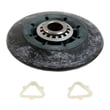
| Thumping or rumbling | Drum support rollers | Support kit WPW10314173 |
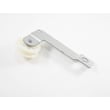
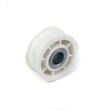
| Squealing or belt slack | Idler system | Dryer idler pulley 279640 |
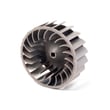
| Poor airflow, longer dry times | Blower housing/wheel | Dryer blower wheel WP697772 |
Why it matters
A dryer that dries slowly or runs hot is not just inconvenient; it accelerates wear on the motor, drum supports, and temperature safety devices. Good airflow and simple cleaning are the biggest drivers of long service life.
Last updated: January 2026
How much does it cost to replace a heating element in a Kenmore dryer?
For the Kenmore gas dryer model 11072932100, there is no electric heating element to replace; heat is produced by the gas burner system. Typical repair costs for “no heat” on this model usually fall in the $25 to $375 parts range, depending on which gas-heat component failed, plus labor if you hire service (see the 11072932100 owner's manual for safety and troubleshooting guidance).
What you actually replace on a gas dryer (instead of a heating element)
On model 11072932100, “won’t heat” repairs usually involve one of these parts:
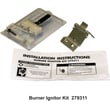
- Gas ignition part such as the igniter 279311
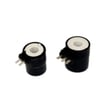
- Gas valve coils (common intermittent heat issue)
- Radiant sensor (flame sensor)
- Thermal safety device (thermal fuse or high-limit thermostat)
- Airflow parts (lint screen, blower wheel, venting)
Typical parts cost ranges for common “no heat” fixes
Parts pricing varies by symptom and what tests bad, but these are common ranges for this model’s heat system.
| Likely fix area | Example part on this model | Typical parts cost | When it’s suspected |
|---|---|---|---|
| Ignition | Igniter | $25 to $60 | No glow at burner, no flame |
| Gas valve coils | Valve coil kit | $20 to $40 | Heats then stops, relights later |
| Safety cutout | Thermal fuse / high-limit | $10 to $30 | No heat and airflow is restricted |
| Gas valve assembly | Gas valve | $200 to $400 | Valve not opening after confirmed power |
Before you buy parts: quick checks that change the diagnosis
These checks prevent replacing good parts and help you target the right repair.
- Clean the lint screen before every load.
- Check strong airflow at the outside vent hood; restricted venting can cause overheating and shutdown.
- Confirm the dryer is on a heat cycle (not air fluff).
- Listen for burner ignition sequence: igniter glow, gas valve click, flame.
- If you smell gas, follow the safety steps in the manual immediately.
Why it matters
Gas dryers like 11072932100 rely on correct airflow and multiple safety sensors. A clogged vent can mimic a failed igniter or coils, and it can also cause repeated thermal cutoffs, turning a simple cleaning job into a repeat repair.
Last updated: January 2026
What is the cubic foot of my Kenmore dryer model 11072932100?
Kenmore gas dryer model 11072932100 is a 27-inch wide dryer. The manual for this model focuses on safety, installation, and operation; for capacity, most full-size 27-inch Kenmore gas dryers are about 6.5 to 7.0 cu. ft. Confirm the exact rating in the 11072932100 owner's manual.
How to find the exact capacity for model 11072932100
Capacity may be listed as drum capacity, drum volume, or capacity in the specifications.
- Check the manual’s specifications/features section
- Look for a model/serial number plate reference; some dryers list key ratings there
- If the manual provides drum dimensions, you can estimate volume from those measurements
- Use the full model number 11072932100 when comparing any spec sheet or parts list
Typical capacity ranges (for comparison)
Use this as a sizing guide when planning load size or comparing dryers.
| Dryer type | Common width | Typical capacity |
|---|---|---|
| Full-size gas dryer | 27 inches | 6.5 to 7.0 cu. ft. |
| Compact dryer | 24 inches | 3.4 to 4.4 cu. ft. |
Why it matters
Cubic feet tells you how much space the drum has for tumbling. Correct load sizing improves drying performance, reduces wrinkles, and helps prevent long dry times caused by overloading.
Last updated: January 2026









