Owner’s manual


What is the capacity of the dle5955g?
The LG DLE5955G dryer has a 7.3 cu. ft. capacity. This is the usable drum volume for drying loads; you can also confirm key specs and operating details in the DLE5955G user manual.
What “7.3 cu. ft.” means for real-world loads
A 7.3 cu. ft. drum is considered an ultra-capacity size for many 27-inch LG dryers. In practical terms, it is designed to handle larger, bulkier loads without packing the drum too tightly.
- Handles bulky items like comforters better than smaller drums
- Helps reduce overdrying by allowing better tumbling and airflow
- Works best when loads are not tightly packed
- Overloading can still increase dry time and wrinkles
Loading tips to get the best drying performance
We recommend these habits for the DLE5955G to match the capacity with proper airflow and sensor performance:
- Clean the lint screen before every load
- Mix large and small items so the load tumbles evenly
- Avoid compressing heavy items (blankets, towels) into a tight ball
- Use Sensor Dry cycles for most everyday loads
- Leave enough space so items can tumble freely
Capacity vs. size: quick reference
| Spec type | What it describes | Why it matters |
|---|---|---|
| Capacity (cu. ft.) | Drum volume | Determines how much laundry can tumble properly |
| Dryer width (in.) | Cabinet size class (often 27-inch) | Helps with fit in your laundry space |
| Load size | What you actually put in | Affects dry time, wrinkles, and airflow |
Why it matters
Using the correct load size for a 7.3 cu. ft. drum helps the dryer’s airflow and moisture-sensing system work correctly; that means more even drying, fewer wrinkles, and less strain on components like the blower wheel and heating system.
Last updated: January 2026
What is the average lifespan of an LG dryer?
An LG dryer like model DLE5955G typically lasts 10 to 15 years with normal household use. Consistent airflow maintenance (lint filter and venting) and avoiding overheating are the biggest factors that help this dryer reach the upper end of that range.
What affects lifespan the most
- Venting and airflow: restricted exhaust makes the dryer run hotter and longer
- Lint control: cleaning the lint screen every load reduces strain on the blower system
- Heat management: repeated overheating can shorten the life of thermostats and heating components
- Load habits: chronic overloading stresses the drum support system and belt
- Installation quality: correct clearances, leveling, and proper duct materials matter
Maintenance checklist we recommend
Use the care and venting guidance in the DLE5955G user manual as your baseline.
- Clean the lint screen before (or after) every load
- Inspect and clean the vent duct periodically; keep the run short with minimal elbows
- Confirm the dryer is level to reduce vibration and wear
- Do not use plastic or thin foil venting; use 4-inch metal ducting
- Stop using the dryer if you smell burning or notice repeated overheating; investigate airflow first
Common wear items vs. typical timing
These are examples of parts that often wear before the cabinet or drum does:
| Item type | What you may notice | Example compatible part for DLE5955G |
|---|---|---|
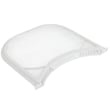
| Airflow/lint handling | Long dry times, hot cabinet | Dryer lint filter 5231EL1003B |
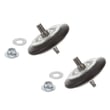
| Drum support | Thumping, rumbling | Dryer drum support roller (varies by symptom) |
| Belt drive | Drum not turning, squeal | Dryer drum belt (varies by symptom) |
Why it matters
A dryer that is forced to run with poor airflow can take longer to dry, waste energy, and overheat internal components. Keeping venting clear and the lint system maintained is the simplest way to protect performance and extend the service life of your LG DLE5955G.
Last updated: January 2026
How do I hard reset my LG dryer?
To hard reset your LG DLE5955G dryer, turn the dryer off and disconnect power for about 1 minute (unplug it or switch the breaker off), then restore power and turn the dryer back on. This clears many temporary control glitches without changing normal settings.
Hard reset steps (DLE5955G)
- Press POWER to turn the dryer off.
- Unplug the power cord (or turn the circuit breaker off).
- Wait 60 seconds.
- Plug the dryer back in (or turn the breaker on).
- Press POWER, then start a cycle.
If the dryer still will not respond
These checks help separate a simple reset issue from a power, door, or control problem:
- Confirm the dryer is getting power (outlet or breaker is on).
- Make sure the door is fully closed and latching.
- Try pressing START/PAUSE once (a paused cycle can look like a failure).
- If the display is on but buttons do nothing, check for Child Lock.
- If drying performance is poor after a reset, check airflow and the lint screen.
Common “reset” situations and what to do
| Symptom | What it usually means | What we recommend |
|---|---|---|
| Dryer is unresponsive | Control needs a power cycle or power issue | Do the hard reset; verify power source |
| Dryer starts then stops | Door not sensed closed or safety condition | Check door closure; inspect door switch |
| Long dry times | Airflow restriction or lint buildup | Clean lint screen and venting |
Parts that can cause “won’t start” symptoms
If the reset does not help and the door is shut, these parts are common suspects on dryers:
- Dryer door switch EBF61496102 (if the dryer does not sense the door closed)
- Thermal protection devices (if the dryer overheated)
- Control components (if the panel powers but won’t run)
Why it matters
A hard reset is a fast first step because it can clear a temporary electronic lockup. If the problem returns quickly, it often points to an underlying issue such as a door-sensing problem, overheating/airflow restriction, or a failing electrical component.
For control panel behavior, cycle operation, and safety notes specific to this model, use the DLE5955G user manual.
Last updated: January 2026
What is the most common problem with LG dryers?
For the LG DLE5955G, the most common repair we see across LG dryers is a no-heat or poor-heat complaint, and the top culprit is typically a failed heating element on electric models. Airflow restrictions (lint buildup) can also mimic a heating failure, so we always check venting first using the DLE5955G user manual.
What “most common” usually means in real-world troubleshooting
Many LG dryer service calls start with one of these symptoms:
- Dryer runs but clothes stay damp (no heat or weak heat)
- Cycles take too long (restricted exhaust airflow)
- Dryer shuts off mid-cycle (overheating protection)
- Loud rumbling or squealing (drum support wear)
- Dryer will not start (door switch or safety circuit issue)
Quick checks before replacing parts
These steps apply directly to the LG DLE5955G and often solve the problem without parts:
- Clean the lint screen completely before every load
- Confirm the exhaust duct is not crushed and the outside vent flap opens freely
- Run a timed dry cycle to compare performance vs sensor cycles
- Avoid overloading; heavy loads can feel like “no heat” because airflow is reduced
- If your model has FlowSense alerts, treat them as an airflow warning first
Common causes and the parts that often fix them
If venting is clear and the dryer still has heat-related issues, these are frequent repair paths:
| Symptom | Likely cause | Example part to check for this model |
|---|---|---|
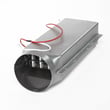
| Runs but no heat (electric) | Heating circuit failure | LG dryer heating element 5301EL1001H |
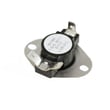
| Shuts off, overheats, or cycles heat oddly | Safety thermostat opening | Dryer high-limit thermostat 6931EL3003D |
| Long dry times with good heat | Weak airflow from lint buildup or blower issue | Dryer blower wheel 5835EL1002A |
| Rumbling or thumping | Worn drum support | Dryer drum support roller 4581EL2002L |
Why it matters
Heat and airflow work together. A restricted vent can cause long dry times, overheating shutdowns, and repeated thermostat failures, even when the heating system is fine. Fixing airflow first helps protect the heating element, thermostats, and motor.
Last updated: January 2026