Owner’s manual
 View engine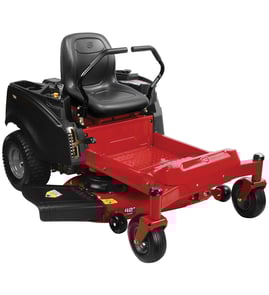




How to identify a lawn mower engine?
To identify the engine on your Craftsman riding mower model 247204182, locate the engine’s ID label or stamped numbers on the engine itself (not on the mower deck). The most reliable identifiers are the engine model, type, and code/serial; use the 247204182 owner's manual to confirm where your mower’s engine ID is typically shown.
Check these common locations first (clean the area so the numbers are readable):
- On the blower housing/shroud near the muffler or spark plug
- On the valve cover or near the air cleaner housing
- On a sticker/foil label on the engine shroud
- Stamped into metal on the front or side of the engine block
- Near the starter or flywheel area
When you find the label, write the numbers exactly as shown.
| What you see on the engine | What it’s used for | Example format (varies by maker) |
|---|---|---|
| Model | Identifies the engine family | “12Q902” or similar |
| Type / Spec | Identifies the exact build configuration | “0112” or similar |
| Code / Serial | Identifies production date/sequence | Longer numeric string |
These details help ensure you match the right parts (like belts, switches, and electrical items) to the correct engine setup:
- Use the engine numbers, not the mower model number, when shopping engine-specific parts
- If the label is missing, look for stamped numbers on the engine block
- Take a clear photo before ordering parts
- If the mower will not crank, confirm safety switches and wiring before assuming an engine issue
- For electrical testing, follow safe meter practices from how to use a multimeter to test electrical parts video
The same Craftsman mower model can be built with different engine versions over time. The engine model and type/spec determine the correct tune-up parts (spark plug, air filter), fuel system parts, and some starting/charging components.
Last updated: January 2026
Is it worth replacing a lawn mower engine?
Yes. Replacing the engine on your Craftsman rear-engine riding mower model 247204182 is worth it when the deck, frame, steering, and drive system are in good condition and the total swap cost stays well below the cost of a comparable new rear-engine rider.
- The mower drives and steers normally (the main problem is engine-related).
- The mower deck is structurally solid (not rusted through) and the spindles and pulleys turn smoothly.
- The drive system is healthy (no persistent slipping, grinding, or loss of drive).
- You can match the replacement engine’s crankshaft size, mounting pattern, and wiring.
- You are comfortable with a moderate DIY project or paying for labor.
Compare the full job cost, not just the engine price.
| Option | Typical cost level | Time/effort | Best when |
|---|---|---|---|
| Tune-up/repair (carburetor, fuel system, ignition) | Low | Low to moderate | The engine has good compression and the issue is starting or running quality |
| Replace with a complete engine | Moderate to high | Moderate | You want the most reliable “fresh start” |
| Replace with a short block | Moderate | High | You want to reuse accessories and keep costs down |
| Replace the mower | High | Low | Multiple major systems are worn (engine plus deck and drive) |
Even with a new engine, these items often determine whether the mower feels “fixed” afterward:
- Drive belt condition and routing (a worn belt can slip and feel like low power): lawn tractor ground drive belt 954-04317A
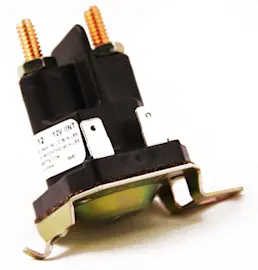
- No-crank or intermittent starting issues: lawn tractor starter solenoid 725-06153
- Random stalling or no-crank tied to operator presence and PTO safety circuits: lawn tractor interlock switch 725-04363
A rear-engine riding mower like the Craftsman 247204182 is a strong candidate for an engine replacement because the chassis and deck often outlast the engine. Making the decision based on total cost and overall condition prevents spending engine money on a mower that also needs major deck or drive repairs.
For model-specific safety steps, wiring notes, and adjustment procedures, follow the 247204182 manual.
Last updated: January 2026
What replacement parts are most commonly needed for the 247204182?
For the Craftsman 247204182 rear-engine riding mower, the most commonly replaced items are routine-wear parts (belts, blades, and deck hardware) plus a few electrical and safety components that affect starting and blade engagement. Use the diagrams in the 247204182 owner's manual to match your deck and drive configuration before ordering.
These are the parts we see customers replace most often on riding mowers like the 247204182, and several are available for this model:
- Mower blade (dull, bent, or causing vibration): Craftsman lawn tractor 46-in deck premium 2-in-1 blade 942-04244A
- Ground drive belt (slipping, no/weak movement): lawn tractor ground drive belt, 9/16 x 67-1/2-in 954-04317A
- Electric clutch (PTO) (blades will not engage): lawn tractor electric clutch 917-05209
- Starter solenoid (clicks but won’t crank, intermittent no-start): lawn tractor starter solenoid 725-06153
- Interlock switch (no-crank due to safety circuit): lawn tractor interlock switch 725-04363
- Discharge and mulching accessories (bagging/mulching performance): lawn tractor 2-bin bagger assembly 19C70020OEM, lawn tractor mulch kit 19B30005OEM
| What you notice | Most likely area | Parts to check first |
|---|---|---|
| Mower won’t move or slips under load | Drive system | Ground drive belt, idlers, transaxle linkage |
| Blades won’t turn on | PTO system | Electric clutch, wiring, interlock switch |
| Engine won’t crank | Starting circuit | Battery connections, starter solenoid, interlock switch |
| Poor cut quality or streaking | Cutting deck | Blade condition, deck level, belt tension |
Belts and blades are consumable parts; they take constant load, heat, and debris impact. Electrical items like a solenoid or interlock switch commonly fail from vibration, moisture, and normal contact wear, and they can stop the mower from starting even when the engine is fine.
- Confirm the full model number is 247204182 on the product label.
- Use the manual diagrams to identify your deck and routing.
- Compare your old part’s number and measurements (belt width and length, blade length and hole pattern).
- Replace worn fasteners (nuts, bolts, cotter pins) when removing deck and linkage hardware.
- If you are unsure between two similar parts, match by diagram location and description, not just appearance.
Last updated: March 2026