Owner’s manual
 Error Codes


What is the average lifespan of a Kenmore Elite refrigerator?
A Kenmore Elite refrigerator like model 79578516801 typically lasts 10 to 15 years with normal household use. Consistent cleaning, good airflow around the cabinet, and keeping the doors sealing properly are the biggest factors that help you reach the high end of that range (see the owner's manual).
- Condenser coil cleanliness: dust buildup makes the compressor run longer and hotter.
- Door seal condition: air leaks force longer run times and can cause frost issues.
- Room temperature and ventilation: hot rooms and tight clearances increase run time.
- How often doors are opened: frequent openings add heat and moisture.
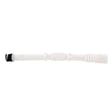
- Water and ice system upkeep: clogged filters or valve issues can create leaks and strain components.
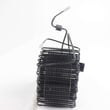
- Vacuum and brush the condenser area regularly (frequency depends on pets and dust).
- Wipe door gaskets and the door liner; keep seals clean and flexible.
- Keep vents inside the refrigerator and freezer clear of food packages.
- Level the refrigerator so doors close easily and completely.
- Replace worn sealing parts when you notice gaps, tears, or persistent condensation.
| Category | Examples | What you usually see first |
|---|---|---|
| Wear and tear items | Door gaskets, light components, bins | Leaks, sweating, warm spots, broken plastic |
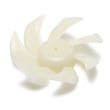
| Cooling system components | Fans, defrost parts, compressor | Temperature swings, heavy frost, constant running |
A refrigerator can still be “running” but not cooling efficiently. Longer run times raise energy use and accelerate wear on the sealed system. The manual notes that modern refrigerators often run 40% to 80% of the time under normal conditions, and more in warm conditions; keeping coils clean and doors sealed helps keep run time in a healthy range.
Last updated: February 2026
How many cubic feet is my Kenmore refrigerator by model number?
For Kenmore Elite model 79578516801, the most accurate way to get cubic feet (total capacity) is to look up the specifications in the 79578516801 owner's manual. Model numbers identify the series, but capacity is not reliably encoded in every Kenmore model number.
Use these options in order; they are the quickest and most reliable.
- Check the specifications section in the 79578516801 owner's manual
- Look for the rating/ID label inside the fresh food compartment (commonly on the right-hand side wall) and note any listed capacity information
- If the label does not list capacity, use the model number and serial number from that label to match the correct spec sheet in your documentation
- As a backup, estimate capacity by measuring interior space (less accurate, but useful if labels are missing)
Your identification label is inside the refrigerator compartment (the manual notes it is located on the right-hand side of the refrigerator compartment). That label is the best reference point because it ties your exact unit configuration to the correct documentation.
- Model number: 79578516801
- Serial number
- Date of purchase (if available)
Most Kenmore bottom-mount refrigerators in the 795 family commonly fall in the roughly 20 to 25 cubic feet range. Use this only as a planning estimate (moving, kitchen layout, food storage), then confirm the exact number in the manual.
| Method | Accuracy | Best for |
|---|---|---|
| Manual specifications | High | Exact capacity for your model |
| Rating/ID label | Medium to high | Confirming the exact unit identity |
| Measuring interior space | Low | Rough estimate only |
Cubic feet affects how you set expectations for food storage, how long the compressor may run, and which accessories and storage bins fit best. It also helps when comparing replacement refrigerators or planning a kitchen remodel.
Last updated: February 2026
Where to find model number on Kenmore Elite fridge?
On Kenmore Elite model 79578516801, the model and serial number are printed on an identification label located on the right-hand side of the refrigerator compartment (inside the fresh food section). Use that label any time you order parts or look up service information in the 79578516801 owner's manual.
- Open the fresh food (refrigerator) door and look along the right interior wall.
- Check near the crisper drawer area on the right side wall.
- Use a flashlight; the label is often easier to read with the door fully open.
- Write down both the model number and serial number before you close the door.
- Take a clear photo of the label so you have it handy when ordering parts.
| Item on label | What it’s used for | Why you need it |
|---|---|---|
| Model number (example: 79578516801) | Identifies the exact refrigerator design | Ensures parts like a door switch or gasket match your unit |
| Serial number | Identifies production run details | Helps confirm correct revisions when troubleshooting |
| Electrical ratings | Power requirements | Useful when checking outlet and circuit issues |
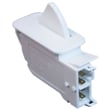
Kenmore Elite refrigerators can look similar across multiple 795-series models, but parts and diagrams can differ. Using the exact model number from the ID label helps us match the correct components (for example, a lg refrigerator door switch 6600JB1010A if you are diagnosing an interior light or door-ajar issue).
Last updated: February 2026
Why is my Kenmore Elite refrigerator leaking from the bottom?
A bottom leak on your Kenmore Elite 79578516801 refrigerator is usually caused by a clogged/iced defrost drain, a leaking water supply connection, or a cracked water line feeding the dispenser or icemaker. Start by checking the drain area and all water line fittings shown in the owner's manual.
- Look for a sheet of ice or standing water under the freezer drawer (often points to a defrost drain issue).
- Check the water line connection at the back for drips; tighten any fitting that leaks.
- Inspect the plastic water tubing for cracks, kinks, or rub-through.
- Confirm the icemaker is not turned off with a full bin; melting ice can overflow and drip.
- Make sure the refrigerator is level so water flows to the drain correctly.
| What you see | Most likely cause | What to do next |
|---|---|---|
| Water pooling under freezer drawer | Defrost drain clogged or frozen | Clear the drain path; flush with warm water and remove ice buildup. |
| Drips behind the refrigerator | Loose or leaking water line fitting | Turn water off, dry the area, then re-seat and tighten the compression nut and ferrule. |
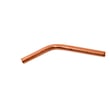
| Leak only when dispensing water or making ice | Cracked tubing or valve seepage | Inspect tubing and connections; replace damaged line such as refrigerator water tubing MJU62070602 if it is split. |
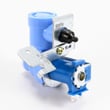
| Slow seep near valve area | Water inlet valve leaking | Test for seepage and replace the valve if it weeps, such as refrigerator water inlet valve MJX41178908. |
Water at the bottom can refreeze into a thick ice layer, block airflow, and lead to warm temperatures in the refrigerator or freezer. A small drip at a fitting can also cause ongoing floor damage if it is not corrected.
- Unplug the refrigerator before removing panels or working near wiring.
- Keep hands away from the base grille and bottom area while the unit is powered.
- If your home temperature can drop below freezing, protect the water supply system to prevent ruptured lines.
Last updated: February 2026
What are the common problems with Kenmore Elite refrigerators?
Common problems on Kenmore Elite bottom-mount refrigerators like model 79578516801 include warm temperatures, water leaks or puddles, ice maker or dispenser failures, frost buildup from door sealing issues, and fan-related noise. Our best starting point is the troubleshooting section in the 79578516801 owner's manual.
- Not cooling or weak cooling: dirty condenser coil, blocked air vents, evaporator fan issue, or defrost failure.
- Water under the refrigerator or ice in the freezer: defrost drain restriction or a damaged drain tube.
- Ice maker not making ice or slow ice: water supply restriction, inlet valve problem, or ice maker failure.
- Frost or ice crystals on food: door not closing fully, frequent openings, or a worn gasket.
- Noisy operation: evaporator fan or condenser fan problems, or airflow obstruction.
- Set temps to 37°F fresh food and 0°F freezer; allow 24 hours to stabilize.
- Clean the condenser area; dust buildup increases run time and reduces cooling.
- Make sure packages are not blocking vents.
- Check door closure and gasket contact all the way around.
- If you see puddles, inspect the drain area for ice and confirm the drain path is clear.
| Symptom | Common suspect part | What it does |
|---|---|---|
| Light or door sensing acts up | Lg refrigerator door switch 6600JB1010A | Detects door position for light and controls |
| Puddles from defrost water | Refrigerator drain tube 5251JA3003D | Routes defrost water to the drain pan |
| No ice or weak fill | Refrigerator water inlet valve MJX41178908 | Controls water flow to ice maker/dispenser |
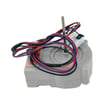
| Warm temps, noisy freezer | Refrigerator evaporator fan motor 4681JB1027C | Circulates cold air through compartments |
Cooling, ice production, and leak prevention depend on steady airflow, a tight door seal, and a clear defrost drain. Fixing the root cause prevents food spoilage, repeat icing, and floor damage.
For diagnostic codes, use the Kenmore 795 model bottom freezer refrigerator error codes guide.
Last updated: February 2026