Owner’s manual


How to hard reset Kenmore washer?
To hard reset your Kenmore washer model 11021884001, we recommend a simple power reset: unplug the washer (or switch off the breaker) for 2 minutes, then restore power. This clears many control glitches and is the safest first step before deeper troubleshooting.
Hard reset steps (power cycle)
- Press the cycle knob in to stop the washer (if it is running).
- Unplug the power cord from the outlet (or turn off the breaker).
- Wait 2 minutes.
- Plug the washer back in (or turn the breaker back on).
- Select a cycle and pull the cycle knob out to restart.
For normal stop and restart operation on this model, the timer knob is designed to push in to stop and pull out to restart; see the owner's manual.
If the washer still acts up after the reset
A reset fixes temporary control issues; it will not correct a mechanical problem (no drain, no agitation, no spin). Check these common causes:
- No drain or slow drain: kinked drain hose, clogged pump, or a failing pump.
- Won’t agitate but will drain/spin: worn agitator drive components.
- Won’t spin or makes a burning/rubbing smell: drive coupling or clutch issues.
- Shakes or bangs: out-of-level washer or suspension wear.
Parts that commonly solve “won’t drain” or “won’t agitate/spin” symptoms
| Symptom | What to check first | Example part for this model |
|---|---|---|
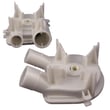
| Won’t drain | Pump for blockage or failure | Washer drain pump WP3363394 |
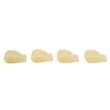
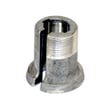
| Won’t agitate | Agitator drive wear | Agitator dog 80040 |
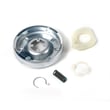
| Won’t spin (motor runs) | Motor-to-transmission connection | Coupling 285753A |
Why it matters
Resetting first prevents unnecessary part replacement and helps you separate a one-time control hiccup from a true failure in the drain system, drive system, or suspension.
Last updated: February 2026
How many cubic feet is a Kenmore Model 11021884001 washer?
The exact tub capacity (cubic feet) for Kenmore model 11021884001 is listed in the product specifications section of the owner's manual. This model is a Kenmore compact washer; most compact top-load washers are typically around 2.0 to 2.6 cu. ft.
How to find the exact capacity for 11021884001
Check these common spots in the owner's manual for the most accurate number:
- Specifications or features page near the front of the manual
- A section describing basket size or load size
- Any chart comparing cycle options and load types
- The model identification section (helps confirm you are reading the correct manual)
Typical capacity ranges (so you can sanity-check what you find)
Here is what we see most often by washer type:
| Washer type | Typical capacity range |
|---|---|
| Compact top-load washer | 2.0 to 2.6 cu. ft. |
| Standard top-load washer | 3.2 to 4.0 cu. ft. |
| Large-capacity top-load washer | 4.3 to 5.0+ cu. ft. |
Why capacity matters
Capacity affects how much you can wash per load and how well the washer can move items through the water. Overloading a compact washer can lead to poor cleaning, out-of-balance spinning, and extra wear on drive components.
Related tip: avoid overloading to protect drive parts
If the washer struggles to agitate or spin when heavily loaded, these parts are commonly involved on this style of Kenmore washer:
- Coupling 285753A (connects the motor to the drive system)
- Clutch 285785 (helps the basket engage during spin)
- Washer drive block WP389140 (locks the basket to the drive tube)
Last updated: February 2026
How to read Kenmore washer model numbers?
Kenmore washer model numbers are read in sections: the first 3 digits identify the manufacturer, the next group identifies the base design, and the remaining digits show feature or production variations. For your Kenmore model 11021884001, the full number is what we use to match the correct parts list.
Where to find the model number on the washer
Your washer’s model and serial numbers are printed on the model and serial number plate. Use the full model number exactly as shown when ordering parts or checking diagrams.
- Look for a label or plate on the washer cabinet (often under the lid or along the rim)
- Record both the model number and serial number for future reference
- Use the complete model number, not just the first few digits
- Match letters and numbers exactly (no spaces)
What each section of a Kenmore model number means
Kenmore model numbers are structured so the beginning tells us who built it, and the rest narrows down the exact configuration.
| Model number section | What it tells us | Why it matters |
|---|---|---|
| First 3 digits (prefix) | Manufacturer code | Helps identify the design family and compatible parts |
| Middle digits | Base model/platform | Points to the correct diagrams and core components |
| Ending digits | Version/feature variation | Ensures the right fit for switches, valves, baskets, and trim |
Why it matters for parts and troubleshooting
Even small model variations can change which components fit, especially on washers where drive and suspension parts must match the exact design.
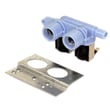
- Correct parts matching for items like the washer inlet valve 285805 and washer drain pump WP3363394
- Accurate diagram lookup for drive system parts (coupling, clutch, gear case)
- Fewer returns due to “looks the same but doesn’t fit” issues
Best practice when ordering parts
- Use the full model number: 11021884001
- Compare the part name and part ID, not just the description
- Confirm the symptom first (fill, drain, spin, agitation) before choosing a part
- Cross-check procedures and safety notes in the owner's manual
Last updated: February 2026
Is Kenmore 11021884001 high end?
The Kenmore 11021884001 is a compact, traditional top-load washer design; it is built for dependable everyday washing rather than “high-end” premium features. In practice, “high end” usually means advanced cycles, larger capacity, and premium controls, which are not the main focus of this model (check the owner's manual for the exact feature set).
How to tell if a washer is “high end”
We use these practical markers when comparing washers:
- Capacity and tub size: premium models are usually larger-capacity
- Controls: digital display, more cycle options, more precise temperature control
- Spin performance: higher spin speeds and better out-of-balance control
- Noise and vibration: improved suspension and cabinet insulation
- Convenience features: specialty cycles, dispensers, and more automation
What you can expect from model 11021884001
This model is typically valued for straightforward operation and serviceable, common-wear components.
- Traditional wash action with an agitator-style layout
- Common mechanical drive system parts that are widely replaceable
- Practical maintenance and repair path when wear items fail
Common “performance” parts that affect how it feels in use
If the washer is not agitating well, not spinning strongly, or is noisy, these parts are often involved:
| Symptom | Often related to | Example part on this model page |
|---|---|---|
| Weak agitation | Worn agitator drive components | Agitator dog 80040 |
| Won’t spin or agitates poorly | Drive coupling wear | Coupling 285753A |
| Drains slowly or not at all | Drain pump issue or blockage | Washer drain pump WP3363394 |
| Slips during spin | Clutch wear | Clutch 285785 |
Why it matters
If you are shopping by “high end,” you are usually paying for extra features and refinement. If you are shopping for reliability and repairability, the Kenmore 11021884001 style of washer is often a strong fit because key wear parts (coupling, pump, clutch, agitator components) are straightforward to replace.
Last updated: February 2026
What is the average lifespan of a Kenmore washer?
A Kenmore washer typically lasts 10 to 15 years with normal household use and basic maintenance. For your Kenmore 11021884001 compact washer, following the loading, detergent, and care guidance in the owner's manual helps reduce wear on key drive and drain components.
Typical lifespan and what affects it
Most washers reach the 10 to 15 year range; the difference usually comes down to usage and upkeep.
Common factors that shorten or extend washer life:
- Load size and balance (frequent overloading increases stress on the basket and suspension)
- Water quality (hard water can increase residue and valve issues)
- Drain performance (slow draining strains the pump and can leave standing water)
- Agitation and drive wear (worn couplers, clutch parts, or agitator components reduce wash action)
- Routine cleaning (reduces odor, residue, and corrosion)
Signs it may be nearing end of life
These symptoms often show up as parts wear accumulates:
- Loud grinding, squealing, or repeated slipping during agitation or spin
- Frequent leaks from the tub area or hoses
- Slow or incomplete draining
- Excessive vibration or “walking”
- Poor cleaning performance even with correct cycle settings
Quick symptom-to-part check
| Symptom | Common area to inspect | Example part for this model |
|---|---|---|
| Won’t drain or drains slowly | Drain pump, drain path | Washer drain pump WP3363394 |
| Weak agitation | Agitator dogs, agitator | Agitator dog 80040 |
| No agitation/spin, motor runs | Motor coupling | Coupling 285753A |
How to extend the life of your 11021884001
These steps prevent the most common wear patterns:
- Load items loosely; do not wrap items around the agitator (helps prevent strain and tangling)
- Use the right amount of detergent; too much can cause buildup
- Keep the washer level to reduce suspension and basket wear
- Check pockets and remove heavy debris before washing
- Address small leaks or slow draining early to avoid bigger failures
Why it matters
A washer can run for years with minor part replacements, but ignoring early symptoms often leads to higher-stress failures in the drive system, basket, or drain components. Replacing a worn wear-item part early can restore performance and reduce strain on the gear case and motor.
Last updated: February 2026