Owner’s manual
 Error Codes


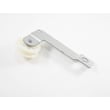
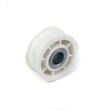
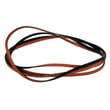
Where is the model number on a Kenmore Elite dryer?
On Kenmore Elite dryer model 11085087401, the model number is typically printed on a rating label inside the dryer door opening. Open the door and check the cabinet frame around the opening first; that is the most common location.
Look for a sticker or metal plate in these spots:
- Inside the door opening on the top of the cabinet frame
- Inside the door opening on the left or right side of the cabinet frame
- On the inside surface of the door (less common)
- Behind the toe panel area (only if the label is missing from the door opening)
The label usually includes the model number and serial number together. For Kenmore dryers, the model number often starts with 110.
- Open the dryer door.
- Use a flashlight and scan the entire door opening frame, especially the upper corners.
- Wipe dust off the label so the numbers are readable.
We use the exact model number to match the correct Kenmore Elite dryer parts and diagrams. Even small model-number differences can change which heating element, drum support roller, or door parts fit.
Use the model number to confirm parts and troubleshooting info:
| What you need | Where you’ll use it | Example for this dryer |
|---|---|---|
| Model number | Parts lookup and diagrams | 11085087401 |
| Serial number | Date code and production run details | Printed on same label |
For model-specific identification details and label examples, check the 11085087401 owner's manual. To order replacement parts by model, you can also search by model number on Sears PartsDirect.
Last updated: February 2026
What size is a Kenmore Model 11085087401 dryer?
The Kenmore Elite dryer model 11085087401 is 27 inches wide, about 31 1/2 inches deep, and about 50 1/2 inches high (to the top of the cabinet). These are the cabinet dimensions shown in the owner's manual.
Even when the cabinet size fits, installation space often needs extra room for venting, door swing, and service access.
- Width: 27 in (68.6 cm)
- Depth: about 31 1/2 in (90.01 cm)
- Height: about 50 1/2 in (128.27 cm)
- Recommended rear clearance: at least 5 1/2 in for the exhaust vent with an elbow (common requirement for this style of vented electric dryer)
- Closet or recessed installs: allow extra side clearance (about 1 in on each side is commonly recommended to reduce noise transfer)
| Measurement | Dryer cabinet size | What can change it |
|---|---|---|
| Width | 27 in | Usually fixed |
| Depth | ~31 1/2 in | Vent elbow, duct routing, wall clearance |
| Height | ~50 1/2 in | Leveling feet adjustment, optional pedestal |
This model supports optional pedestals that increase overall height.
- 13 in pedestal: total height becomes about 51 in
- 15.5 in pedestal: total height becomes about 53 in
- For garage installs, the manual also calls out minimum elevation above the floor; follow the owner's manual guidance for safe placement.
Correct sizing helps prevent crushed or kinked venting (which causes long dry times and overheating), ensures the door opens fully, and leaves enough room to service common wear items like drum rollers and the belt system.
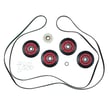
If you’re planning a rebuild while you have the dryer pulled out, we commonly see customers replace wear parts together using a kit such as the dryer repair kit 4392067. You can also search by model number on Sears PartsDirect if you need additional parts beyond the list for 11085087401.
Last updated: February 2026
How do I know if my Kenmore dryer thermal fuse is blown?
If your Kenmore Elite dryer model 11085087401 won’t start, or the drum turns but there’s no heat, a blown thermal fuse is a common cause. The sure way to confirm is a continuity test with a multimeter; we also recommend checking household breakers/fuses first as outlined in the 11085087401 owner's manual.
A thermal fuse is a one-time safety device; when it opens, it can shut the dryer down (or shut off heat) to prevent overheating.
- Dryer won’t start at all (no motor run)
- Dryer runs but produces no heat (clothes stay damp)
- Cycle seems normal but drying time suddenly gets much longer (often paired with restricted venting)
- Problem appears after the dryer overheated (very hot cabinet, strong hot smell)
- Unplug the dryer (or shut off power at the breaker).
- Access the thermal fuse (location varies by design; commonly on the blower housing or exhaust duct area).
- Pull the wires off the fuse terminals.
- Test across the fuse terminals for continuity.
| Meter result | What it indicates | What to do next |
|---|---|---|
| Continuity (near 0 ohms / closed circuit) | Fuse is good | Keep troubleshooting (heat circuit, airflow, controls) |
| No continuity (open circuit) | Fuse is blown | Replace the fuse and correct the overheating cause |
A blown thermal fuse is often the result of overheating from poor airflow.
- Clean the lint screen and lint housing
- Check the vent hose for kinks, crushing, or long runs
- Clear lint buildup in the exhaust duct to the outside
- Make sure the outside vent hood opens freely
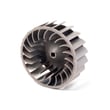
- Inspect the blower area; a damaged wheel can reduce airflow (see dryer blower wheel WP697772 if yours is cracked or stripped)
Replacing a thermal fuse without fixing airflow can lead to repeat failures, longer dry times, and overheating. Restoring proper venting protects key components like the heating element and motor.
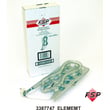
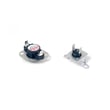
For this model, common heat and airflow related parts you may see on the parts list include the dryer thermal cut-off fuse kit 279973 and the dryer heating element WP3387747. You can order replacement parts from the parts list for model 11085087401, or search by model number on Sears PartsDirect.
Last updated: February 2026
What are common problems with Kenmore dryers?
Common problems with the Kenmore Elite dryer model 11085087401 include not starting, running with no heat, long dry times, and unusual noises. These issues usually come from power supply problems, restricted airflow from lint buildup, or normal wear of drum support and drive components; see the 11085087401 owner's manual for model-specific troubleshooting.
- Dryer will not run: tripped breaker or blown fuse (many electric dryers use two), door not fully closed, Start not held long enough
- No heat (drum turns): one side of 240V power is out, heater circuit failure, overheating from poor venting
- Long dry times: clogged lint screen, crushed/blocked exhaust duct, lint buildup inside ducting
- Unusual sounds: worn rollers or idler pulley, blower wheel issue, small items caught at drum edge
- Confirm both breakers are ON (electric dryers need 240V)
- Close the door firmly; press and hold Start 2 to 5 seconds for some loads
- Clean the lint screen every load; check strong airflow at the outside vent hood
- Check pockets and drum edges for coins, buttons, or paper clips
| Symptom | Part to check | Example part on this model page |
|---|---|---|
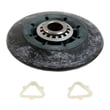
| Squealing/rumbling | Drum support roller | Support WPW10314173 |
| Squealing, belt slack | Idler pulley | Dryer idler pulley 279640 |
| No heat | Heating element | Dryer heating element WP3387747 |
| Overheats, shuts down | Thermal cut-off kit | Dryer thermal cut-off fuse kit 279973 |
Restricted airflow makes drying slow and drives temperatures up, which can trip thermal safety devices and shorten the life of the motor and heater circuit.
Match parts to model 11085087401 using the parts list for this dryer; for broader model searches, use Sears PartsDirect.
Last updated: February 2026