Error Codes


How do I tell what model my Kenmore dryer is?
Your Kenmore dryer’s model number is printed on the appliance’s ID label; once you find it, match it exactly (letters and numbers) to look up the correct parts and diagrams. For this page, the model number format looks like 11097576200.
Most Kenmore dryers have the model/serial label in one of these spots:
- Inside the dryer door opening on the cabinet frame
- On the back panel of the dryer cabinet
- Along the door opening edge near the door switch area
- Near the lint screen housing (some designs place the label nearby)
Kenmore model numbers often start with a prefix that helps identify the platform. For example, many Kenmore dryers use a 110 prefix. The full model number (like 11097576200) is what we use to ensure parts such as a belt, door switch, or gas ignition components fit correctly.
| What you see on the label | What to do | Why it helps |
|---|---|---|
| A long number (example: 11097576200) | Use the full number exactly as printed | Ensures correct part fit and diagrams |
| Model and serial together | Record both | Serial can help confirm production variation |
| Missing or unreadable label | Check the door opening and rear panel carefully | These are the most common locations |
If the dryer will not start or will not tumble, these common parts are often involved:
- Door switch W10820036 (dryer will not run if the switch does not close)
- Drum belt 341241 (broken belt can stop tumbling)
- Drive motor 279827 (motor hums or will not run)
- Dryer timer WP3398190 (timer contacts can fail on some symptoms)
Using the exact Kenmore model number prevents ordering the wrong replacement part and helps you follow the right disassembly path for your specific gas dryer configuration.
Last updated: February 2026
How do I troubleshoot my 11097576200?
To troubleshoot your Kenmore gas dryer 11097576200, start by matching the symptom (no heat, no start, noisy, long dry times) to airflow, door switch, and ignition checks. Many issues trace to lint restriction, a failed door switch, or gas ignition parts.
- Unplug the dryer before opening panels
- Shut off the gas supply if you smell gas or you are servicing burner components
- If you are not comfortable working around gas or wiring, use a qualified technician
- Confirm the outlet has power (reset breaker)
- Make sure the door fully closes; test/replace the door switch W10820036
- Check the timer and start switch for normal feel and operation
- Verify gas supply valve is open
- Watch for ignition sequence: igniter glows, then flame
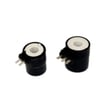
- If igniter glows but no flame, replace the dryer valve coil kit 279834
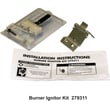
- If igniter never glows, suspect the igniter 279311 or a heat circuit issue
- Clean lint screen and inspect the entire vent run for blockage or crushed duct
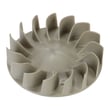
- Check blower performance; a damaged wheel can reduce airflow (see dryer blower wheel WP694089)
- Confirm the dryer is not pushed tight against the wall, pinching the vent
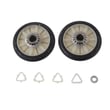
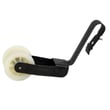
- Inspect belt, idler pulley, and drum support surfaces
- Replace worn belt or idler if you see glazing, cracks, or wobble
| Tool | What we test | What a bad result suggests |
|---|---|---|
| Multimeter | Continuity on switches/thermostats | Open switch, failed thermostat, wiring issue |
| Visual inspection | Lint buildup, burnt connectors | Airflow restriction, overheating damage |
| Listen/feel | Squeal, scraping, heavy drag | Idler, belt, drum support wear |
Accurate troubleshooting prevents repeat failures. For example, replacing ignition parts without fixing restricted venting often leads to overheating and short cycling.
Last updated: March 2026
What is the average lifespan of 11097576200?
A Kenmore gas dryer like model 11097576200 typically lasts 13 years with normal household use and good airflow. Keeping the venting clear and replacing wear items early (like a belt or idler pulley) helps you reach that lifespan.
Most dryers hit their expected life when heat, airflow, and drum support parts stay in good shape.
- Venting and lint control: restricted airflow overheats parts and shortens life
- Load size: frequent overloading strains the motor, belt, and drum supports
- Heat system health: weak ignition or cycling issues increase run time and wear
- Maintenance: cleaning lint paths and checking rollers reduces noise and drag
If your 11097576200 still heats but is noisy, slow, or stops turning, these are common wear points.
| Symptom | Common wear area | Example part for this model |
|---|---|---|
| Drum not turning | Belt or idler system | Drum belt 341241 |
| Squealing or thumping | Drum support/bearing surfaces | Bearing ring, shafts, seals (varies by symptom) |
| Runs but no heat or intermittent heat | Gas ignition components | Igniter, coils, radiant sensor |
A dryer near end-of-life often shows up as longer dry times, higher gas use, and repeated thermal issues. Fixing airflow and a single wear part early can prevent a cascade of failures.
- Clean the lint screen every load
- Check outside vent flap opens strongly while running
- Keep the vent run short and not crushed
- Vacuum lint around the door opening and filter housing
Last updated: March 2026