Installation guide
 Owner’s manual
 Error Codes


How long should a Kenmore gas stove last?
A Kenmore gas range typically lasts 15 years with normal household use. For Kenmore model 79078773407, consistent cleaning, correct burner setup, and replacing wear items (like an oven light bulb or igniter) on time are the biggest factors in reaching that lifespan; see the 79078773407 owner's manual.
Typical lifespan and what changes it
Most gas ranges fall into a predictable range, and maintenance is what moves you toward the high end.
- Typical gas range lifespan: 13 to 18 years
- Common “life extenders”: keeping burners clean, fixing ignition issues early, avoiding harsh cleaners on surfaces
- Common “life shorteners”: repeated boil-overs into burner heads, running the oven with a damaged door seal, ignoring weak ignition
Quick checklist to help your range reach 15+ years
- Keep burner heads and grates clean and fully dry after washing
- Make sure burner caps and heads sit flat and centered after cleaning
- Wipe spills promptly to prevent corrosion and clogged gas ports
- Avoid spray oven cleaners on the cooktop surface (they can damage finishes)
- Replace worn parts as soon as symptoms show up (light out, weak ignition, heat loss)
Wear items vs. major repairs (what to expect)
| Item type | Examples on model 79078773407 | What it usually means |
|---|---|---|
| Wear items | Range oven light bulb 316538904, igniters, seals | Normal upkeep; helps extend lifespan |
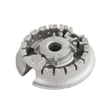
| Performance parts | burner head, pressure regulator | Fixes poor flame, uneven heat |
| Major repairs | control board, gas valve | Higher cost; evaluate overall condition |
Why it matters
A gas range can keep cooking safely and evenly for years, but small issues compound. For example, a poor door seal can waste heat and overwork components, and dirty burner ports can cause delayed ignition and uneven flames.
Last updated: February 2026
How to change Kenmore spark electrode igniter?
To change a spark electrode igniter on your Kenmore gas range model 79078773407, we shut off power and gas first, then remove the burner parts to access the electrode, transfer the wire to the new electrode, and reinstall everything so the burner lights quickly and consistently. See the 79078773407 installation guide for gas shut-off and safety details.
Safety first (do this before any disassembly)
- Turn the surface burner knob to OFF and let the cooktop cool completely.
- Unplug the range (or switch off the circuit breaker).
- Close the manual gas shut-off valve to isolate the range from the gas supply.
- Work in good light; keep screws and small parts organized.
- If you smell gas at any point, stop and restore the area to a safe condition before continuing.
Steps to replace the spark electrode igniter
- Remove the burner grate.
- Lift off the burner cap and burner head (keep the parts matched to the same burner).
- Remove the mounting screw holding the electrode/igniter assembly.
- Pull the electrode up enough to access the wire connection.
- Transfer the wire to the new electrode:
- Attach the connector to the wire.
- Crimp the connector so it fits tightly and will not pull off.
- Insert the new electrode into the orifice holder and secure it with the screw.
- Reinstall the burner head and cap; make sure the cap sits flat so the electrode is not stressed.
- Restore gas and power; test ignition.
Quick checks after replacement
- You should hear sparking and see the burner ignite within a few seconds.
- If the burner lights but goes out on low, adjust the low flame setting at the valve stem (thin-blade screwdriver method described in the installation instructions).
- If ignition is uneven, clean burner ports and confirm the burner cap is seated correctly.
| Symptom | Most common cause | What we do next |
|---|---|---|
| Clicking but no flame | Burner cap/head misaligned or dirty ports | Reseat and clean burner parts |
| Weak/slow ignition | Electrode gap/position off or loose wire | Reposition electrode, tighten connection |
| Burner goes out on LOW | Low flame needs adjustment | Adjust low setting at valve stem |
Why it matters
A properly installed electrode and clean burner head prevent delayed ignition and help keep the flame stable, especially when turning from LITE to a low setting.
Last updated: February 2026
What does F31 mean on a Kenmore gas stove?
On Kenmore gas range model 79078773407, the F31 code points to a problem with the oven temperature sensing circuit (most often the oven temperature sensor/probe or its wiring), which can cause inaccurate heating or the oven to stop heating for safety.
What to do first (safe, quick checks)
- Press CANCEL/OFF to clear the code, then restore power by turning the breaker OFF for 1 minute and back ON.
- If the code returns, stop using the oven until the cause is corrected.
- Check for obvious issues: loose connector, pinched wire harness, or heat-damaged wiring at the back of the range.
- If the code appeared during self-clean, let the range cool completely and try a normal bake cycle.
- Use the troubleshooting section in the 79078773407 owner's manual to confirm the recommended checks and any model-specific steps.
How F31 relates to F30
F30 and F31 are commonly paired as “oven temperature sensor circuit” errors. The difference is typically the direction of the fault (open vs. short), but the fix path is the same: inspect the sensor, wiring, and control.
| Code | What it usually indicates | Most common causes |
|---|---|---|
| F30 | Sensor circuit “open” | Unplugged connector, broken wire, failed sensor |
| F31 | Sensor circuit “shorted” or out-of-range | Pinched wire, moisture/heat damage, failed sensor |
Parts that are often involved
If testing shows the sensor is out of spec or the connector is damaged, replacement is the normal repair.
- Oven temperature sensor/probe: on this model, see the probe 316490001 listing
- Control board (less common): intermittent sensor readings can also be caused by a failing electronic control
- Wiring/connectors: heat damage near the oven cavity or rear panel can trigger repeat codes
Why it matters
When the range cannot trust the temperature feedback, it may overheat, underheat, or shut the oven down. Fixing the sensor circuit restores accurate baking and helps prevent repeat shutdowns.
Last updated: February 2026
Where to find model number on Kenmore gas range?
On Kenmore gas range model 79078773407, the model and serial number are printed on an identification plate on the right side of the oven front frame. Check the frame area you see when you open the lower front compartment area and look along the right-side metal frame.
Where to look first on model 79078773407
- Open the lower front compartment area below the oven door
- Use a flashlight and look along the right-side oven front frame
- Find the identification plate with Model No. 790. and a Serial No.
- Write the numbers down exactly as shown (including all digits)
- Take a clear photo; it helps when ordering Kenmore parts
If you do not see the plate right away
Grease and heat can darken the label. These quick checks help you spot it:
- Wipe the right-side frame with a damp cloth and mild cleaner
- Look for a silver or white sticker or metal tag
- Check slightly above and below the opening edge on the same right-side frame
What to record (and why)
| Item on the plate | What it helps with | Example format |
|---|---|---|
| Model number | Matching diagrams and parts to your exact range | 790.XXXXXXX |
| Serial number | Identifying production changes for the same model | Letters and numbers |
Why it matters
Using the exact model and serial from the identification plate prevents ordering the wrong burner parts, oven controls, or hardware for your Kenmore range. The product record section in the 79078773407 owner’s manual also points you to this identification plate location.
Last updated: February 2026
Who makes Kenmore 79078773407?
Kenmore model 79078773407 is a Kenmore gas range built for Sears; the 790 model prefix identifies Frigidaire (Electrolux) as the manufacturer for this range family. For confirmation details and the exact ID plate location, use the 79078773407 owner's manual.
How to confirm on the appliance ID plate
We recommend matching the model prefix and verifying the full model and serial number on the range.
- Open the storage or warmer drawer.
- Look on the right side of the oven front frame for the identification plate.
- Confirm the model reads 79078773407 (prefix 790).
- Record the serial number for parts lookup and service history.
- Keep the information with your purchase records.
What the model prefix means (quick reference)
Kenmore uses manufacturer prefixes; for ranges, the prefix is the fastest way to identify who built the unit.
| Kenmore model prefix | What it indicates | Why you care |
|---|---|---|
| 790 | Frigidaire (Electrolux) built | Helps match correct diagrams and parts |
| Full model number (79078773407) | Your exact configuration | Ensures correct fit and compatibility |
Why it matters for parts and repairs
Knowing Frigidaire (Electrolux) built your Kenmore 79078773407 helps us narrow to the correct component designs (burner system, oven ignition, control layout) so you order the right replacement part the first time.
If you are troubleshooting a specific symptom (no bake, weak flame, no ignition), start with the diagnostic and safety steps in the 79078773407 owner's manual before replacing parts.
Last updated: February 2026
Why won't my Kenmore gas oven heat up?
If your Kenmore gas range model 79078773407 won’t heat, the most common causes are a weak igniter, controls not set correctly (including the clock/time), or the gas regulator being OFF. Start with basic settings and power, then move to ignition and gas-supply checks using the 79078773407 owner’s manual.
Quick checks (fastest fixes first)
- Confirm the time of day is set; this model can require the clock to be set before the oven will operate.
- Verify you selected the correct Bake or Broil function and temperature.
- Make sure the range has power (plug seated, breaker not tripped); electric ignition needs electricity.
- Check that the gas supply shutoff valve is open.
- Confirm the range pressure regulator is ON; see the 79078773407 installation guide for regulator and gas-supply details.
What to look for when you try to bake
When you set Bake, watch and listen for the normal ignition sequence.
| What you observe | What it usually means | What to do next |
|---|---|---|
| No glow from igniter, no click | No power to ignition or control issue | Recheck outlet/breaker, clock setting, and control selection |
| Igniter glows but burner never lights | Weak igniter or gas valve not opening | Test igniter circuit; replace failed component |
| Burner lights but heat is low/uneven | Burner/orifice issue or gas pressure problem | Inspect burner area; have gas pressure checked |
Parts that commonly cause “no heat”
If the quick checks pass, these are the most frequent repair items on gas ovens:
- Oven igniter (most common); a weak igniter can glow but still not open the gas valve.
- Oven gas valve; if it fails, gas won’t flow to the bake burner.
- Bake burner; damage or blockage can prevent proper flame.
- Temperature sensor/probe; a bad sensor can cause incorrect operation.
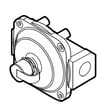
Model-matched parts you may need include the range oven gas valve 316404901 and the range bake burner 316404400.
Why it matters
A gas oven that won’t heat is often an ignition or gas-flow problem. Fixing the root cause restores safe, reliable lighting and helps prevent repeated ignition attempts that can delay cooking and stress components.
Last updated: February 2026