 Owner’s manual
 Error Codes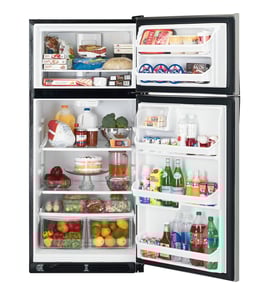



What is the average lifespan of a Kenmore 11170719910 refrigerator?
Most Kenmore 11170719910 top-mount refrigerators last 10 to 15 years with normal household use. Keeping the condenser area clean, maintaining good door seals, and fixing airflow or defrost issues early typically helps you reach the upper end of that range; see the owner's manual for model-specific care and safety guidance.
Typical lifespan and what affects it
A refrigerator’s life is usually determined by how hard the sealed system and fans have to work day to day.
- Maintenance: dust buildup and blocked airflow shorten compressor life
- Door gasket condition: warm air leaks increase run time and frost
- Room conditions: hot garages and tight enclosures raise operating stress
- Ice maker and water supply (if equipped): poor water pressure or leaks can cause secondary damage
- Usage habits: frequent door openings and overpacking reduce airflow
Quick “repair vs. replace” checkpoints
If your Kenmore 11170719910 is approaching the 10 to 15 year mark, these checks help you decide what to do next.
| What you’re seeing | Most common cause | What we recommend first |
|---|---|---|
| Warm fridge, freezer OK | Evaporator airflow problem | Check for blocked vents, listen for the evaporator fan |
| Heavy frost on back wall | Defrost system issue or door leak | Inspect door seal, confirm doors close squarely |
| Constant running | Dirty condenser, warm room, gasket leak | Clean condenser area, verify door seal contact |
| Water under fridge | Defrost drain issue | Clear the drain path and check drain pan |
Why it matters
A fridge that runs longer than it should uses more electricity and wears out key components faster. Simple upkeep (airflow, seals, cleaning) reduces run time and helps the refrigerator hold safe food temperatures longer.
Helpful model-specific troubleshooting
If you see an error code or suspect an electronic issue, use our guide for this platform: Kenmore 111 model top freezer refrigerator error codes.
Last updated: February 2026
What is the top part of a refrigerator called?
In a Kenmore 11170719910 top-mount refrigerator, the top compartment is typically called the freezer compartment (or simply the freezer). It is designed to keep foods frozen and, on some models, can support an optional ice maker.
Common names you will see
- Freezer compartment
- Freezer section
- Top freezer
- Freezer cabinet (less common)
What the top compartment does
The freezer’s job is to maintain below-freezing temperatures so food stays safely frozen. Depending on how your refrigerator is equipped, it may also:
- Provide space for ice trays or an ice bin
- Circulate cold air that helps cool the fresh food section below
- Include shelves, door bins, and a light (varies by configuration)
Quick comparison: freezer vs fresh food section
| Compartment | Typical location on a top-mount refrigerator | Primary purpose |
|---|---|---|
| Freezer compartment | Top | Freezes and stores frozen foods |
| Fresh food (refrigerator) compartment | Bottom | Cools and stores fresh foods |
Why it matters
Knowing the correct name helps when you are using the owner's manual for temperature settings, cleaning guidance, and troubleshooting symptoms like warm freezer temperatures, frost buildup, or ice maker issues.
If you are seeing a code on the display, use the Kenmore 111 model top freezer refrigerator error codes guide to match the code to the most likely cause.
Last updated: February 2026
What are the common problems with Kenmore 11170719910 refrigerators?
Common problems we see with the Kenmore 11170719910 top-mount refrigerator include warm temperatures from restricted airflow (frosted evaporator area or blocked vents), water leaking from a clogged defrost drain, noisy operation from a worn fan, and ice maker or water issues tied to supply pressure or a clogged filter. Use the owner's manual for model-specific checks and safety guidance.
Most common symptoms and likely causes
- Not cooling or weak cooling: dirty condenser coils, evaporator fan not running, heavy frost blocking airflow, door not sealing
- Frost buildup in freezer: door left ajar, damaged door gasket, defrost system problem
- Water under the fridge or in fresh food section: clogged/iced defrost drain, drain pan overflow
- Loud buzzing, rattling, or grinding: evaporator fan blade hitting ice, condenser fan wear, items vibrating on shelves
- Ice maker not making ice (if equipped): low water pressure, kinked water line, frozen fill tube, clogged filter
Quick checks we recommend (in order)
- Confirm temperatures: 0°F in the freezer and 37°F in the refrigerator.
- Make sure air vents are not blocked by food packages.
- Inspect door gaskets for gaps; close a dollar bill in the door and check for easy pull-out.
- Look for frost on the rear freezer panel; heavy frost points to an airflow or defrost issue.
- If you have an ice maker, verify the water supply is on and within typical household pressure.
Water and ice maker specs to know
The manual lists these water supply limits for models in this family; staying in range prevents fill problems and leaks.
| Item | Specification |
|---|---|
| Minimum inlet water pressure | 207 kPa |
| Maximum inlet water pressure | 827 kPa |
| Ice maker rated power (optional) | 145 W |
Why it matters
Most “not cooling” complaints are actually airflow problems (ice buildup or a failed fan). Catching that early helps prevent food spoilage and reduces strain on the sealed system.
If you’re seeing a display code or unusual indicator behavior, use our Kenmore 111 model top freezer refrigerator error codes guide to narrow the problem to a specific circuit or sensor.
Last updated: February 2026





