Installation guide
 Owner’s manual
 Error Codes




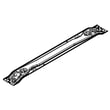




Where can I order Maytag washing machine parts?
You can order replacement parts for your Maytag washer model MHW4300DC0 right here by matching the symptom or the part name to the correct component, then confirming fit by model number. For part identification and safe DIY guidance, use the MHW4300DC0 owner’s manual.
- Start with the symptom (won’t drain, won’t fill, leaking, door won’t seal) and narrow to the most likely part.
- Confirm your full model number MHW4300DC0 and your washer’s serial number before ordering.
- Use factory-specified parts for best fit and performance.
- If you are unsure which component failed, check troubleshooting steps in the manual first.
- For installation requirements (power, grounding, hookups), reference the MHW4300DC0 installation guide.
| Problem you see | Part that often fixes it | Example part for MHW4300DC0 |
|---|---|---|
| Washer won’t drain or drains slowly | Drain pump or pump filter blockage | Washer drain pump WPW10605427 |
| Water level issues (overfills, underfills, won’t sense) | Water-level pressure switch or air trap | Washer water-level pressure switch (model-matched) |
| Leaks at the door | Door boot (bellow) or clamp | Washer bellow (model-matched) |
Ordering by exact model number helps prevent returns and downtime. On front-load Maytag washers like MHW4300DC0, a single wrong-fit seal, clamp, or pump can cause leaks, drain errors, or repeat failures.
Last updated: February 2026
What's the average lifespan of a Maytag washer?
Most Maytag washers average 10 to 13 years of service life with normal household use and basic maintenance; your Maytag MHW4300DC0 can reach the high end of that range when it is installed correctly and kept clean per the MHW4300DC0 owner's manual.
- Load size and frequency: fewer overloaded cycles reduces stress on the drive system and tub.
- Installation and leveling: a solid, level floor helps prevent vibration-related wear.
- Moisture control: keeping the door seal area dry helps prevent odor and bellow deterioration.
- Drain health: clearing coins, lint, and debris reduces strain on the drain system.
- Water quality: hard water can increase detergent buildup and residue.
| Use pattern | What we typically see | Practical expectation |
|---|---|---|
| Light (1 to 3 loads/week) | Lower wear on motor, bearings, pump | Often 12 to 15 years |
| Average (4 to 7 loads/week) | Normal wear | 10 to 13 years |
| Heavy (8+ loads/week) | Faster wear on moving parts | 7 to 10 years |
- Run periodic cleaning cycles and wipe the door opening and seal dry.
- Use the right amount of HE detergent to reduce residue.
- Check pockets to prevent clogs and pump damage.
- If draining slows or you see standing water, inspect the drain path and consider the washer drain pump WPW10605427 if the pump is noisy or not moving water.
- Keep the washer properly leveled and avoid installing on soft surfaces; follow the MHW4300DC0 installation guide for spacing, floor support, and temperature limits.
A washer that is overloaded, out of level, or allowed to build up residue tends to develop early issues like poor draining, vibration, leaks at the door bellow, and longer cycle times. Simple upkeep helps protect high-wear parts such as the drain pump, door boot, and drive components.
Last updated: February 2026
Is it worth fixing a Maytag washer?
Yes, it’s usually worth fixing a Maytag MHW4300DC0 washer when the problem is a common, mid-cost repair (drain, fill, door seal, or vibration issues) and the machine is otherwise in good condition; it’s less worth it when the repair involves major tub or motor work or repeated breakdowns.
- Repair cost under ~50% of a comparable new washer: repair typically makes sense.
- One clear symptom with a known fix (won’t drain, leaks at the door, won’t fill): repair is usually straightforward.
- Multiple symptoms or repeat service calls: replacement becomes the better value.
- Major component failure (tub assembly, motor system, control issues): costs can climb fast.
- Installation issues (shipping bolts left in, not level): fix the setup first before buying parts.
Many MHW4300DC0 complaints trace back to setup, draining, or door-seal areas:
| Symptom | Most common cause | Typical fix path |
|---|---|---|
| Won’t drain, clothes still wet | Drain restriction or failing pump | Clean drain path; replace washer drain pump WPW10605427 if needed |
| Leaks at the door | Torn/dirty door boot or loose clamp | Inspect/clean; replace washer bellow W11106747 or washer door boot spring clamp W11266654 |
| “Walking,” vibration, metallic clicking | Not level, feet not locked, shipping bolts installed | Level and lock feet; remove shipping bolts per installation guide |
| Won’t fill or stops | Suds from non-HE detergent, drain hose issues | Use HE detergent; verify drain hose height and standpipe fit per MHW4300DC0 owner’s manual |
This Maytag documentation describes a 1-year limited warranty (parts and labor) and a 2nd through 10th year limited warranty on drive motor (stator/rotor only) and wash basket side walls (parts only, no labor). That matters because a “covered part” can still leave you paying significant labor, which changes the repair vs. replace math.
A front-load washer can look “dead” from simple causes (shipping bolts, leveling, HE detergent suds, drain hose setup). Ruling those out first prevents spending money on parts you do not need.
Last updated: February 2026
What is the most common problem with a Maytag washer?
For the Maytag MHW4300DC0 washer, the most common problems customers run into are drain and spin issues (loads stay wet), excess suds from non-HE detergent, and vibration or “walking” from leveling or load balance problems. These show up as drain pump errors, long cycles, or shaking.
- Won’t drain or won’t spin, clothes still wet: drain hose installation issues, a clog in the drain system, or a failing pump such as the washer drain pump WPW10605427.
- “Sud” (excess suds) on the display: too much detergent or non-HE detergent; the washer may pause to run a suds-reduction routine.
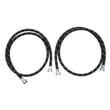
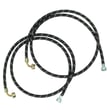
- Water supply errors (fill problems): kinked hoses, closed faucets, or clogged inlet screens; replacing old hoses with a set like the washer fill hose, 2-pack 8212487RP helps prevent flow restrictions.
- Vibration, rocking, or “walking”: feet not firmly on the floor, washer not level, load too large or unbalanced, or shipping bolts still installed.
- Door won’t lock: door not fully closed or a load pressing against the door boot.
- Use HE detergent only and measure carefully (too much can slow or stop draining/spinning).
- Confirm both hot and cold faucets are fully open; straighten any kinked inlet hoses.
- Check the drain hose setup: it should not be shoved too far into the standpipe (typical max is about 4.5 inches).
- Level the washer so all feet are firmly on the floor; tighten the jam nuts.
- If the washer is noisy during draining, check for objects caught in the drain system.
| Symptom | Most likely cause | What to do first |
|---|---|---|
| Loads still wet | Drain restriction or pump issue | Check drain hose height/fit; inspect drain system |
| “Sud” code | Too much or wrong detergent | Switch to HE; reduce dose |
| Shaking/walking | Not level or unbalanced load | Re-level; redistribute load |
| Won’t fill | Supply issue | Open faucets; clean inlet screens |
Drain, suds, and leveling problems can trigger error codes, extend cycle time, and leave clothes wet. Fixing the basics first also helps you avoid replacing parts that are not actually bad. For model-specific troubleshooting steps and error-code guidance, use the MHW4300DC0 owner’s manual and compare symptoms to the Maytag front-load code list in Maytag maxima front load washer error codes.
Last updated: February 2026