 Installation guide
 Owner’s manual


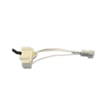
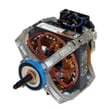
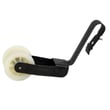
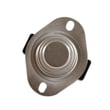
How do I know if my Kenmore dryer thermal fuse is blown?
If your Kenmore gas dryer model 11071202015 won’t start, or it runs but won’t heat, a blown thermal fuse (or thermal cut-off) is a top suspect. We confirm it by unplugging the dryer and checking the fuse with a multimeter for continuity; no continuity means it’s blown.
Common symptoms you’ll notice
- Dryer will not start even though the door is closed
- Drum tumbles but there’s no heat (clothes stay damp)
- Dryer stops mid-cycle and won’t restart until it cools
- You recently had poor airflow (clogged lint screen or vent)
How we test it safely (quick checklist)
- Unplug the dryer (the installation instructions stress using a properly grounded outlet and avoiding extension cords). See the 11071202015 installation guide.
- Access the thermal fuse or thermal cut-off on the blower housing or heater/burner duct area (location varies by design).
- Pull at least one wire off the fuse terminal.
- Set a multimeter to continuity or lowest ohms.
- Touch probes to the fuse terminals:
- Beep or near 0 ohms: fuse is good
- No beep or OL/infinite: fuse is blown
What to do if it’s blown
A thermal fuse usually blows because the dryer overheated from restricted airflow. Replacing the fuse without fixing airflow often leads to another failure.
| What we check | What “good” looks like | What to fix if not good |
|---|---|---|
| Lint screen | Clean, no film buildup | Wash screen with warm water and a soft brush, then dry |
| Vent duct | Short, smooth, not crushed/kinked | Clear lint, replace crushed flex duct |
| Outside vent hood | Strong airflow, flap opens | Remove blockage (lint, nests) |
Why it matters
The thermal fuse is a safety device; when it opens, it prevents unsafe overheating. Restoring proper venting helps your 11071202015 dry faster, run cooler, and avoid repeat no-heat or no-start problems.
Last updated: February 2026
What size is a Kenmore Model 11071202015 dryer?
The Kenmore gas dryer model 11071202015 is approximately 27 inches wide, 27 3/4 inches deep, and 43 3/8 inches tall. These dimensions come from the installation specifications and help you plan closet clearance, vent routing, and door swing. See the 11071202015 installation guide for the full diagram and spacing notes.
Dimensions and what they mean
Typical overall cabinet dimensions for model 11071202015:
| Measurement | Approx. size |
|---|---|
| Width | 27 in. |
| Depth | 27 3/4 in. |
| Height | 43 3/8 in. |
Installation clearances to plan for
Even if the dryer fits the footprint, we plan space for airflow, venting, and service access.
- Allow room for the dryer door to open fully.
- Plan for at least 5 1/2 inches behind the dryer for the exhaust vent with an elbow (common requirement).
- Keep the floor level; a slope over about 1 inch under the dryer can affect tumbling and sensor cycles.
- Avoid installing where temperatures drop below 45°F, which can affect automatic cycle shutoff.
- For garage installs, keep the dryer at least 18 inches above the floor.
Quick fit check (common scenarios)
Use this as a fast planning guide before you measure your space:
- Closet install: add rear clearance for venting plus side clearance for easier hookup.
- Alcove install: keep the vent run as straight as possible to reduce drying time.
- Tight laundry area: confirm you can still remove the lint screen and access the gas shutoff.
Why it matters
Correct sizing and clearance prevents crushed venting, poor airflow, longer dry times, and overheating. Good vent routing also helps protect key airflow parts like the blower wheel and operating thermostat.
Last updated: February 2026
How do I tell what model my Kenmore dryer is?
Your Kenmore dryer’s model number is printed on the model and serial rating plate; on model 11071202015, you’ll typically find that plate in the door opening (door well). Once you have the full model number, we can match the correct parts, diagrams, and specifications.
Where to look for the model number
Check these common locations on Kenmore dryers:
- In the door opening (door well) on the cabinet frame
- On the back panel of the dryer cabinet
- Near the lint screen housing (depending on design)
- On a sticker or metal plate labeled “Model” and “Serial”
For model-specific placement and labeling examples, use the 11071202015 installation guide.
What the rating plate tells you (and why it matters)
The rating plate usually includes more than just the model number. For a gas dryer, it can also list details used for safe setup and correct service.
| Item on plate | What it’s used for | Why you want it before ordering parts |
|---|---|---|
| Model number | Identifies the exact dryer build | Ensures part compatibility (timers, switches, belts) |
| Serial number | Identifies production run | Helps confirm revisions and wiring variations |
| Gas type / burner info | Confirms Natural Gas vs LP setup | Prevents installing the wrong gas components |
Quick tips to avoid mix-ups
- Write the model number exactly as shown (all digits, no spaces).
- Take a clear photo of the plate before you start shopping.
- If the plate is worn, use a flashlight and view from an angle to make faint text easier to read.
- Use the model number to pull the correct diagrams and part lists before ordering.
If you already have the model number
If your plate shows 11071202015, you’re set. From there, we can help you pinpoint common wear items like the belt 341241 or diagnose a no-start symptom tied to the dryer door switch WP3406107.
Last updated: February 2026
Are Kenmore dryers made by Whirlpool?
Yes, many Kenmore dryers, including many Kenmore 110-series models like 11071202015, were built for Kenmore by Whirlpool. Kenmore is a brand name; the actual manufacturer can vary by model and production run, so the most reliable way to confirm is by checking the identification label and the parts used on your specific dryer.
How to tell who built your Kenmore 11071202015
Use these quick checks to identify the manufacturer family and match the right replacement parts.
- Model prefix clue: Kenmore models starting with 110. are commonly Whirlpool-built.
- Parts cross-reference: If your common wear parts match Whirlpool-style parts (belt, idler pulley, door switch), that supports Whirlpool lineage.
- ID label: Check the model and serial tag (typically inside the door opening or on the cabinet opening).
- Manual and diagrams: The wiring, burner layout, and venting requirements in the documentation help confirm the platform.
For model-specific documentation, use the 11071202015 installation guide.
Why this matters when ordering parts
The manufacturer platform determines fit and electrical or gas-ignition compatibility. For example, Whirlpool-built gas dryers often share common service parts like:
- Belt 341241 (drum drive)
- Dryer idler pulley WP691366 (belt tension)
- Dryer door switch WP3406107 (start enable)
- Dryer valve coil kit 279834 (gas valve operation)
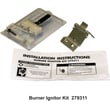
- Igniter 279311 (burner ignition)
Common manufacturer clues (quick reference)
| What you see on the dryer | What it usually indicates | What to do next |
|---|---|---|
| Model starts with 110. | Often Whirlpool-built | Match parts by model number and diagrams |
| Gas burner and ignition parts match Whirlpool-style kits | Whirlpool platform | Use exact part IDs when ordering |
| Different prefix (not 110) | Could be another manufacturer | Verify using the ID label and parts list |
Why it matters (in plain terms)
When we match parts to the correct manufacturer platform, your Kenmore gas dryer heats safely, tumbles correctly, and avoids repeat failures from near-fit parts.
Last updated: February 2026
How to replace a belt on an old Kenmore dryer?
On Kenmore gas dryer model 11071202015, replacing the drum belt means unplugging the dryer, opening the cabinet, removing the old belt, and routing a new belt around the drum and motor pulley with proper tension at the idler pulley. Use the steps in the 11071202015 installation guide for safe access and handling.
Before you start (safety and prep)
- Unplug the dryer from the wall outlet.
- Shut off the gas supply valve (gas dryer safety).
- Let the dryer cool completely.
- Protect the floor and your hands; sheet-metal edges are sharp.
- Keep screws organized by panel (top, front, bulkhead).
Belt replacement steps (typical Kenmore 110-style dryer)
- Remove the lint screen, then remove the screws that secure the top (location varies by console style).
- Lift the top and support it.
- Remove the front panel (and door switch connector if needed) to access the drum.
- Reach under the drum to release belt tension by pushing the idler pulley arm, then slip the belt off the motor pulley.
- Pull the drum forward slightly and remove the old belt.
- Install the new belt with the ribbed side against the drum; position it roughly where the old belt rode.
- Route the belt through the idler pulley and around the motor pulley; rotate the drum by hand 1 to 2 turns to verify tracking.
- Reinstall the front panel, reconnect the door switch, lower the top, and reinstall screws.
- Restore gas and power; run a short timed cycle to confirm smooth tumbling.
Correct belt routing (quick check)
| What you see | What it usually means | What to do |
|---|---|---|
| Belt walks toward front/back of drum | Belt not centered or drum not seated | Re-seat drum on rear rollers, re-center belt |
| Drum turns by hand but slips under load | Idler not applying tension | Re-route belt through idler, inspect idler pulley |
| Thumping/squeal after belt install | Worn support parts | Consider a maintenance kit while open |
Parts that commonly apply
- Belt 341241 (drum drive belt)
- Dryer idler pulley WP691366 (maintains belt tension)
- Dryer repair kit 4392065 (common wear items for drum support)
Why it matters
A correctly routed belt keeps the drum turning at the right speed and prevents premature wear on the drive motor and idler pulley. While the cabinet is open, checking rollers and the idler can prevent repeat breakdowns.
Last updated: February 2026
How to remove front panel of Kenmore dryer?
To remove the front panel on your Kenmore gas dryer model 11071202015, we start by disconnecting power, then remove the screws that secure the top and front, and lift the front panel off while supporting any wiring. This gives access to the drum, belt, and blower area.
Safety first (before you touch any screws)
- Unplug the dryer from the wall outlet.
- Turn the gas supply shut-off valve to the OFF position.
- Let the dryer cool completely if it was running.
- Wear cut-resistant gloves; cabinet edges can be sharp.
- Keep a small container for screws so nothing gets lost.
Front panel removal steps (typical for this Kenmore 110 series design)
- Remove the lint screen, then remove the screws in the lint screen housing (if present on your version).
- Release and lift the top panel: many Kenmore 110 dryers use spring clips near the front corners; a putty knife helps release them so the top can tilt up.
- Remove the front panel mounting screws: look along the inside top edge (under the lifted top) and around the door opening.
- Disconnect the door switch wiring (note the connector position for reassembly).
- Lift the front panel up and off the lower retaining tabs, then pull it forward.
What you can service once the front is off
| Symptom | Common area to inspect | Example part for this model |
|---|---|---|
| Drum not turning | Belt and idler pulley | Belt 341241 |
| Loud squeal or thump | Drum support components | Dryer repair kit 4392065 |
| Poor airflow/noisy airflow | Blower housing and wheel | Dryer blower wheel WP694089 |
Why it matters
Removing the front panel correctly prevents broken tabs, stripped screws, and damaged door switch wiring. It also makes belt and drum access much easier for common repairs on Kenmore gas dryers.
Reference
For screw locations and panel sequence specific to model 11071202015, follow the cabinet access and service guidance in the 11071202015 installation guide.
Last updated: February 2026








