 Installation guide
 Owner’s manual





Why is my Frigidaire dishwasher not air drying?
Your Frigidaire FFCD2413UW2A dishwasher usually won’t “air dry” well when the drying options are off, rinse aid is low, water is not hot enough (target about 120°F), or the load traps water. Using Heat Dry plus rinse aid is the most reliable way to improve drying.
Quick checks that fix most “not drying” complaints
- Turn on Heat Dry for the cycle (it is designed to enhance drying, especially with rinse aid).
- Fill the rinse aid dispenser and increase the rinse aid setting if droplets remain.
- Verify hot water to the dishwasher is at least 120°F (49°C).
- Avoid nesting bowls and cups; angle concave items so water drains.
- Expect plastics to stay wetter than glass or ceramic; towel-dry plastics if needed.
- Load concave-bottom cups on the far left of the upper rack so they sit tilted.
For the exact button sequence and option behavior on this model, follow the FFCD2413UW2A owner’s manual.
When it points to a part problem
If you are already using Heat Dry and rinse aid, and dishes still come out cool and wet, the heater circuit is the next place to check.
Common part-related causes include:
- Failed heating element
- Control not energizing heat during the dry portion
- Poor wash performance leaving excess water behind
Model-matched parts to consider
| Symptom you notice | Likely area | Model-matched part example |
|---|---|---|
| Dishes are cool, no heat during dry | Heating | Frigidaire dishwasher heating element 154825001 |
| Wash is weak, water remains everywhere | Pump and motor | Crosley dishwasher pump and motor assembly 5304519906 |
Why it matters
Drying performance affects more than comfort. Better drying reduces water spotting, helps prevent odors from lingering moisture, and improves results on plastics and concave items that naturally hold water.
Last updated: January 2026
How can I force my Frigidaire dishwasher to drain?
To force-drain your Frigidaire FFCD2413UW2A dishwasher, press and hold START/CANCEL for 3 seconds; the dishwasher will run an automatic 90-second drain. This is the correct way to cancel a cycle and pump water out before selecting a new cycle (see the FFCD2413UW2A user manual).
Quick steps to force a drain
- Press and hold START/CANCEL for 3 seconds.
- Confirm the cycle/option lights go out and the START/CANCEL light stays on.
- Close the door fully so the unit can run the drain.
- Wait about 90 seconds for the drain to finish.
- Select the next cycle you want and press START/CANCEL to start.
If it still will not drain
A forced drain only works if water can flow out through the drain path. Check these common causes first:
- Kinked or pinched drain hose under the sink or behind the dishwasher.
- Drain connection below the sink trap or missing high loop; the drain entry needs to be above the trap.
- Disposer knockout plug not removed (if the hose connects to a garbage disposer).
- Clogged filter or glass trap area in the tub.
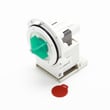
- Drain pump issue (humming, no water movement), which can point to the drain pump a A00126401.
Drain setup checklist (what “correct” looks like)
Use this as a quick visual guide for a typical installation.
| Item to check | What you want | What causes problems |
|---|---|---|
| Sink drain connection | Drain hose entry above the trap | Backflow, slow draining |
| Hose routing | No kinks, no crushing | Intermittent or no drain |
| Disposer connection | Knockout plug removed | No drain at all |
| Air gap (if required) | Installed per local code | Leaks or backups |
For the exact routing options and requirements for your kitchen setup, follow the FFCD2413UW2A installation guide.
Why it matters
Canceling a cycle and forcing a drain protects the pump and motor assembly, prevents standing water odors, and helps you confirm whether the issue is a control action (cancel/drain) or a physical blockage in the drain hose, sink connection, or pump.
Last updated: January 2026
How long does a dishwasher run a Frigidaire?
On the Frigidaire FFCD2413UW2A dishwasher, cycle time depends on the cycle you choose: Heavy Wash typically runs about 2 to 3 hours, while Normal Wash is commonly around 1.5 to 2 hours under typical conditions. Options like heated drying can extend total run time. See the FFCD2413UW2A owner’s manual for the cycle chart and option details.
What changes the cycle time
Several normal factors make a Frigidaire dishwasher run longer or shorter:
- Cycle selection (Heavy, Normal, 1 Hour Wash)
- Water temperature entering the dishwasher (cooler water can add heating time)
- Soil level on dishes (more soil can increase wash action and time)
- Options selected (especially drying and temperature-related options)
- Door opened mid-cycle (you may need to restart promptly to continue)
Typical cycle-time ranges (what to expect)
These are the most common time expectations for this style of Frigidaire dishwasher:
| Cycle | Typical duration | Best for |
|---|---|---|
| Heavy Wash | 2 to 3 hours | Pots, pans, heavier soil |
| Normal Wash | 1.5 to 2 hours | Everyday mixed loads |
| 1 Hour Wash | About 1 hour | Lightly soiled loads |
If your dishwasher seems to “pause,” that is often normal heating, filling, or draining behavior.
Quick checks if the dishwasher seems to run too long
Use these practical steps before assuming a failure:
- Run hot water at the sink until it is hot, then start the cycle.
- Avoid overloading; keep spray arms from being blocked.
- Clean the filter area regularly; a restricted filter can slow performance (see dishwasher filter 5304532206).
- Use rinse aid if you are using heated drying; it improves drying efficiency.
- If the unit is not draining well, check the drain path and hose routing; a restriction can extend cycle stages.
Why it matters
Cycle length is tied to cleaning and energy use. Longer cycles often mean the dishwasher is heating water to the right temperature and completing multiple fills and drains to improve wash results, especially on Heavy Wash.
Last updated: January 2026
What is the most common problem with the Frigidaire dishwasher?
The most common issue we see with the Frigidaire FFCD2413UW2A dishwasher is water left in the bottom of the tub after a cycle, which points to a draining problem. The Use & Care Guide notes that standing water after the cycle is not normal and typically traces back to a restriction or a drain-system fault (filter, hose, or pump). See the FFCD2413UW2A owner's manual.
Most common symptoms and what they usually mean
- Water in bottom of tub: drain path restricted, drain pump issue, or drain hose problem
- Won’t run: door not fully closed and latched, Delay Start selected, or power issue
- Not cleaning well: loading issue, low water temperature, or filter/glass trap needs cleaning
- Leaks: door gasket not seated correctly, oversudsing, or dishwasher not level
Quick checks we recommend first (fast, no parts)
- Cancel the cycle and let the unit attempt to drain.
- Check and clean the filter area; remove debris that can block flow.
- Inspect the drain hose routing for kinks and confirm it is not pinched.
- If connected to a garbage disposal, make sure the disposal inlet plug was removed.
- Confirm the door closes firmly and latches; the dishwasher will not run if it is not latched.
When a part is the likely fix
If the tub still holds water after cleaning the filter area and verifying the hose path, the drain pump or drain hose is the next most common repair direction.
| Symptom | Most likely area | Common next step |
|---|---|---|
| Water remains after cycle | Drain pump or restriction | Check pump for blockage; replace if weak/no drain |
| Slow draining | Drain hose routing/clog | Clear hose; replace if collapsed |
| Intermittent draining | Electrical connection or pump | Inspect wiring; test pump operation |
Helpful model-matched parts to consider:
- Drain pump a A00126401 (moves water out during drain)
- Dishwasher drain hose 807117001 (carries drain water to the sink/disposal)
Why it matters
A dishwasher that does not drain properly can leave dirty water in the sump, cause odors, and reduce cleaning performance on the next load. Fixing restrictions early also helps prevent extra strain on the wash and drain motors.
Last updated: January 2026





