Owner’s manual


What are the codes for Kenmore Elite dryer?
For Kenmore Elite dryer model 11097729700, the most common display codes include PF (power failure), L2 (home power supply issue affecting heat), AF (vent airflow restriction), and F-series service codes such as F1, F2, and F20. Use the 11097729700 owner's manual to match the code to the right fix.
- PF: Power failure during a cycle; press and hold START to restart.
- L2: Incoming power issue that can keep the heater from turning on.
- AF: Vent may be crushed, blocked, or restricted.
- F1 / F2 / F20: Service codes tied to control or heater relay problems.
- Thermistor-related codes (often shown as F22, F23, F24, F25 on some Elite platforms): Temperature sensing circuit issue.
- Reset the dryer: Unplug for 1 minute, then restore power.
- Confirm power supply: Dryer should be on a properly grounded outlet; check the breaker or fuse.
- Check the door: Make sure the door fully closes and latches.
- Clean airflow path: Clean the lint screen and confirm strong airflow at the outside hood.
- Restart the cycle: Especially after PF, press and hold START.
| Code | What it points to | Best next step |
|---|---|---|
| PF | Cycle interrupted by power loss | Press and hold START to restart |
| L2 | Home power supply issue affecting heat | Check breaker, outlet, and supply wiring |
| AF | Restricted venting/airflow | Inspect vent run, clean lint buildup |
| F1/F2/F20 | Electronic control or heater relay related service code | Use diagnostics in the manual; schedule service if it returns |
If your code or symptoms point to heating or temperature sensing, these model-compatible parts are commonly involved:
- Dryer thermistor WP8577274 (temperature sensing)
- Dryer radiant sensor WP338906 (burner flame sensing on gas models)
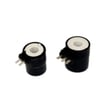
- Dryer gas valve coil kit 279834 (gas valve coils that can fail intermittently)
Error codes help us avoid guesswork. For example, AF usually means airflow is restricted, which can cause long dry times and overheating; L2 often means the dryer cannot heat because the power supply is not correct.
Last updated: January 2026
How to find Kenmore Elite dryer model number?
For Kenmore Elite dryer model 11097729700, the model number is printed on the appliance identification label. On most dryers, we find it either inside the door opening on the cabinet frame or on the back of the dryer near the top; confirm the exact label location in the 11097729700 owner's manual.
Check these common label locations first:
- Inside the dryer door opening on the cabinet frame
- On the back panel near the top edge
- Along the door opening edge (near the lint screen housing on some designs)
- Behind the lower access panel (less common)
The label usually includes several identifiers. Use the model number for parts lookup and service.
| What you see on the label | What it’s used for | Example format |
|---|---|---|
| Model number | Finding correct parts and manuals | 110.9772# (the # is a color code) |
| Serial number | Manufacturing info and service history | Letters and numbers |
| Type/voltage/gas info | Installation and troubleshooting | Varies by unit |
We use the model number to match parts like a drum support roller, idler pulley, thermistor, or igniter to the exact Kenmore Elite dryer design. Even small model variations can change the correct part fit.
- Copy the model number exactly as printed (including dots or suffixes)
- If the label shows 110.9772#, use the full model family plus the color code when ordering
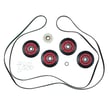
- If you’re replacing wear items, a bundled option like the dryer repair kit 4392067 can be a practical starting point for common drum and belt-related issues
Last updated: January 2026
What is the lifespan of a Kenmore dryer?
Most Kenmore dryers, including Kenmore Elite model 11097729700, typically last 10 to 13 years. With consistent lint control, proper venting, and timely replacement of wear items (belt, rollers, idler), many units run 15 years or longer.
A dryer’s life is mostly driven by heat stress, airflow restriction, and drum support wear.
- Usage volume: multiple loads per day shortens life faster than a few loads per week
- Airflow and venting: restricted exhaust overheats components and increases cycling
- Maintenance habits: lint screen cleaning and periodic deep lint removal matter
- Wear parts condition: rollers, idler pulley, and blower wheel wear gradually
- Moisture-sensing performance: sensor issues can cause longer run times and extra wear
Your 11097729700 manual calls out periodic lint removal inside the cabinet and exhaust vent; it also notes water inlet hose replacement intervals for steam-capable setups. Use the 11097729700 owner's manual for the exact maintenance instructions and safety steps.
| Task | How often | Why it helps lifespan |
|---|---|---|
| Clean lint screen | Every load | Maintains airflow and drying performance |
| Clean exhaust duct and outside hood | At least yearly (more with heavy use) | Reduces heat buildup and run time |
| Remove lint inside cabinet (qualified service) | About every 2 years | Lowers fire risk and protects motor and heater/burner |
| Inspect drum support and belt path | When noise starts or during service | Prevents drum drag and belt failure |
If your dryer starts squealing, thumping, or taking longer to dry, these are common wear points on this platform:
- Support WPW10314173 (drum support roller): worn rollers can cause rumbling and extra motor load
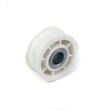
- Dryer idler pulley 279640: a seized pulley can shred the belt or stop the drum
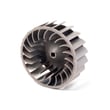
- Dryer blower wheel WP697772: a loose or cracked wheel reduces airflow and increases drying time
- Dryer thermistor WP8577274: inaccurate temperature sensing can cause overheating or poor drying
A dryer that runs hot or with poor airflow wears out faster and can damage expensive components like the drive motor and gas burner assembly. Keeping airflow strong and replacing small wear parts early is the most cost-effective way to extend service life.
Last updated: January 2026
Why is Kenmore Elite dryer not heating?
If your Kenmore Elite dryer model 11097729700 runs but does not heat, the most common causes are restricted venting (airflow problem), a failed ignition or gas-heating component, or a temperature-sensing safety part that has opened. Start with airflow and power checks, then test heat-system parts.
- Clean the lint screen and confirm strong airflow at the outside vent hood.
- Make sure the cycle is a heated cycle (not an air-only/no-heat setting).
- Confirm the dryer is fully powered; the manual notes an L2 code can indicate a home power supply issue that keeps the heater from turning on.
- Check for a crushed, kinked, or blocked vent; the manual notes an AF code can point to vent restriction.
- If this is the first heated use after installation, a brief “new heater” odor can be normal.
On gas models, the dryer can tumble normally but never ignite if ignition parts fail.
| Symptom you notice | Most likely area | Example part to consider for this model |
|---|---|---|
| No flame at all, intermittent heat | Gas valve coils | Dryer gas valve coil kit 279834 |
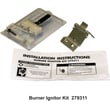
| Igniter never glows | Ignition circuit | Igniter 279311 |
| Igniter glows but no flame | Flame sensing or gas delivery | Dryer radiant sensor WP338906 |
Even when the burner works, poor airflow can make the dryer “feel” like it is not heating because heat is not moving through the drum.
- Clear lint buildup in the lint duct and vent path.
- Inspect the blower area for lint and damage; a stripped wheel can reduce airflow.
- If temperatures are erratic, a sensor can misread drum temperature.
Helpful parts for airflow and sensing on this model:
A blocked vent can cause long dry times, overheating, and repeated safety shutdowns. Fixing airflow first often prevents repeat failures of sensors, coils, and other heating components.
Use the 11097729700 owner's manual for troubleshooting steps, code meanings (such as L2 and AF), and cycle/temperature guidance. For additional code help, see Kenmore elite dryer error codes.
Last updated: January 2026