 Installation guide
 Owner’s manual
 Error Codes


What is the lifespan of a GE dryer?
A GE electric dryer like model GTDX180ED4WW typically lasts 10 to 13 years with normal household use. Consistent vent cleaning, not overloading, and fixing wear items early (belt, glides, thermostats) are the biggest factors that keep a dryer running longer.
Most dryers reach the end of their service life due to heat stress, restricted airflow, or normal wear in drum support and drive components.
- Usage frequency: multiple loads daily shortens life
- Airflow and venting: clogged ducts overheat parts and extend dry times
- Load size: overloading increases strain and wrinkling
- Maintenance habits: cleaning lint filter and venting prevents overheating
- Timely repairs: replacing small wear parts can prevent bigger failures
Your GTDX180ED4WW manual emphasizes cleaning the lint filter before each use and keeping the exhaust path clear; a partially clogged exhaust can lengthen drying time and increase heat stress. Use the venting specs and cleaning steps in the owner's manual.
- Clean the lint screen before every load
- Inspect and vacuum the exhaust duct periodically
- Confirm the outside hood flaps open freely and are not blocked
- Use rigid metal 4-inch duct where possible; avoid plastic ducting
- Keep the duct run short and uncrushed
These are frequent replacement items on many GE dryers; catching them early helps avoid secondary damage.
| Symptom | Common cause | Example part on this model page |
|---|---|---|
| Squealing, scraping, thumping | Drum support wear | Dryer drum glide bearing, upper WE03X37320 |
| Drum not turning, weak tension | Idler pulley wear | Dryer idler pulley WE03X31620 |
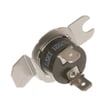
| Long dry times or overheating shutdowns | Thermostat/airflow issues | Dryer high-limit thermostat WE4M137 |
A dryer that takes longer to dry is not just inconvenient; it usually signals restricted airflow or overheating risk, which accelerates failure of the heating system and safety thermostats.
If you need to order replacement parts for GE GTDX180ED4WW, use the parts list for this model or search by model number on Sears PartsDirect.
Last updated: February 2026
Can you reverse the door on a GE dryer?
Yes. On the GE GTDX180ED4WW electric dryer, we can reverse the door swing by moving the hinges and door strike to the opposite side, then rotating the door 180° and reinstalling it using the existing screws and filler plugs (steps are in the installation guide).
- Standard #2 Phillips screwdriver
- Tape-tipped putty knife (helps protect the finish when prying plugs)
- A small container for screws
- A helper (optional, but useful when lifting the door)
- Open the door and remove the filler plugs on the side opposite the hinges.
- With the door fully open, remove the bottom screw from each hinge on the dryer front.
- Start those bottom screws about halfway into the top hinge holes on the opposite side.
- Loosen (do not remove) the top hinge screws halfway.
- Support the door with both hands; lift the door up and out to remove it.
- Rotate the door 180°.
- Set the door onto the partially installed screws on the opposite side by moving it in and down.
- Move the remaining hinge screws to secure the hinges; tighten all hinge screws.
- Move the strike plate and the blind plate to the opposite sides (if your door setup includes them).
- Reinstall the filler plugs on the original hinge side.
- Door closes smoothly and sits flush
- Latch engages without slamming
- No rubbing at the hinge side
- Drum light (if equipped) still works
- Removing the top hinge screws completely before supporting the door
- Cross-threading screws when starting them in new holes
- Forgetting to move the strike plate or blind plate (door may not latch)
Reversing the door can improve airflow and safety in tight laundry spaces by preventing the door from blocking the walkway, and it can make loading and unloading easier without changing any electrical or heating components.
| Item moved | From | To |
|---|---|---|
| Hinges and hinge screws | Original hinge side | Opposite side |
| Door orientation | Original | Rotated 180° |
| Filler plugs | Opposite side | Original hinge side |
| Strike plate and blind plate (if present) | Original locations | Swapped sides |
For replacement parts related to the door, drum, or cabinet fit, you can order from the parts list for this model or search by model number on Sears PartsDirect.
Last updated: February 2026
How do I know what model GE dryer I have?
Your GE dryer’s model number is printed on the rating label. On the GE GTDX180ED4WW electric dryer, that label is on the front of the dryer behind the door. Write down the full model number exactly as shown, including all letters and numbers, before ordering parts.
Check these common model tag locations in this order:
- Front frame behind the door (most common on GE dryers, including GTDX180ED4WW)
- Inside edge of the dryer door
- Back panel of the cabinet
- Under the top panel (on some designs)
- Near the control panel housing (less common)
Model and serial labels can include several codes. Use this quick guide:
| Label item | What it’s used for | Example format |
|---|---|---|
| Model number | Matching parts and diagrams | Letters and numbers (often starts and ends with a letter) |
| Serial number | Dating the unit and service history | Letters and numbers |
| Electrical ratings | Confirming power requirements | Volts/amps |
Even one character off can pull up the wrong parts list. We recommend:
- Copy the model number exactly, including any ending letters
- Take a clear photo of the label before it wears or gets smudged
- Use the model number when selecting parts like a heating element or thermostat
- Match parts by model first, then by part ID
If you’re replacing a common wear item, you can also cross-check your parts list against items such as the dryer lint screen WE18X25100 or the dryer heating element WE11M10001. For broader model searches, use Sears PartsDirect.
GE often uses similar-looking cabinets across multiple dryer series. The correct model number ensures the right fit for parts like the timer, drum glides, idler pulley, and thermostats.
For the exact label location and model/serial write-in section, use the owner's manual.
Last updated: February 2026
What is the most common problem with a GE dryer?
The most common problem we see with GE dryers like model GTDX180ED4WW is poor drying performance: no heat or long dry times caused by restricted airflow (lint buildup or a clogged vent) or a failed heating component. Start with venting and power checks, then test heat parts.
- Clean the lint screen before every load; a full screen slows airflow and increases dry time.
- Check the exhaust hood outside; the damper should move freely and be clear of lint and nests.
- Inspect the vent path for kinks, crushing, or long runs; use the shortest route possible.
- Confirm proper duct type: 4-inch rigid metal or UL-listed flexible metal; avoid plastic duct.
- Verify power: most electric dryers use two fuses or two breakers; one tripped can cause tumbling with no heat.
| Symptom | Most common causes | Parts on this model that often relate |
|---|---|---|
| Tumbles but no heat | One breaker tripped, failed heater, thermostat issue, airflow restriction | Dryer heating element WE11M10001, dryer high-limit thermostat WE4M137 |
| Takes too long to dry | Lint screen clogged, vent restriction, improper sorting or load size | Dryer lint screen WE18X25100 |
| Stops mid-cycle or overheats | Restricted venting causing high temperatures and safety shutdown | Dryer safety thermostat WE4M160 |
When venting is partially clogged, the dryer runs hotter and longer. That can trigger safety thermostats, reduce heat output, and make loads take much longer to dry. Proper 4-inch metal ducting and a clear exterior hood restore normal performance.
If your venting and power supply check out, the next most common repair on an electric dryer is the heater circuit (heating element and thermostats). You can order GTDX180ED4WW replacement parts from the parts list for this model, or search by model number on Sears PartsDirect. For wiring diagrams, venting specs, and troubleshooting tables, use the GTDX180ED4WW owner's manual and the GTDX180ED4WW installation guide.
Last updated: February 2026





