Owner’s manual
 Error Codes



Is a top or bottom mount fridge better?
A bottom-mount refrigerator like the GE PFCS1NFZASS is better when you want everyday fresh-food items at eye level and more freezer organization (drawers and baskets). A top-mount refrigerator is better when you want a simpler layout and typically lower purchase cost.
Quick comparison (what most homeowners notice)
| Feature | Bottom-mount (like PFCS1NFZASS) | Top-mount |
|---|---|---|
| Fresh-food access | Easier (less bending) | More bending |
| Freezer organization | Better (drawers/baskets) | Basic shelves |
| Energy use | Often slightly higher | Often slightly lower |
| Upfront cost | Often higher | Often lower |
| Moving/installation | Heavier, more complex | Lighter, simpler |
How to choose for your kitchen
- Choose bottom-mount if you use the refrigerator section more than the freezer.
- Choose top-mount if you want the most budget-friendly, straightforward design.
- If you have tight doorways, measure carefully; the PFCS1NFZASS is listed as 34-1/2 inches deep, and GE notes 36-inch-wide passageways help prevent door/handle damage during moving.
- If your garage or room runs hot or cold, placement matters; GE recommends avoiding locations below 60°F or above 100°F for proper performance.
- Plan for airflow and hookups; typical clearances include small side clearance and about 1 inch at the top and back (varies by depth style).
Why it matters
The “better” choice is the one that matches how you cook and shop. Most people open the fresh-food doors far more often than the freezer, so bottom-mount designs usually feel more convenient day to day, while top-mount designs usually win on simplicity.
Helpful reference
For model-specific moving, clearance, and placement guidance, use the PFCS1NFZASS owner’s manual.
Last updated: January 2026
What is the most common problem with GE profile refrigerators?
On GE Profile refrigerators like model PFCS1NFZASS, the most common service complaint is not cooling correctly (fresh food too warm, freezer too warm, or both). In many cases, the issue is caused by airflow problems, a defrost-related issue, or a control/sensor problem rather than a sealed-system failure.
What “not cooling” usually looks like
- Fresh food section warms up but freezer seems OK
- Freezer warms up and ice production slows or stops
- Compressor runs a lot (or cycles frequently)
- You hear the fan, but temperatures do not recover
- Cooling improves briefly after unplugging, then fails again
Quick checks we recommend first (no tools)
Use these steps before replacing parts:
- Give it time after power loss or first plug-in: the manual notes it can take up to 24 hours to fully cool.
- Check for a door not sealing or left ajar: packaging can hold a door open and cause warm temps.
- Confirm controls are not set to “0/off”: the manual lists the control in 0 (off) position as a common “won’t run” cause.
- Allow defrost to finish: if it is in a defrost cycle, wait about 30 minutes.
- Make sure the refrigerator is level and stable: leveling legs that need adjustment can cause vibration and poor door alignment.
Common parts involved when cooling is inconsistent
If the basic checks do not fix it, these parts are frequently involved in cooling complaints:
| Symptom | Common suspect | Example part for PFCS1NFZASS |
|---|---|---|
| Temps swing, unit runs too long | Temperature sensing issue | Temperature sensor WR55X10025 |
| Frost buildup, warm fridge, fan noise changes | Defrost control issue | Refrigerator defrost bi-metal thermostat WR50X10069 |
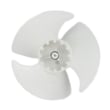
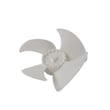
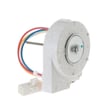
| Warm fridge, weak airflow from vents | Evaporator fan problem | Refrigerator evaporator fan motor WR60X10277 |
Why it matters
A “not cooling” problem can quickly lead to food spoilage and can also make the compressor run longer than normal. Catching airflow, defrost, or sensor issues early often prevents bigger repairs.
Helpful model-specific reference
For control settings, defrost timing, leveling guidance, and door alignment basics, use the PFCS1NFZASS owner’s manual.
Last updated: January 2026
How to remove bottom grille on GE refrigerator?
On the GE PFCS1NFZASS refrigerator (French-door style with a bottom freezer drawer), we remove the bottom base grille by taking out the 2 Phillips-head screws, then pulling the grille straight out. Reinstall by positioning the grille and reinstalling the same screws. See the PFCS1NFZASS owner’s manual for diagrams.
Steps to remove the base grille
- Unplug the refrigerator if you will be working near wiring or moving the unit.
- Locate the base grille at the very bottom front of the refrigerator.
- Remove the 2 Phillips-head screws (one on each side of the grille).
- Pull the grille straight out (do not twist; it can crack mounting tabs).
- Set the grille and screws aside together.
Reinstalling the grille
- Align the grille with the lower front opening.
- Push it in evenly until it seats.
- Reinstall the 2 Phillips-head screws.
- Confirm the grille sits flush and does not rattle.
Common reasons you remove the grille
Removing the base grille is typically done for leveling, cleaning, or service access at the bottom front of the refrigerator.
| Reason | What you gain access to | What to watch for |
|---|---|---|
| Leveling | Leveling legs | Legs must firmly touch the floor after adjustment |
| Cleaning | Dust buildup near the bottom front | Keep airflow paths clear |
| Moving/service | Clearance and access | Pull straight out to avoid floor damage |
Why it matters
The base grille protects lower components and helps maintain proper airflow. Removing it correctly prevents stripped screws, broken grille tabs, and fit issues that can cause vibration noise.
Last updated: January 2026