 Owner’s manual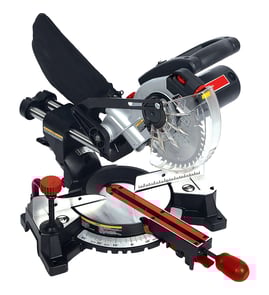

What should you never cut with a miter saw?
You should never cut anything you cannot hold firmly against the fence and table on your Craftsman 17224360 10" compound miter saw, and you should never cut freehand or with guards removed. These situations let the blade grab, bind, and kick back, which can throw the workpiece and cause serious injury (the manual is explicit about clamping and using the fence).
Never cut these (or cut only with the correct setup)
- Too-small pieces you cannot clamp; the manual warns against hand-holding small workpieces.
- Anything freehand (not flat on the miter table and tight to the fence).
- Material with nails, screws, or staples in the blade path; inspect first.
- Warped, bowed, or twisted stock that will not sit flat and stable.
- Long stock without support (no roller stand or outfeed support); it can lift, pinch, and bind.
- Wood or molding clamped on both sides of the blade; the manual warns this can bind the blade and cause kickback.
What this saw is intended to cut
Our Craftsman 17224360 is designed for crosscutting and mitering wood and plastic with the correct blade and a properly secured workpiece.
| Material | OK on this saw? | Key requirement |
|---|---|---|
| Wood (trim, framing, molding) | Yes | Fence contact, stable support, sharp blade |
| Plastic | Yes | Use a blade suited for plastic; clamp securely |
| Metal | No (typical setup) | Use a saw and blade designed for metal cutting |
Safe cutting setup checklist (reduces binding and kickback)
- Bolt or clamp the saw to a stable bench at about hip height.
- Lock miter and bevel adjustments before cutting.
- Keep hands out of the marked “no hands” zone (at least 3 inches from the blade).
- Let the blade reach full speed; lower smoothly through the cut.
- Release the trigger and wait for the blade to stop before raising the arm.
Why it matters
Most miter saw injuries happen when the workpiece shifts or pinches the blade. Keeping the stock flat to the table, tight to the fence, and clamped when possible prevents stalls and kickback.
For model-specific safety rules and diagrams, follow the 17224360 owner's manual.
Last updated: February 2026
Which Mitre saw is the most accurate?
The most accurate miter saw is the one that holds its settings and cuts square repeatedly after setup. Your Craftsman 17224360 10" compound miter saw is factory-adjusted for accurate cuts, and you can keep it highly accurate by checking alignment after shipping, after blade changes, and periodically as parts wear (details in the owner's manual).
What “most accurate” really means
Accuracy is a combination of calibration, rigidity, and repeatability, not just brand. For miter saws, we focus on:
- Fence and table being square to the blade at 0° miter and 0° bevel
- Miter detents landing exactly where the scale says they are
- Bevel stops returning to true 0° and 45°
- Blade running true (no wobble) and installed correctly
- Workpiece being clamped and supported so it cannot shift
How to get maximum accuracy from the Craftsman 17224360
We recommend doing these checks before precision work (trim, crown molding, cabinetry):
- Verify 0° miter and 0° bevel produce a dead-square cut using a combination square
- Confirm the fence is straight and tight; re-tighten fasteners if needed
- Use the “no hands zone” rule and keep the work firmly against the fence (no freehand cuts)
- Make trial cuts in scrap before compound miters and crown molding
- Re-check alignment after transporting the saw or replacing the blade
Typical accuracy differentiators when comparing miter saws
If you are comparing saws across brands, these features usually improve real-world accuracy:
| Feature | Why it helps accuracy | What to look for |
|---|---|---|
| Solid fence and table | Reduces flex and drift | Minimal play, stays square after tightening |
| Clear cutline system | Improves repeatability | Shadow line or laser that stays aligned |
| Reliable detents/stops | Faster, consistent angles | Positive detents at common angles |
| Good blade support | Cleaner, truer cuts | Correct blade size and proper installation |
Why it matters
Small angle errors compound fast. For example, crown molding and compound miters require extreme accuracy; even a tiny miter or bevel error can open visible gaps at corners. Your manual includes compound-angle guidance and emphasizes planning and trial cuts for best fit.
Last updated: February 2026
Can a 10inch miter saw cut a 4x4?
Yes. The Craftsman 17224360 10-inch compound miter saw is rated to cut up to 3 1/2 inches thick at a 0° miter and 0° bevel, so it can cut a standard 4x4 (actual 3 1/2 in. x 3 1/2 in.) in a single pass at 90° when the board is positioned correctly; see the owner's manual.
What the 17224360 cutting capacity means for a 4x4
A 4x4 is typically 3 1/2 inches thick, and this saw’s maximum thickness capacity at straight cuts matches that.
- Best case: 0° miter, 0° bevel (straight crosscut)
- Keep the 4x4 flat on the table and tight to the fence
- Let the blade reach full speed before entering the cut
- Use a firm clamp whenever possible to prevent shifting
- Use the “no hands zone” guidance and keep hands well clear of the blade path
Capacity quick reference (from the manual)
| Saw setting | Max width | Max thickness |
|---|---|---|
| 0° miter, 0° bevel | 5 1/2 in. | 3 1/2 in. |
| 45° miter, 0° bevel | 4 1/8 in. | 3 1/2 in. |
| 0° miter, 45° bevel | 5 1/2 in. | 1 9/16 in. |
| 45° miter, 45° bevel | 4 1/8 in. | 1 9/16 in. |
If your 4x4 does not cut cleanly in one pass
These issues usually cause an incomplete cut even when capacity is sufficient:
- Board not fully seated against the fence (gap or twist)
- Warped or crowned lumber lifting off the table
- Dull blade, wrong blade type, or heavy pitch buildup
- Depth stop out of adjustment (especially if a blade has been sharpened down)
- Forcing the cut too fast, which can deflect the blade
Depth stop note
On the 17224360, the depth stop is factory set to maintain full cutting capacity; it may need adjustment if the blade diameter has been reduced by sharpening (details are in the owner's manual).
Why it matters
A 4x4 cut that is right at the saw’s maximum thickness needs correct setup. Proper seating, clamping, and a sharp 10-inch blade help you get a square, full-depth cut without binding or kickback.
Last updated: February 2026
Is it worth getting a double bevel mitre saw?
Yes, a double bevel miter saw is worth it when you regularly make compound cuts (miter plus bevel) for trim, crown molding, or cabinetry because it saves time and reduces setup errors. Your Craftsman 17224360 is a single-bevel compound miter saw (0° to 45° left), so the upgrade matters most if you often need matching bevels in both directions.
When a double bevel is the better buy
A double bevel saw lets you tilt the head left and right, so you can keep the workpiece in the same position and avoid flipping it for opposing bevels.
- You cut crown molding, baseboard returns, or complex trim frequently
- You do repetitive left-hand and right-hand bevels (production work)
- You want fewer layout mistakes from flipping stock
- You often work with long boards where flipping is awkward
- You value speed more than the added cost and weight
When your Craftsman 17224360 is already enough
The 17224360 is designed for accurate miter work with positive stops and common miter indexes, and it bevels from 0° to 45° to the left. For many DIY projects, flipping the board for the opposite bevel is a normal workflow.
- You mostly do crosscuts and basic miters (frames, simple trim)
- You only occasionally need compound miter cuts
- You are comfortable flipping the workpiece to mirror a bevel
- You want a simpler saw with fewer adjustments to maintain
Quick comparison
| Feature | Single bevel (like 17224360) | Double bevel |
|---|---|---|
| Bevel direction | One direction | Left and right |
| Opposing bevels | Usually requires flipping stock | Usually no flipping |
| Speed on trim work | Good | Faster |
| Complexity/weight | Lower | Higher |
Why it matters
Compound miter setups are sensitive because changing the miter angle affects the bevel result and vice versa. A double bevel reduces the number of times you reposition material, which helps keep your angles consistent and your hands safely positioned.
Tips to get the most from a single-bevel saw
- Use the miter table positive stops (0°, 15°, 22.5°, 30°, 45°) for repeatable miters
- Tighten the miter lock handle before every cut
- Tighten the bevel lock knob after setting the bevel angle
- Make a test cut in scrap for compound cuts
- Support long stock with a stand so it stays level with the table
For the exact operating steps and adjustment points on the Craftsman 17224360, follow the owner's manual.
Last updated: February 2026