Owner’s manual
 Error Codes


What are the disadvantages of a bottom freezer?
Bottom-freezer refrigerators like the Samsung RF323TEDBSR put fresh food at eye level, but the tradeoffs are higher purchase cost, more bending to access frozen items, and drawer-style freezers that can feel deep and harder to sort. They can also be more prone to ice and drain-related maintenance.
- More bending and lifting: You reach down for frozen foods, and heavy items (meat, bulk bags) often sit in the bottom basket.
- Deep drawer organization: Items can stack and get buried, especially in lower baskets.
- Higher upfront cost: Bottom-mount designs typically cost more than comparable top-freezer models.
- Freezer access can feel slower: You often pull out a drawer and then open bins to reach items.
- More ice and water system complexity (on many models): If your unit has an ice maker and water filter, there are more components that can need attention over time.
Bottom-freezer and French door refrigerators commonly see issues tied to airflow, frost, and drainage. If you notice symptoms, these are the areas we check first:
| Symptom | Common cause | What to check first |
|---|---|---|
| Water pooling or ice under the freezer drawer | Drain restriction or frozen drain | Drain tube and drain area; see owner's manual for access and cleaning steps |
| Frost buildup, warm temps, or fan noise | Frost/defrost issue or fan obstruction | Defrost components and evaporator cover area |
| Ice maker slow or not making ice | Water supply, filter restriction, or ice maker issue | Filter condition and ice maker function; use why your Samsung fridge stopped making ice and how to fix it |
If you use the freezer constantly, the bending and drawer organization can be a real inconvenience. If you use fresh food more often, the eye-level refrigerator section is usually worth it, and staying on top of filter changes and drain/defrost upkeep helps prevent the most common headaches.
Last updated: February 2026
What's the lifespan of a bottom freezer fridge?
Most bottom-freezer refrigerators, including the Samsung RF323TEDBSR, typically last 15 to 20 years with normal household use and basic maintenance. Lifespan is most affected by compressor run time, door-seal condition, and keeping the condenser area clean; our owner's manual covers model-specific care steps.
A bottom-mount (bottom-freezer) refrigerator often has features like an ice maker and water filtration; those convenience systems can need service before the sealed cooling system does.
- 15 to 20 years: typical overall refrigerator lifespan
- 5 to 10 years: common window for first repairs (fans, sensors, ice maker, gaskets)
- 10+ years: cooling performance issues often trace to airflow, defrost, or control problems
If you keep these items in good shape, the refrigerator usually runs colder, cycles less, and lasts longer.
- Door sealing: torn or warped gasket can cause long run times
- Defrost system: prevents frost buildup that blocks airflow
- Airflow components: evaporator fan and covers keep temperatures even
- Water system: filter changes protect flow and reduce dispenser issues
- Temperature sensing: bad sensors can cause warm temps or overcooling
| What you notice | What it often points to | Example part on this model page |
|---|---|---|
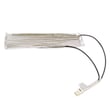
| Frost buildup, warm fresh food | Defrost problem | Refrigerator defrost heater DA47-00244U |
| Door not closing, moisture on gasket | Door seal issue | Refrigerator door gasket DA97-05253W |
| Slow water, weak ice production | Restricted filter | Refrigerator water filter DA29-00019A |
- Keep doors closing fully; avoid overloading door bins
- Replace the water filter on schedule (often every 6 months for typical use)
- Clean spills quickly to protect drawer rails and door seals
- Maintain proper temperatures (about 37°F fresh food, 0°F freezer)
- If ice production stops, follow a structured check before replacing parts
For ice-maker related issues, we recommend our guide: why your Samsung fridge stopped making ice and how to fix it.
A refrigerator that runs longer than necessary (air leaks, frost blockage, dirty airflow paths) puts extra wear on the compressor and electronics. Preventive maintenance and timely replacement of common wear parts usually costs less than major cooling-system repairs.
Last updated: February 2026
What is the most common problem with Samsung refrigerators?
The most common problems we see on Samsung refrigerators like model RF323TEDBSR are cooling complaints (warm fresh food section, frost buildup) and ice maker issues (no ice, clumping, slow production). These problems often trace back to airflow, defrost, or sensor-related faults described in the owner's manual.
- Fresh food section not cold enough while the freezer seems OK
- Frost or ice buildup on the evaporator cover, then reduced airflow
- Ice maker stops producing, produces small cubes, or jams
- Water leaking inside the refrigerator or pooling under crispers
- Unusual fan noise from the back of the fresh food section or freezer
If troubleshooting points to a failed component, these model-compatible parts are commonly involved:
| Problem area | What it affects | Example part for RF323TEDBSR |
|---|---|---|
| Defrost system | Frost buildup, blocked airflow | Refrigerator defrost heater DA47-00244U |
| Temperature sensing | Incorrect temps, erratic cycling | Refrigerator temperature sensor DA32-10104N |
| Ice production | No ice, poor harvest, jams | Samsung refrigerator ice maker assembly DA97-07603B |
| Water flow/quality | Slow water, bad taste, low ice output | Refrigerator water filter DA29-00019A |
- Confirm temperature settings: Most refrigerators run best around 37°F in the fresh food section and 0°F in the freezer.
- Check door sealing and loading: Overpacked shelves and a poor door seal reduce airflow and cause warm spots.
- Look for frost patterns: Heavy frost behind interior panels usually points to a defrost or airflow issue.
- Verify ice maker basics: Make sure the ice maker is turned on, the bin is seated, and the fill tube is not frozen.
- Replace the water filter on schedule: A restricted filter can reduce water flow to the dispenser and ice maker.
Cooling and ice maker problems are often connected. When airflow is restricted (frost buildup, fan issues, blocked vents), temperatures drift and the ice maker can stop cycling correctly. Catching the early signs helps prevent food spoilage and repeat icing.
For step-by-step ice maker troubleshooting, we also recommend why your Samsung fridge stopped making ice and how to fix it.
Last updated: February 2026