Owner’s manual
 Error Codes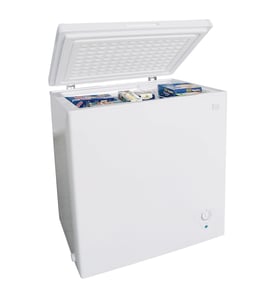



How can I tell what size my chest freezer is?
For Kenmore chest freezer model 25312702410, the most accurate way to tell the freezer’s “size” is to use the capacity listed for your exact model on the rating plate or in the 25312702410 use & care guide. If you can’t find a capacity value there, you can estimate cubic feet by measuring the usable interior and calculating volume.
1) Confirm the model and look for capacity on the rating plate
The manual notes that chest-model serial plates are typically on the left exterior wall; the plate often lists capacity in cubic feet.
- Look for Model and Serial on the rating plate
- Kenmore model numbers may appear with or without punctuation (for example, 253.12702410 vs 25312702410); treat them as the same model identifier
- Check the same label for capacity (often shown as “cu. ft.”)
- Clean the label with mild soap and water only
2) If capacity isn’t shown, estimate cubic feet from interior measurements
Measure the usable interior space (not the lid thickness).
- Length: left-to-right inside
- Width: front-to-back inside
- Depth: bottom-to-top, stopping at the underside of the lid seal area
Quick calculation
- Convert inches to feet: divide each measurement by 12.
- Multiply: L (ft) × W (ft) × D (ft) = cubic feet.
- Subtract a little for rounded corners and any compressor hump.
| What you need | Measure | What it tells you |
|---|---|---|
| Storage capacity (cu ft) | Interior dimensions | Best estimate of usable space |
| Fit in your space | Exterior dimensions | Cabinet footprint and lid swing |
| Efficient operation | Clearance around cabinet | Airflow and energy use |
Why it matters
Knowing cubic feet helps you compare chest freezer sizes, plan food storage, and avoid overloading, which can increase run time and temperature swings.
Last updated: January 2026
How to move a heavy chest freezer?
To move a heavy Kenmore chest freezer model 25312702410, we recommend emptying it, unplugging it, defrosting and drying it, then securing loose items before transporting it upright. Using an appliance dolly and floor protection helps prevent cabinet damage and injuries; see the 25312702410 use & care manual.
Safe moving steps (best practice)
- Remove food and place it in coolers or another freezer.
- Unplug the power cord from the wall outlet.
- Defrost and clean the freezer; dry the interior so water does not spill during the move.
- Secure loose items (baskets, dividers, paperwork) with tape so they do not shift.
- Protect floors and doorways with cardboard, plywood, or a moving blanket.
- Use an appliance dolly; tilt the freezer slightly and slide the dolly toe plate under the cabinet base (not under the lid).
- Transport upright and strap it securely in the vehicle to prevent tipping.
What to do before you plug it back in
If the freezer stayed upright the whole time, you can typically plug it in once it is in place and level. If it was laid on its side at any point, let it sit upright before powering on so compressor oil can settle.
| Situation during move | What we recommend before powering on |
|---|---|
| Stayed upright | Plug in after positioning and leveling |
| Was tipped/laid down | Let it stand upright for several hours |
Why it matters
Chest freezers can be top-heavy and awkward to grip. Emptying, drying, and strapping the unit reduces the risk of injury, prevents water damage to floors, and helps avoid cooling problems caused by rough handling.
Last updated: January 2026
What are the most common issues with 25312702410?
The most common issues we see with the Kenmore 25312702410 chest freezer are temperature control problems, lid seal air leaks, and lid hardware wear that prevents a tight close. These problems show up as warm temperatures, heavy frost, long run times, or a lid that will not stay shut.
Common symptoms and what they usually point to
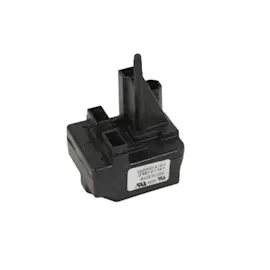
- Freezer not cold enough or temperature swings: thermostat or control issue; start components can also be involved
- Heavy frost or moisture around the rim: lid not sealing, gasket torn, or lid not closing squarely
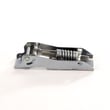
- Lid hard to open, slams shut, or will not stay open: hinge or spring wear
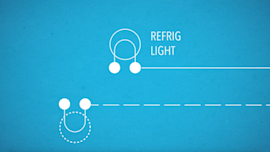
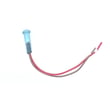
- Power light not working but freezer runs: indicator light issue
- Poor organization leading to long lid-open time: missing or broken basket (can increase warm-ups)
Quick checks we recommend first
- Confirm the control is set colder and allow 24 hours for stabilization (especially after loading warm food).
- Check the lid closes evenly on all sides; look for gaps, rips, or hardened areas on the gasket.
- Clean the gasket and rim; food residue can prevent sealing.
- Verify the freezer is level and not twisted; cabinet twist can cause lid misalignment.
- If you suspect a control issue, follow the diagnostic and operating guidance in the owner's manual.
Parts that commonly solve these issues
If your symptoms match, these model-compatible parts are frequent fixes:
| Symptom | Likely part | What it does |
|---|---|---|
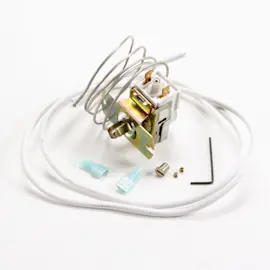
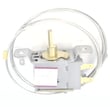
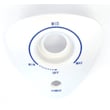
| Temperature too warm or inconsistent | Frigidaire freezer temperature control thermostat 5304476700 | Cycles the compressor to maintain set temperature |
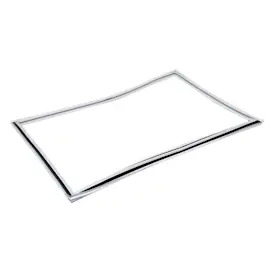
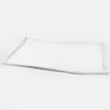
| Frost, sweating, or air leaks at lid | Freezer lid gasket 5304489973 | Seals the lid to keep warm air out |
| Lid will not stay open or won’t close right | Freezer hinge and spring 5304496317 | Supports lid movement and alignment |
| Indicator light out | Freezer indicator light 5304492852 | Shows power/operation status |
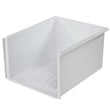
| Hard to organize, lid open too long | Freezer basket 5304439835 | Helps reduce lid-open time and temperature rise |
Why it matters
A chest freezer depends on a tight lid seal and stable temperature control. Small air leaks or a drifting thermostat can cause frost buildup, higher energy use, and food quality problems.
Last updated: March 2026