Owner’s manual
 Error Codes


How to identify a Kenmore washer model?
Your Kenmore washer model number is printed on the model and serial number plate; on Kenmore model 11020422990, the 11020422990 owner's manual shows this plate is typically located under the lid on the top panel area. Use the full model number exactly as shown to match the correct washer parts.
Where to look on Kenmore washers
Check these common locations in this order:
- Under the lid on the top panel or rim (common on top-load models like 11020422990)
- Back of the cabinet near the power cord entry
- Inside the lid opening along the frame
- Behind the control panel (less common)
What the model number looks like
Kenmore washer model numbers are usually a long numeric string. For this unit, the model number is:
| Item | Example for your washer |
|---|---|
| Brand | Kenmore |
| Model number format | 110######## |
| Your model number | 11020422990 |
Why the exact model number matters
We use the model number to filter parts by the correct design revision. A single digit difference can change fit and function for items like the lid switch, drain pump, or motor drive system.
Quick parts cross-check (common matches for this model)
If you are troubleshooting and want to confirm you are on the right parts list, these are common part types shown for Kenmore 11020422990:
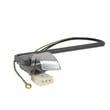
- Washer lid switch WP3949238 (won’t spin or drain if the lid switch fails)
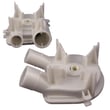
- Washer drain pump WP3363394 (won’t drain or drains slowly)
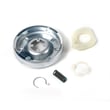
- Coupling 285753A (agitates but won’t spin, or loud grinding)
Last updated: February 2026
What is the average lifespan of a Kenmore washer?
A Kenmore washer typically lasts 10 to 15 years. For Kenmore model 11020422990, you usually reach the high end of that range by keeping loads balanced, using the right water level and temperature settings, and fixing small problems (drain, spin, fill) before they strain the drive system.
Typical lifespan and what affects it
Most top-load washers like the Kenmore 11020422990 land in this range, but real-world life depends on usage and care.
- Load size and balance (frequent overloading shortens life)
- Water quality (sediment can stress the inlet valve and pump)
- Drain and spin performance (slow draining increases wear)
- Vibration and leveling (constant shaking stresses suspension and drive parts)
- Routine cleaning and inspection (hoses, lid switch, leaks)
Maintenance habits that extend washer life
Use these habits to reduce wear on the motor, clutch, and gear case.
- Choose the correct water level for the load size (your washer has multiple water level settings)
- Avoid packing the basket tight; leave room for clothes to circulate
- Level the washer and keep it from rocking during spin
- Check fill hoses and the drain hose for kinks, cracks, or seepage
- If the washer will not spin or agitate, stop using it and troubleshoot right away
Common wear parts and what they usually cause
These are frequent failure points on many Kenmore 110-style top-load washers.
| Symptom | Common cause | Part to check first |
|---|---|---|
| Won’t spin or agitate | Drive coupling worn/broken | Coupling 285753A |
| Won’t drain | Pump jammed or failing | Washer drain pump WP3363394 |
| Won’t start or stops when lid opens/closes | Lid switch issue | Washer lid switch WP3949238 |
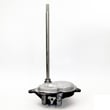
| Spins weakly or slips | Clutch wear | Clutch 285785 |
Why it matters
A washer can run for years with minor issues, but continuing to operate with a slipping clutch, a failing drain pump, or a broken coupling can overload the motor and gear case. Catching those symptoms early is one of the simplest ways to protect the overall lifespan.
For cycle and feature details specific to Kenmore 11020422990 (water level settings, operating suggestions, and normal operation), use the 11020422990 owner’s manual.
Last updated: February 2026
What are the most common issues with 11020422990?
The most common issues we see with the Kenmore 11020422990 washer are no drain or slow drain, won’t spin or agitate, excessive vibration or out-of-balance loads, and water fill problems. Many of these symptoms trace to a few high-wear parts and basic setup checks in the owner's manual.
Common symptoms and what usually causes them
- Won’t drain or drains slowly: clogged pump, kinked drain hose, or a failing drain pump
- Won’t spin or agitate: worn drive coupling, lid switch not closing, clutch wear
- Loud noise during spin: clutch or gear case wear, basket drive issues
- Leaking: tub gasket or center post seal wear, loose hose connections
- Shakes or bangs: unbalanced load, weak suspension springs, leveling issues
Parts that commonly fix these problems
If your symptoms match, these model-compatible parts are frequent solutions:
- Washer drain pump WP3363394 for no drain/slow drain
- Washer lid switch WP3949238 for no spin/agitate when the lid isn’t sensed as closed
- Coupling 285753A for motor runs but washer won’t agitate or spin
- Clutch 285785 for weak or slipping spin
- Washer inlet valve 285805 for no fill, slow fill, or incorrect water temperature mix
Quick checks before replacing parts
- Confirm the load and level: redistribute bulky items; level the cabinet on a firm floor.
- Check draining basics: make sure the standpipe is not blocked and the drain hose is not pinched.
- Verify lid closure: a misaligned lid can prevent spin on many top-load designs.
- Use the right settings: this washer has multiple water level and temperature selections; using the correct combination helps prevent out-of-balance and poor cleaning.
Symptom-to-part cheat sheet
| Symptom | Most likely area | Common part match on this model |
|---|---|---|
| Hums but won’t drain | Drain system | WP3363394 |
| Fills slowly or not at all | Water supply/valve | 285805 |
| Motor runs, no agitation | Drive connection | 285753A |
| No spin with lid closed | Lid safety circuit | WP3949238 |
Why it matters
Catching these issues early prevents secondary damage (for example, repeated off-balance spinning can strain suspension springs and the drive system) and helps you choose the right repair path the first time.
Last updated: March 2026