





How do I tell what Briggs and Stratton engine I have?
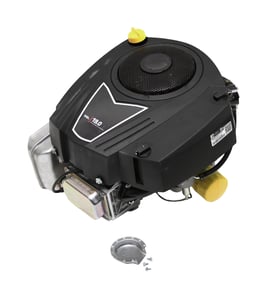
To identify your Briggs & Stratton engine, find the engine’s model number, type number, and code number stamped on the engine. For the Briggs 33R877-0032-G1, the model number format looks like 33R877-0032-G1 and is typically stamped into metal on the valve cover area or shown on an engine ID tag.
Where to look on the engine
We recommend checking these common ID locations first:
- Valve cover area (numbers stamped into the metal)
- Blower housing or shroud area (often near the recoil or fan cover)
- Engine block near the spark plug
- A metal or foil ID tag attached to the engine
- Under heavy dirt or oil buildup (wipe the area clean to reveal the stamp)
What the numbers mean (and what to write down)
Most Briggs & Stratton engines use three identifiers. Recording all three helps ensure you get the right carburetor, gasket set, fuel line, or starter motor.
| ID you’ll see | What it tells us | Example (format) |
|---|---|---|
| Model | Engine family and basic design | 33R877 |
| Type | Exact configuration and parts variation | 0032 |
| Code | Production date code | (varies) |
Quick tips to avoid ordering the wrong parts
Once you find the ID, match parts to the full model and type whenever possible.
- Copy the characters exactly (including dashes)
- Take a clear photo before ordering
- If the stamp is faint, rub chalk over it and wipe lightly to increase contrast
- Match tune-up parts by engine model, not by tractor brand alone
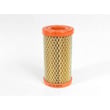
- Use the engine model to select maintenance parts like the engine air filter 793569 and engine fuel filter (white) 394358S
Why it matters
Briggs engines that look identical can use different carburetors, gaskets, and fuel system parts based on the type number and code. Using the correct engine ID prevents hard-starting issues, fuel leaks, and fit problems during repairs.
Last updated: January 2026
Can I use SAE 30 in Briggs and Stratton engine?
Yes. For the Briggs & Stratton engine model 33R877-0032-G1, SAE 30 is a good choice for warm-weather operation; we use SAE 30 above 40°F (4°C) for strong lubrication and stable oil pressure. For best engine life, keep the oil level correct and change oil on schedule.
When SAE 30 is the right oil
SAE 30 works best when outdoor temperatures stay consistently warm.
- Use SAE 30 when temps are above 40°F (4°C)
- If you mow in cooler weather, a multi-viscosity oil (like 10W-30) typically cranks easier
- Always verify the oil level before each use (low oil can damage the engine fast)
- Change oil after the first 5 hours on a fresh engine, then about every 50 hours or once per season
Quick oil selection guide
| Operating temperature | Typical oil choice | What you will notice |
|---|---|---|
| Above 40°F (4°C) | SAE 30 | Stable protection in heat |
| Mixed temps (spring/fall) | 10W-30 | Easier starting when cool |
| Cold starts | 5W-30 (synthetic often used) | Best cranking in cold |
Oil change and filter tips (helps prevent hard starting)
A restricted oil filter or dirty oil can contribute to overheating and faster wear.
- Warm the engine briefly, then shut it off and remove the key
- Drain oil completely and refill to the correct level on the dipstick
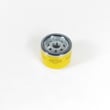
- Replace the oil filter if your engine uses one: Briggs & stratton lawn and garden equipment engine oil filter 696854
- Wipe up spills and recheck the level after the first short run
Why it matters
Using the right viscosity for the temperature helps your 33R877-0032-G1 maintain proper lubrication at startup and under load; that reduces wear on internal parts like the crankshaft, piston, and cylinder.
Last updated: January 2026
What are common Briggs & Stratton engine problems?
Common problems on the Briggs & Stratton 33R877-0032-G1 lawn and garden engine are no-start, hard starting, surging, stalling, and loss of power; the most frequent root causes are stale fuel, restricted airflow, and fuel delivery issues. We start by checking fuel quality, filters, and basic ignition safety interlocks.
Most common symptoms and likely causes
- Won’t start: stale fuel, clogged fuel filter, dirty carburetor, weak battery/starter circuit
- Starts then dies: fuel cap venting issue, restricted fuel flow, carburetor varnish
- Surges at idle: partially clogged carburetor jets, air leak, dirty air filter
- Runs rough or lacks power: dirty air filter, old fuel, restricted exhaust, low compression
- Oil leak or burning smell: worn seal/gasket, overfilled oil, crankcase breather issue
Quick checks we recommend first (10 to 20 minutes)
- Replace old gas with fresh fuel (and use fuel stabilizer for storage).
- Inspect and replace the air filter and pre-filter if dirty: Briggs & stratton lawn & garden equipment engine air filter 793569, Briggs & stratton lawn and garden equipment engine pre-filter 793685.
- Check fuel flow; replace the filter if it looks restricted: Briggs & stratton lawn & garden equipment engine fuel filter (white) 394358S.
- Verify the fuel line is not cracked, soft, or collapsing: Briggs & stratton lawn & garden equipment engine fuel line, red 791766.
- If it still surges or won’t stay running, clean or replace the carburetor: Briggs & stratton lawn & garden equipment engine carburetor 594601.
Parts that commonly solve these issues
| Problem you see | Part that often fixes it | What it addresses |
|---|---|---|
| Hard starting, stalling | Fuel filter | Fuel restriction and debris |
| Surging, won’t idle | Carburetor | Varnish, plugged jets |
| Low power, black smoke | Air filter / pre-filter | Air restriction |
| Fuel starvation | Fuel line | Cracks, leaks, collapse |
Why it matters
Fuel and air restrictions make the engine run lean or unstable, which causes surging, backfiring, and hard starts. Fixing the basics early also helps prevent carburetor damage and reduces wear on the starter motor.
Last updated: January 2026
What are the different B&S engine types?
Briggs and Briggs & Stratton engines are commonly grouped by application and shaft orientation, such as Vanguard (commercial-duty), vertical-shaft (most walk-behind mowers), and horizontal-shaft (many tillers, pressure washers, and go-karts). For model 33R877-0032-G1, the exact “type” depends on how the engine is configured in your equipment.
Common Briggs engine type categories
Here are the engine “types” customers usually mean when shopping parts or comparing engines:
- Vanguard engine: commercial-duty line used in heavy-use equipment
- Vanguard marine engine: corrosion-resistant configurations for marine applications
- Vertical shaft engine: crankshaft points down; common on lawn mowers
- Horizontal shaft engine: crankshaft points out the side; common on generators and pumps
- Cast iron sleeve (often called I/C or commercial-duty): cylinder sleeve material used for durability (not a shaft orientation)
How to identify your engine type on 33R877-0032-G1
Use these quick checks to match the “type” to what you are working on:
- Look at the crankshaft direction (down = vertical, side = horizontal)
- Note the equipment application (tractor, mower, generator, etc.)
- Confirm the spec number on the engine label (it helps match exact parts)
- Match maintenance parts by fit, such as the lawn and garden equipment engine air filter 793569
- If fuel delivery parts are involved, match by the existing filter style, such as the lawn & garden equipment engine fuel filter (white) 394358S
Quick comparison
| Engine type label | What it usually tells you | Common use |
|---|---|---|
| Vertical shaft | Crankshaft points down | Walk-behind mowers, some riders |
| Horizontal shaft | Crankshaft points out | Generators, pumps, tillers |
| Vanguard | Commercial-duty product line | Pro-grade mowers, commercial equipment |
| Marine | Corrosion-resistant configuration | Boats, marine equipment |
| Cast iron sleeve | Durability feature (sleeve material) | Heavy-use engines |
Why it matters
Engine “type” affects which parts fit and how you service the engine. Shaft orientation impacts crankshaft, sump, and mounting parts; product line (like Vanguard) impacts component design and maintenance intervals.
Last updated: January 2026