Owner’s manual
 Error Codes


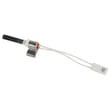

Can you get parts for a Kenmore dryer?
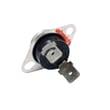
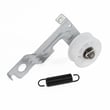
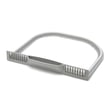
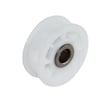
Yes. We carry replacement parts for the Kenmore Elite dryer model 79671553610, including common wear items (like belts and lint screens) and key components (like thermostats, sensors, and control parts). Use the model’s 79671553610 owner's manual to confirm the correct part and safe service steps before you start.
Parts you can typically replace on this model
For Kenmore Elite 79671553610 dryers, these are some of the most frequently ordered parts:
- Drum drive parts such as the lg dryer drum belt 4400EL2001F and idler pulley
- Drum support parts (rollers and seals) that reduce thumping or squealing
- Airflow and safety parts like lint screens and thermostats
- Moisture sensing parts that affect auto-dry performance
- Door and panel parts (handles, frames, door assemblies)
How we recommend choosing the right part
Start with the symptom, then match the part to your exact model number and configuration.
- Confirm the full model number 79671553610 from the ID plate inside the dryer door
- Look up the part by symptom (won’t start, won’t heat, noisy, long dry times)
- Compare the part ID and description to your original part
- Check whether multiple similar parts exist (for example, more than one idler pulley)
- Follow the safety and disassembly guidance in the manual before servicing
Quick symptom-to-part guide
| Symptom | Common part categories to check | Examples available for this model |
|---|---|---|
| Dryer is noisy or squeals | Belt, idler pulley, support rollers, drum seal | Drum belt, idler pulley, support roller, rear drum seal |
| Clothes take too long to dry | Lint screen, blower wheel, thermostats, venting | Lint screen, blower thermostat, blower wheel |
| Auto cycles end too soon or run too long | Moisture sensor, sensor harness, thermistor | Moisture sensor, sensor wire harness, thermistor |
Why it matters
Using the correct, model-matched part helps restore proper drum movement, airflow, and temperature control. That improves drying performance and helps prevent overheating conditions caused by restricted airflow or failed thermostats.
Last updated: February 2026
How do I reset my Kenmore Elite dryer?
To reset your Kenmore Elite dryer model 79671553610, we recommend a simple power reset: turn the dryer off, unplug it (or switch off the breaker) for about 5 minutes, then restore power and start a cycle. If the display shows CL, turn off Control Lock by holding Drum Light for 5 seconds (per the 79671553610 owner's manual).
Quick reset steps (most common)
- Press POWER to turn the dryer off.
- Unplug the power cord (or turn the circuit breaker off).
- Wait 5 minutes.
- Restore power.
- Press POWER, select a cycle, then press START/PAUSE.
If you see “CL” on the display
“CL” means Control Lock is on; the dryer will power on, but the controls stay disabled.
- Press and hold DRUM LIGHT for 5 seconds to toggle Control Lock off.
- Confirm the CL indicator clears, then start a cycle.
If the dryer shuts off and “loses” settings
This model turns itself off after being stopped for more than 4 minutes, and settings are cleared.
| What happened | What it means | What to do |
|---|---|---|
| Paused too long | Auto power-off | Press POWER, reselect cycle, press START/PAUSE |
| Door opened mid-cycle | Cycle paused | Close door, press START/PAUSE |
| Power interruption | Control reset | Perform the 5-minute power reset |
Why it matters
A reset clears minor control glitches and helps you quickly separate a simple control issue (like Control Lock) from airflow or heating problems that can cause poor drying.
After resetting: check airflow basics
Restricted venting can cause long dry times and overheating-related symptoms.
- Clean the lint screen before every load
- Check the vent for crushing, kinks, or lint buildup
- Keep the duct run as short and straight as possible
- If drying is inconsistent, inspect the lint screen area for gaps or damage
If your lint screen is torn or not fitting correctly, replacing it can help restore proper airflow; see the dryer lint screen 5231EL1001C.
Last updated: February 2026
How to find Kenmore Elite dryer model number?
For Kenmore Elite dryer model 79671553610, the model number is printed on the identification plate inside the dryer door (on the cabinet frame area). We recommend writing down both the model and serial number so you can match the correct parts and troubleshooting steps in the 79671553610 owner's manual.
Where to look on the dryer
Check these common label locations first:
- Inside the dryer door opening on the cabinet frame (primary location for this model series)
- Along the inner door opening edge where the door closes
- If the label is damaged or missing: check the back panel near the top (common alternate location)
How to record it correctly
Use this quick checklist so the number you save matches parts listings exactly:
- Copy the full model number exactly as shown (including all digits)
- Record the serial number from the same plate
- Take a clear photo of the label for future reference
- Keep the info with your purchase date and receipt
Why the model number matters
Kenmore Elite dryers often share similar styling across multiple series, but parts like a drum belt, thermistor, or control board can vary by model. Using the exact model number helps us match the right diagrams and parts for your dryer.
| What you need | Where it’s found | What it’s used for |
|---|---|---|
| Model number (79671553610) | Identification plate inside the door | Matching correct parts and manuals |
| Serial number | Same identification plate | Service history and support |
Last updated: February 2026
Is it worth repairing an old Kenmore dryer?
Yes, repairing an older Kenmore Elite dryer like model 79671553610 is worth it when the problem is a normal wear item (belt, roller, idler) or a simple airflow issue, and the dryer is otherwise safe and drying well. If you are facing repeated breakdowns or major electrical or gas-heat problems, replacement is usually the better value.
Quick way to decide (what we use)
- If the dryer still tumbles smoothly and heats normally, a repair is usually cost-effective.
- If it is noisy, not tumbling, or taking too long to dry, common mechanical parts often fix it.
- If you smell gas, see scorching, or the unit trips breakers repeatedly, stop using it and schedule service.
- If multiple major parts are failing close together, replacement typically costs less long-term.
Common “worth it” repairs on this model
These are typical wear items that fail with age and are usually straightforward repairs:
- Drum not turning: belt or idler pulley
- Thumping or squealing: drum support rollers
- Poor drying: lint screen or airflow restriction (venting)
| Symptom | Most likely area | Typical fix type |
|---|---|---|
| Drum won’t turn | Drive system | Replace belt or idler |
| Loud rumble/thump | Drum support | Replace roller(s) |
| Long dry times | Airflow/lint | Clean venting, replace lint screen |
| Overheating/shuts off | Temperature sensing | Diagnose thermostats/thermistor |
Parts that often make a repair economical
- Lg dryer drum belt 4400EL2001F
- Dryer drum support roller 4581EL2002H
- Lg dryer idler pulley 4561EL3002A
- Dryer lint screen by lg 5231EL1001C
Why it matters
A dryer that is slow to dry or overheating can waste energy and increase wear on components. Fixing airflow and common wear parts early often prevents bigger failures and keeps drying performance consistent.
What to check first (before buying parts)
- Clean the lint screen and confirm the exhaust vent is not crushed or clogged.
- Listen for squealing, grinding, or thumping while the drum turns.
- Confirm the drum turns freely by hand (with power off).
- Use the troubleshooting and safety guidance in the 79671553610 use and care guide.
Last updated: February 2026
What are the codes for Kenmore Elite dryer?
For Kenmore Elite dryer model 79671553610, common display codes point to power issues, vent restrictions, or sensor and control problems. Start by noting the exact code, then follow the reset and airflow checks in the 79671553610 owner's manual before replacing parts.
Common Kenmore Elite dryer codes and what they mean
Here are codes you will commonly see on Kenmore Elite dryers, including the 796.7155* series:
- PF: Power failure during a cycle
- CL: Control lock is on (buttons disabled)
- tE1 to tE7: Temperature sensor (thermistor) failure
- PS (electric models): Power cord wired incorrectly
- nP: Incorrect power cord connection
- gAS (gas models): Gas supply off or gas service issue
- d80 / d90 / d95: Exhaust vent restriction (about 80% to 95% blocked)
What to do first (safe, fast checks)
We recommend these steps before ordering parts:
- Unplug the dryer (or switch off the breaker) for 1 minute, then restore power and retry.
- If you see PF, check for a tripped breaker or blown fuse.
- If you see CL, press and hold DRUM LIGHT for 3 seconds to toggle Control Lock.
- If you see d80/d90/d95, stop using the dryer and clean or repair the entire vent run.
- If you see gAS, confirm both the house gas shutoff and dryer gas shutoff valves are fully open.
Quick reference table
| Code | What it points to | Best first action |
|---|---|---|
| PF | Power interruption | Check breaker, outlet, cord fit |
| CL | Control lock enabled | Hold DRUM LIGHT 3 seconds |
| tE1-tE7 | Thermistor/sensing problem | Power off; service diagnosis |
| d80/d90/d95 | Severe vent restriction | Clean venting before running |
| nP / PS | Wiring/connection issue | Verify terminal block wiring |
| gAS | Gas supply issue | Open shutoffs; confirm supply |
Why it matters
Error codes help prevent bigger failures. For example, d80/d90/d95 indicates restricted airflow that increases drying time and energy use and can overheat components like thermostats and the blower system.
When a part is likely involved
If the code repeats after the checks above, these parts are commonly involved:
- Temperature sensing issues (tE codes): consider the dryer thermistor AGM30045804
- Overheating or airflow symptoms: inspect lint screen, blower wheel, and venting
- No heat on gas models: ignition and gas valve circuits may need testing
Last updated: February 2026
What does AF mean on a Kenmore Elite dryer?
On Kenmore Elite dryer model 79671553610, AF means the dryer is detecting restricted airflow through the exhaust system. This condition increases drying time and can trigger airflow-related warnings such as the Check Vent indicator; correcting the vent restriction restores normal performance.
What to check first (fast airflow fixes)
- Clean the lint screen before every load; a clogged screen is the most common cause.
- Inspect the vent hose behind the dryer for kinks, crushing, or sagging.
- Check the outside vent hood; confirm the damper opens fully and is not blocked by lint.
- Remove lint buildup from the entire duct run; ducts should be cleaned at least yearly.
- Replace plastic or foil venting with rigid or semi-rigid metal ducting.
How we confirm airflow is the problem
Your 79671553610 has a duct blockage sensing system that can illuminate the Check Vent indicator when there is a serious restriction in the home exhaust system. For a performance check, we follow the airflow guidance in the 79671553610 owner's manual.
Quick airflow check
- Run a heated cycle.
- After about 3 minutes, verify the exhaust air is warm.
- If airflow feels weak at the outside hood, the restriction is in the venting, not the drum.
Common causes and what they lead to
| Likely cause | What you may notice | What to do |
|---|---|---|
| Lint buildup in duct | AF, long dry times | Clean duct run and hood |
| Vent hose kinked/crushed | AF after moving dryer | Re-route or replace hose |
| Vent run too long | Slow drying even when clean | Shorten run, reduce elbows |
| Wrong vent material (foil/plastic) | Frequent restrictions | Upgrade to metal venting |
Why it matters
Restricted exhaust airflow reduces energy efficiency and greatly increases drying time. It can also cause the dryer to run hotter than intended, so clearing the venting is the best first repair step before replacing parts.
If you are also seeing an error code or warning light pattern, the Kenmore elite dryer error codes guide helps match the display to the right troubleshooting path.
Last updated: February 2026
Why is my Kenmore Elite dryer not spinning?
If our Kenmore Elite dryer model 79671553610 runs but the drum will not turn, the most common causes are a broken or slipped drum belt, a failed idler pulley, or worn drum support rollers. Start with a quick belt and drum check, then inspect the drive system parts.
Quick checks first (no tools)
- Unplug the dryer.
- Open the door and try to rotate the drum by hand.
- Listen for the motor running while the drum stays still (often points to a belt or idler issue).
- Check for a heavy load jammed against the front or rear drum seal.
Most likely causes and what to look for
- Broken or stretched belt: Drum turns freely by hand; motor may run but drum does not move.
- Idler pulley problem: Squealing, thumping, or belt slipping; pulley may be seized or off-track.
- Worn drum support rollers: Rumbling or thumping; drum may bind and stop turning.
- Motor issue: Hums but will not start, or stops quickly (less common than belt and rollers).
Common parts for model 79671553610
| Symptom | What you’ll notice | Part to inspect first |
|---|---|---|
| Motor runs, drum does not | No tumbling, little to no airflow change | Lg dryer drum belt 4400EL2001F |
| Squeal, belt slips, intermittent tumbling | Noise near motor area | Lg dryer idler pulley 4561EL3002A |
| Rumble or thump as drum tries to turn | Drum feels rough or “flat spots” | Dryer drum support roller 4581EL2002H |
How we recommend diagnosing it (simple sequence)
- Step 1: Confirm belt condition. If the belt is snapped or off the drum, replace it.
- Step 2: Spin the idler pulley by hand. It should spin smoothly and quietly; replace if seized or wobbly.
- Step 3: Check drum rollers. Rollers should spin freely without grinding; replace worn rollers.
- Step 4: Recheck drum movement. After correcting binding parts, the drum should rotate smoothly.
Why it matters
A dryer that will not spin usually cannot dry properly, and continuing to run it can damage the belt, idler pulley, drum rollers, or even the motor. Fixing the drive system early prevents bigger repairs.
For model-specific disassembly notes and safety steps, follow the 79671553610 owner's manual.
Last updated: February 2026