Owner’s manual
 Error Codes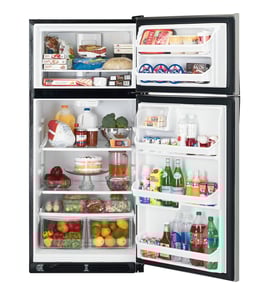


What size is Kenmore refrigerator model 25361462100?
Kenmore top-mount refrigerator model 25361462100 is typically a mid-to-large capacity top-freezer style refrigerator; most units in this design range run about 18 to 21 cu. ft. total capacity. For the exact cubic-foot rating and cabinet dimensions for your specific unit, use the 25361462100 owner's manual.
How to confirm the exact size (capacity and dimensions)
We recommend verifying size two ways: the model’s published specs and the physical cabinet measurements.
- Check the specifications section in the manual for total capacity (cu. ft.)
- Measure width, height, and depth of the cabinet (doors closed)
- Measure depth with handles if you need clearance for a walkway
- Confirm required airflow clearance around the refrigerator (top, sides, rear)
- If you are replacing an older unit, compare the opening size to the new refrigerator’s listed dimensions
Typical size ranges for a Kenmore top-mount refrigerator
These are common ranges for top-mount (top-freezer) refrigerators like the Kenmore 253 series; use them for planning until you confirm the exact spec.
| Spec | Typical range for top-mount refrigerators |
|---|---|
| Total capacity | 18 to 21 cu. ft. |
| Width | 29 to 33 inches |
| Height | 65 to 69 inches |
| Depth (without handles) | 30 to 34 inches |
Why it matters
Knowing the correct size helps you avoid fit problems (door swing, cabinet depth, and ventilation clearance) and helps you choose compatible accessories and replacement parts such as shelves, door bins, and gaskets.
Last updated: January 2026
Who makes Kenmore refrigerator model 25361462100?
Kenmore is a brand name, not a manufacturer; the Kenmore 25361462100 top-mount refrigerator was built for Sears by another appliance maker. For this model family, the “253” prefix is the key identifier used to determine the original manufacturer in the model number.
How to identify the manufacturer for model 25361462100
We use the model number prefix and the full model tag to match the unit to its original builder.
- Check the model and serial tag inside the fresh food compartment (usually on a side wall).
- Confirm the model number is exactly 25361462100 (all digits matter).
- Use the prefix 253 to look up the manufacturer code.
- Cross-check the parts list for this model; the OEM parts catalog typically aligns with the original builder.
- Keep the serial number handy; it helps when ordering parts like a defrost heater or thermostat.
What the “253” prefix means
For Kenmore refrigerators, the first three digits often indicate the original manufacturer that produced the unit for Sears.
| What you see | What it’s used for | Why it matters |
|---|---|---|
| 25361462100 | Full Kenmore model number | Ensures correct parts and diagrams |
| 253 | Manufacturer code prefix | Identifies who built the refrigerator |
| Serial number | Production identifier | Helps confirm revisions and part compatibility |
Why it matters when ordering parts
Even when the Kenmore badge is the same, different manufacturers use different designs for sealed system components, defrost systems, and door hardware. Matching the correct manufacturer family helps you get the right replacement part the first time.
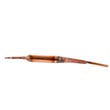
If you are troubleshooting cooling or frost issues on this model, common repair parts include the refrigerator defrost bi-metal thermostat 5303918202 and the refrigerator defrost heater 5303918203. For model-specific diagrams and identification details, use the 25361462100 owner's manual.
Last updated: January 2026
What are the common problems with Kenmore Elite refrigerators?
Common Kenmore Elite refrigerator problems include warm temperatures, heavy frost or ice buildup, water leaks, and unusual noises. On a Kenmore top-mount refrigerator like model 25361462100, these symptoms most often trace back to airflow issues, a defrost-system fault, or a drain problem; use the 25361462100 owner's manual to match symptoms to the correct checks.
Most common symptoms and what they usually mean
- Not cooling or weak cooling: dirty condenser coils, blocked vents, or an evaporator fan issue.
- Frost or ice on the back wall of the freezer: defrost heater, defrost thermostat, or airflow restriction.
- Water puddles inside or under the unit: clogged/iced defrost drain or drain tube issue.
- Clicking, buzzing, or rattling: fan blade hitting ice, loose panels, or compressor start components.
- Lights out but unit runs: failed bulb or door switch.
Quick checks we recommend first (safe DIY)
- Confirm the unit is plugged into a grounded outlet and the cord is fully seated.
- Verify temperature controls are not set to OFF; allow 24 hours after any adjustment for temps to stabilize.
- Listen for the evaporator fan in the freezer; a scraping sound often points to ice buildup or a damaged fan blade.
- Check door closing and gasket contact all the way around.
- Look for ice or debris in the drain area if you see water pooling.
Parts that commonly solve these problems
| Symptom | Common system | Example part for this model |
|---|---|---|
| Frost buildup, warm fridge | Defrost system | Refrigerator defrost heater 5303918203 |
| Frost buildup, intermittent defrost | Defrost sensing | Refrigerator defrost bi-metal thermostat 5303918202 |
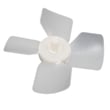
| Fan noise or poor airflow | Air circulation | Refrigerator evaporator fan blade 5308000010 |
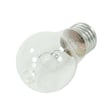
| No interior light | Lighting | Appliance light bulb, 40-watt 316538904 |
Why it matters
Cooling complaints and frost problems usually get worse over time. Catching a blocked airflow path, a failing defrost component, or a drain restriction early helps protect food temperatures and reduces strain on the sealed system.
Last updated: January 2026